
Classical Schools: A Quiet Revolution in Cultivating Character?
In an era often dominated by rapid technological shifts and a singular focus on immediate job skills, a growing movement in education is quietly championing a different path. This approach, rooted in the traditions of classical learning, posits that the true purpose of schooling extends far beyond mere vocational training. It argues for a profound engagement with timeless ideas and enduring works of art, not for their immediate utility, but for their power to shape the very character of students.
This philosophy, detailed in a recent exploration of the classical education model, suggests that the virtues fostered by such a curriculum represent a subtle yet powerful counterpoint to prevailing educational trends. It’s a vision of education that prioritizes the cultivation of wisdom and moral understanding, aiming to form individuals capable of discerning truth, goodness, and beauty in a complex world.
The Unseen Curriculum: Beyond the Great Books
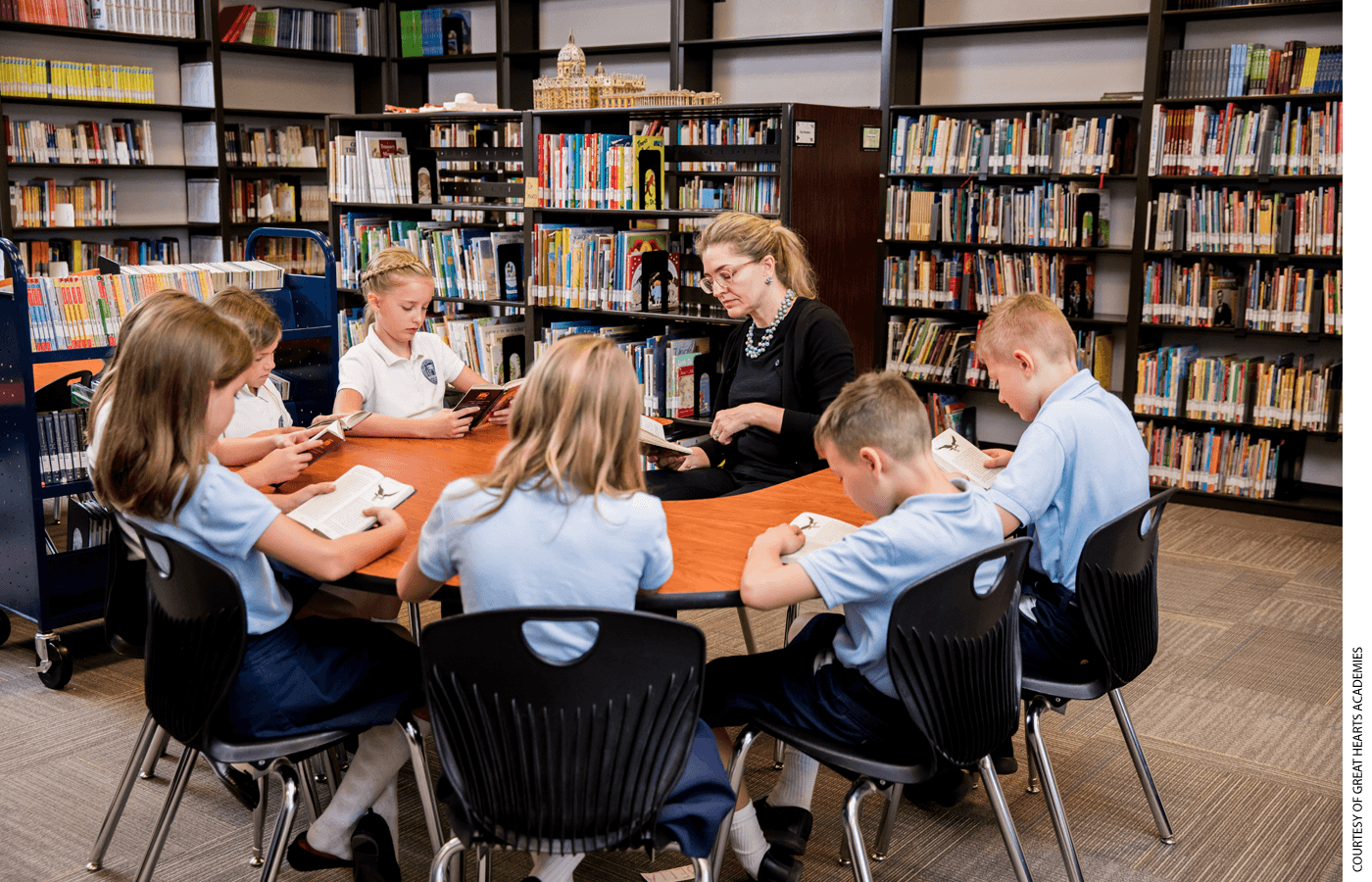
When many people picture a classical school, their minds often conjure images of specific, visible practices. These might include the rigorous study of ancient languages like Latin and Greek, the immersion in "great books" from across history, or the structured environment of school uniforms and seminar-style discussions. Elementary students might be memorizing historical facts or epic poems, while high schoolers grapple with Euclidean geometry and perform Shakespeare.
These elements are indeed hallmarks of the movement, which has seen a significant surge in popularity, with over 1,500 such schools now operating nationwide. A remarkable one-third of these institutions have opened their doors in the last decade alone, indicating a strong and growing demand from families seeking this distinct educational experience.
However, these outward signs, while important, often overshadow a more fundamental aspect that practitioners of classical education emphasize with deep passion: moral formation. The very names of some of these schools, evoking figures of virtue and duty from ancient epics, hint at this core commitment. The stated mission of many emphasizes the "moral and intellectual formation" of children, suggesting a holistic approach to student development.
Defining the "Good": A Distinct Approach to Moral Education
The central question then arises: how does the classical approach to moral education truly distinguish itself? While nearly every school today would claim to care about a student's character, the classical model offers a unique framework for understanding and cultivating virtue. This raises critical questions about the specific morals being emphasized and whether this approach is simply a different guise for more contemporary character education initiatives.
Many contemporary schools are indeed embracing social and emotional learning (SEL) programs, with over 80 percent of public school principals reporting their implementation. Proponents argue these programs can bolster academic success, yet critics raise concerns about a potential shift towards "therapeutic education," the pathologizing of childhood, and even negative impacts on mental health.
To navigate these complexities, a deeper examination of the principles underpinning classical education is essential. This involves understanding not just *what* is taught, but *how* it is taught, and the underlying philosophy that guides the formation of young minds. The goal is to move beyond superficial notions of character building and engage with the profound ways in which learning can shape a person's moral compass.
The Subversive Power of the Liberal Arts
At the heart of the classical educational philosophy lies a critique of what is often termed the "instrumentalization of learning." This refers to the prevailing notion that the value of any educational activity can be measured solely by its immediate, practical applications or its contribution to future economic productivity. In this view, subjects are often prioritized based on their perceived marketability.
Classical education, however, challenges this utilitarian reductionism. It argues that certain disciplines and practices possess intrinsic value, meaning they are good in and of themselves, regardless of their direct external benefits. This perspective suggests that the pursuit of knowledge and the engagement with art and literature are not merely means to an end, but are fundamental to human flourishing.
Consider the act of memorizing a profound poem or studying a complex scientific theory. The questions often posed are: "What is the market value of knowing this by heart?" or "What measurable objective does this achieve?" These questions, proponents argue, miss the essential point. They are akin to asking about the practical utility of love or the market value of friendship – they fail to grasp the intrinsic worth of the experience itself.
Cultivating Virtue Through Academic Content
This belief in intrinsic value is directly linked to the cultivation of virtue. When classical schools emphasize subjects like formal logic or the intricacies of grammar, their aim is not solely to boost test scores or create more efficient future employees, though such outcomes may be secondary benefits. Instead, the focus is on how these disciplines can make students more virtuous individuals.
The argument is that engaging with these subjects fosters specific intellectual and moral qualities that are essential for a well-lived life. This approach grounds moral development firmly within the academic curriculum, rather than treating it as a separate, supplementary program.
The Virtues in Practice: Precision, Creativity, and Perception
Classical education seeks to cultivate a range of virtues through its distinctive curriculum. These virtues are not abstract ideals but are actively fostered through engagement with specific academic disciplines. Examining these virtues offers a clearer picture of the moral formation envisioned by this educational model.
The Virtue of Precision
Precision, closely allied with honesty, is a virtue significantly nurtured through the study of grammar. The inherent structure and precise rules of grammar teach students that words carry specific meanings and that manipulating them can have consequences. This instills a habit of using language not for deception or self-aggrandizement, but for the clear and truthful expression of ideas.
Similarly, the discipline of formal logic trains students to evaluate arguments based on their merits rather than their popularity. It teaches them to insist that conclusions logically follow from premises, fostering a commitment to intellectual rigor and honest discourse. This emphasis on precision extends to all areas of study, encouraging a careful and deliberate approach to understanding.
The Virtue of Creativity
Creativity in the classical model is not seen as a spontaneous outburst of unbridled imagination, but as a thoughtful and informed process. Students develop their creative capacities by engaging with the great works of art and literature that form the Western canon. By learning the "symbolic vocabulary" of these traditions, they gain the tools to understand and interpret complex human experiences.
This engagement with tradition is crucial for genuine originality. As the argument goes, even rebellion requires something to rebel against; it is one thing to break from a tradition, but quite another to have never encountered it. Reading and memorizing great works of poetry and oratory also plays a vital role, integrating these profound expressions into a student's cognitive and emotional framework.
These memorized texts become more than just stored information; they become "thoughts to think with," offering students an "invisible company of the wise" to draw upon in their own lives. This internal reservoir of profound ideas and eloquent expression enriches their capacity for original thought and creative expression.
The Virtue of Perception
The development of keen perception is another key aim of classical education. Students are encouraged to sense the "hidden order" that exists within language, argumentation, and the natural world. Disciplines like geometry, with its focus on proportion, symmetry, and elegance, cultivate this perceptual capacity.
Sentence diagramming, applied to literature, achieves a similar effect for language. It reveals the intricate structure of sentences, much like a complex architectural design. This process can make the study of literature a deeply engaging, almost architectural exploration, where every element connects according to underlying principles.
Through these disciplines, students are said to develop a new kind of vision, one that makes visible aspects of experience that might otherwise remain unnoticed or unarticulated. This heightened perception allows them to appreciate the complexity and beauty of the world around them, fostering a sense of wonder and intellectual curiosity.
Beyond SEL: A Deeper Moral Aim
The classical approach to moral education stands apart from contemporary initiatives like SEL and the broader category of "21st-century skills" in several key ways. Firstly, it integrates the cultivation of virtue directly into the academic content itself. Rather than teaching character in isolation through abstract lessons or therapeutic exercises, it uses subjects like grammar, geometry, and art as conduits for moral development.
This approach reflects a profound respect for teachers, viewing them as experts in their subject matter rather than as therapists. The academic content is the primary tool for character formation, allowing for a more organic and integrated learning experience.
Furthermore, classical education acknowledges the inherent complexity and nuance of human nature. It resists the simplistic notion that goodness can be easily "downloaded" or programmed into young minds. The idea that moral development can be reduced to a measurable, efficient, and non-invasive system is seen as a flattening of the rich and often challenging reality of human moral experience.
Instead, classical education posits that the most effective way to cultivate moral understanding is through narrative, particularly through engagement with great literature. This does not mean reducing stories to simple moralistic fables. Rather, it recognizes that stories are uniquely capable of depicting the intricate interplay of cognition, emotion, imagination, and will that shapes moral decision-making.
The ultimate goal of this comprehensive educational approach is wisdom. Wisdom, in this context, is defined as the capacity to judge rightly, to discern what is true, good, and beautiful, and to live accordingly. By engaging with profound ideas, discoveries, and works of art, students learn to navigate complexity, internalize higher standards of thought, and distinguish between the trivial and the profound.
The Pursuit of Wisdom: A Timeless Goal
This pursuit of wisdom aligns with ancient philosophical ideals, such as Plato's assertion that the purpose of education is to teach us to love what is beautiful. The recognition of truth and goodness in the arts and sciences, cultivated through rigorous study, ultimately informs and guides our daily lives, shaping our character and our actions.
Compared to SEL, therefore, classical education is both more deeply rooted in academic content and more ambitious in its moral aims. It seeks to form not just well-adjusted individuals, but wise and virtuous citizens capable of contributing meaningfully to society.
While the vision of classical education is compelling, its practical implementation can present challenges. The ideal of students spending extended periods engrossed in solitary study, for instance, may not always reflect the realities of busy classrooms and the need for collaborative learning. Bridging the gap between this idealized vision and the everyday practice of teaching is an ongoing endeavor for educators in this field.
Nevertheless, for those seeking to understand a model of education that prioritizes the cultivation of virtue and the pursuit of wisdom, the principles of classical learning offer a profound and enduring framework. It is an approach that suggests the most valuable lessons are often learned not through direct instruction, but through immersion in the enduring wisdom of the past.







 Explore AI Teaching Tools
Comments (0)
Please login to comment
No comments yet
Be the first to comment on this article