
San Francisco State's Romberg Tiburon Campus: A Fight for Marine Science's Future
The vibrant marine ecosystem of San Francisco Bay faces unprecedented challenges, and at its forefront is the potential closure of a vital research hub.San Francisco State University's Romberg Tiburon campus, a cornerstone for ecological study and conservation efforts, is at a critical juncture.
This article delves into the complex financial realities, the invaluable research conducted at the campus, and the broader implications for marine science education and environmental stewardship.
We explore the dedicated efforts to preserve this unique facility and the broader trends impacting higher education and scientific research.
The Crucial Role of the Romberg Tiburon Campus
Nestled on the shores of San Francisco Bay, the Romberg Tiburon campus has served as a critical nexus for understanding and protecting the delicate balance of this vital estuary.For decades, it has provided a unique environment for researchers and students to engage directly with the marine world, fostering a deep connection to the environment they study.
Eelgrass: A Keystone Species Under Threat
One of the most significant areas of research at the Romberg Tiburon campus centers on eelgrass, a seemingly unassuming underwater plant with profound ecological importance.Katharyn Boyer, a leading biology professor and director of San Francisco State University's Estuary and Ocean Science Center, has dedicated much of her career to studying and restoring these vital underwater meadows.
Eelgrass plays a multifaceted role in the health of San Francisco Bay.
It acts as a natural carbon sequestration system, helping to mitigate the effects of climate change by absorbing atmospheric carbon dioxide.
Furthermore, its dense root systems stabilize shorelines, offering a natural defense against erosion and the rising sea levels that threaten coastal communities.
For marine life, eelgrass beds are essential nurseries and feeding grounds, supporting a diverse array of species, including oysters and various bird populations.
Hands-On Learning in a Dynamic Environment
The Romberg Tiburon campus offers an unparalleled setting for hands-on scientific training.Unlike traditional laboratories, this facility allows students to conduct experiments directly within the natural environment they are studying.
This immersive approach is crucial for developing the practical skills necessary for effective marine research and conservation.
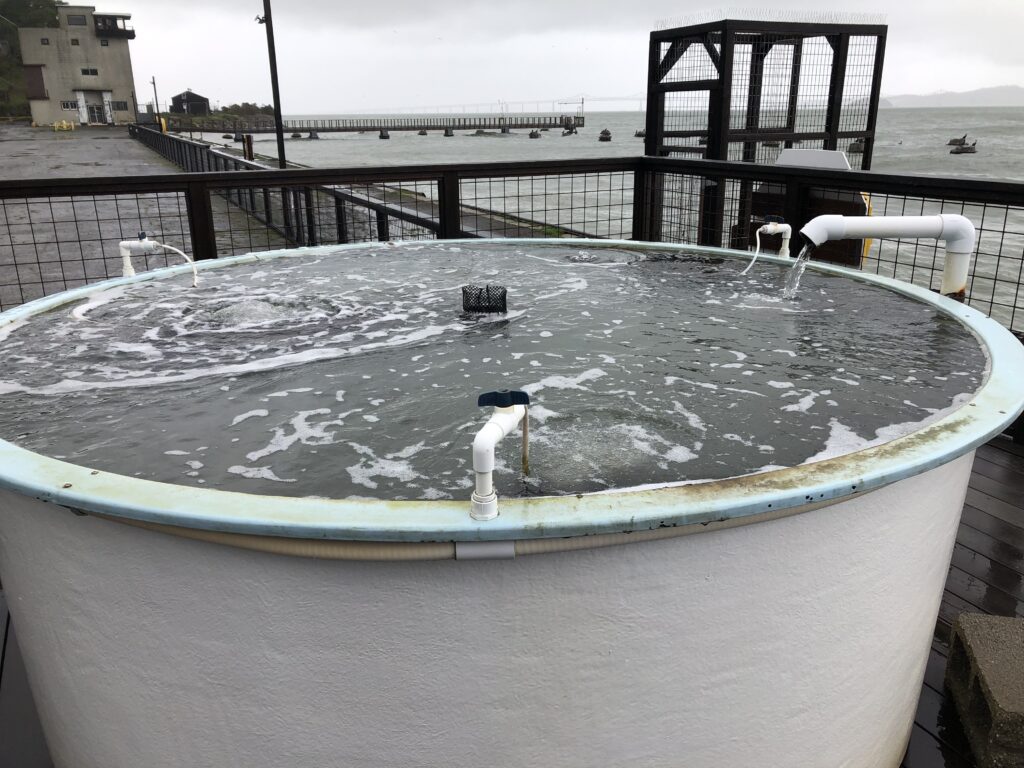
Researchers like Boyer utilize the campus's specialized facilities, including saltwater tanks, to nurture and prepare eelgrass for transplantation back into the bay.
This meticulous process ensures the health and viability of the plants, maximizing the success of restoration efforts.
The ability to maintain these delicate organisms in a controlled, natural seawater environment is a testament to the unique advantages of the Romberg Tiburon campus.
The campus has been instrumental in training a new generation of scientists and conservationists.
Many graduates have gone on to impactful careers in environmental protection agencies and conservation organizations, applying the knowledge and skills honed at Tiburon to real-world challenges.
The program has consistently produced skilled professionals ready to tackle the complex environmental issues facing the region.
Financial Pressures and the Future of Research Campuses
The potential closure of the Romberg Tiburon campus is not an isolated incident but rather a symptom of broader financial challenges facing many educational institutions, particularly within the California State University system.Declining enrollment, anticipated state budget reductions, and significant deferred maintenance needs are creating a difficult landscape for campuses across the state.
The Challenge of Financial Self-Sustainability
San Francisco State University has publicly stated that attempts to make the Romberg Tiburon campus financially self-sustaining have fallen short.This highlights a common dilemma for specialized research facilities: the high operational costs associated with maintaining unique infrastructure and specialized equipment often outweigh the revenue generated through grants and external funding alone.
Professor Boyer has been actively pursuing external funding to secure the campus's future.
However, despite her dedicated efforts and the success in raising significant grant money, university finance officials have indicated that these funds are insufficient to cover the campus's basic operational expenses.
This situation underscores the difficulty of bridging the gap between research funding and the day-to-day costs of running a facility.
The university's stance is that with limited resources, it is challenging to justify the continued allocation of funds to a facility that does not directly serve a large undergraduate student population on the main campus.
This perspective reflects a broader institutional strategy to prioritize core academic programs and direct student services amidst fiscal constraints.
Enrollment Trends and State Funding
The financial struggles of San Francisco State University are closely linked to declining enrollment figures.Between 2015 and 2024, the university experienced a significant drop in student numbers, which directly impacts tuition revenue and state funding allocations.
As part of the 23-campus California State University system, San Francisco State's enrollment figures influence its share of overall system funding.
Compounding these challenges is the proposed reduction in funding for both the California State University and University of California systems by the state government.
Such cuts can have a ripple effect, forcing campuses to make difficult decisions about program offerings, staffing, and facility maintenance.
Broader System-Wide Impacts
The situation at Romberg Tiburon is not unique.Other California State University campuses are also facing financial pressures, leading to various cost-saving measures:
- Sonoma State University: Proposed cuts to sports teams and the geology department.
- Cal State East Bay: Plans to close its downtown Oakland conference and classroom center.
- Sacramento State: Implementing significant budget reductions in its academic affairs department.
- Cal State San Marcos: Offering retirement incentives to manage its budget, despite being a growing campus.
These examples illustrate a system-wide trend of belt-tightening, where campuses are re-evaluating their operational models and resource allocation to navigate financial uncertainties.
The Legacy and Infrastructure of Romberg Tiburon
The Romberg Tiburon campus has a rich history, evolving from its origins as a U.S.Navy base to become a hub for scientific exploration.
Its unique location and historical structures contribute to its character and the challenges it faces.
A Unique Setting for Marine Research
Unlike many marine research institutions situated in pristine, remote locations, the Romberg Tiburon campus is uniquely positioned within the bustling San Francisco Bay.This "gritty" environment, as described by Boyer, presents both challenges and unparalleled opportunities for research.
The proximity to a large urban population means researchers are studying an ecosystem directly impacted by human activity.
This allows for critical investigations into pollution, habitat degradation, and the development of effective restoration strategies for a heavily utilized waterway.
The campus provides a living laboratory for understanding the complex interplay between human development and ecological health.
Historical Structures and Deferred Maintenance
The campus comprises a mix of historical buildings, including former barracks and a converted warehouse that now serves as Delta Hall, the primary research facility.These structures, remnants of the site's past lives as a Navy base, coaling station, and nautical training school, require significant investment for modernization and upkeep.
San Francisco State University estimates that approximately $4 million in critical safety repairs are needed at the Romberg Tiburon campus.
This figure represents a fraction of the estimated $8 billion in deferred maintenance across the entire California State University system, highlighting the immense infrastructure challenges facing public higher education.
Past Redevelopment Ambitions
In the past, San Francisco State University had ambitious plans for redeveloping the Romberg Tiburon campus.Blueprints from 2019 envisioned a revitalized facility that could enhance the university's social justice initiatives, incorporating new housing, academic spaces, and refurbished existing structures.
These redevelopment plans, however, were contingent on private investment or partnerships.
The university has also explored alternative solutions, such as returning the site to the federal government or finding other academic institutions to assume stewardship of the campus.
These explorations underscore the ongoing search for viable pathways to preserve the campus's research capabilities.
The Human Element: Researchers, Students, and Livelihoods
Beyond the financial figures and infrastructure concerns, the potential closure of the Romberg Tiburon campus has a profound impact on the individuals who dedicate their careers and academic pursuits to this unique research environment.Faculty and Student Transitions
San Francisco State University has stated its intention to offer all Estuary and Ocean Science faculty the opportunity to relocate to the main campus.However, the availability of adequate lab space on the main campus is limited.
This transition may primarily benefit tenured faculty, potentially leaving non-tenured faculty in a precarious position, impacting their research and the graduate students they mentor.
The uncertainty surrounding lab space and research continuity poses significant challenges for graduate students.
Their academic progress, thesis research, and future career prospects are directly tied to the resources and environment provided by the Romberg Tiburon campus.
The disruption could effectively leave many students "homeless" in terms of their research endeavors.
The Value of Expertise and Experience
The expertise cultivated at the Romberg Tiburon campus is invaluable.Researchers like Katharyn Boyer and her colleagues possess deep knowledge of the San Francisco Bay ecosystem, developed through years of dedicated fieldwork and study.
Losing this institutional memory and practical experience would be a significant blow to regional conservation efforts.
Marilyn Latta, a project manager at the California State Coastal Conservancy, emphasizes the irreplaceable nature of the skills and knowledge gained at such a specialized facility.
The hands-on work required for marine science—early mornings, wetsuits, boat access—is best suited for a dedicated shoreline campus like Romberg Tiburon.
The loss of this expertise would mean that "you can't just rebuild it."
Conclusion: A Call for Innovative Solutions
The potential closure of San Francisco State University's Romberg Tiburon campus represents a critical moment for marine science education and environmental stewardship in the San Francisco Bay region.The campus, a vital center for research on critical issues like eelgrass restoration and climate change adaptation, faces an uncertain future due to declining enrollment and significant financial pressures.
The challenges faced by Romberg Tiburon are indicative of broader trends impacting higher education and research institutions across the country.
The struggle to balance operational costs with research funding, coupled with the need for substantial infrastructure investment, creates a difficult environment for specialized facilities.
The dedicated efforts of researchers like Katharyn Boyer to secure external funding highlight the passion and commitment driving these vital scientific endeavors.
Moving forward, innovative solutions are urgently needed.
This could involve exploring new models of public-private partnerships, seeking philanthropic support from a wider base, or fostering collaborations with other institutions to share resources and expertise.
The preservation of the Romberg Tiburon campus is not just about saving a building; it's about safeguarding invaluable research capabilities, nurturing the next generation of environmental scientists, and protecting the ecological health of San Francisco Bay for years to come.
The community's recognition of the campus's value, as expressed by Boyer, underscores the importance of finding a way to keep this critical research hub alive.



 Explore AI Teaching Tools
Comments (0)
Please login to comment
No comments yet
Be the first to comment on this article