
A Second Chance Academy: How One North Carolina School is Redefining Success for Disconnected Students
In the heart of Raleigh, North Carolina, a unique school is quietly rewriting the narrative for students who have fallen through the cracks of traditional education. Central Wake High School, a public charter institution, isn't just about earning credits; it's about rebuilding confidence, fostering resilience, and offering a genuine pathway to a brighter future for those who need it most.
A Welcoming Harbor in a Stormy Sea
The moment students step through the doors of Central Wake, they are met not with the sterile formality of a large institution, but with a palpable sense of care and connection. Staff members greet them by name, a teacher secures their phones to ensure focus, and belongings are placed in baskets before they pass through a security checkpoint, a guard and school resource officer a reassuring presence.
Executive Principal Thomas Hanley II, a constant, smiling presence, embodies the school's ethos. His warm "Good morning!" often punctuated by individual student names, sets a tone of personal investment. On a typical September morning, the air hums with upbeat salsa music, a stark contrast to the anxieties many students carry.
Family Support Specialist Bria Coleman and her intern are on high alert, scanning for any signs of distress. "I try to identify any student that may come in upset and take them to our office to assess what’s going on, navigate, and help them calm down before going to class," Coleman explains. This proactive approach ensures that emotional well-being is addressed before academic engagement can even begin.
The departure is as deliberate as the arrival. Students are dismissed one classroom at a time, a practice that minimizes congestion and allows for a final moment of individual attention. As they collect their phones, staff members line the hallway, offering words of encouragement: "I’m proud of you." "Be careful out there." "Make good decisions." The recurring phrase, "See y’all tomorrow," is more than a farewell; it's a promise of continued support and an expectation of return.
A New Modality for Learning
Central Wake High School is a beacon for students who have either dropped out of high school or are teetering on the brink. It's part of the Second Mile Education network, a group of 27 schools dedicated to providing a personalized educational experience. These schools operate in North Carolina, Florida, and Georgia, with ambitions to expand further.
The school's condensed four-hour instructional day and self-paced curriculum are specifically designed for students who found the traditional comprehensive high school model unworkable. Many arrive at Central Wake because they are struggling academically or have significant attendance issues. Hanley notes that some students face challenges stemming from transient family situations, caregiving responsibilities for younger siblings or their own children, or the lingering mental health impacts of the post-COVID era, including anxiety and depression.
"Oftentimes these students just need a change in environment," Hanley states. "They need a change in the modality in which they learn. Sitting in a classroom, passing classes every 55 minutes for seven-and-a-half hours might not be the best for them." This recognition of diverse learning needs is central to the school's success.
As a Title I school, approximately 85 percent of Central Wake's students come from low-income families. The school's commitment to providing robust academic support and comprehensive wraparound services empowers these students to envision a viable path forward. "We’re making what they thought was impossible possible," Hanley asserts, highlighting the transformative impact of their approach.
Flexibility Meets Rigor: A Unique Educational Framework
North Carolina's adoption of an alternative accountability model has been instrumental in granting schools like Central Wake the flexibility needed to innovate. Instead of relying solely on standardized test scores, administrators set annual goals focused on growth in math and reading, credit-earning rates, GPA improvements, and overall student satisfaction. Central Wake has consistently earned "highly effective" ratings for its success in re-engaging students who have become disconnected from their education.
The flexibility extends to the very structure of the school day. Students can choose from three distinct four-hour sessions: 7:30 a.m. to 11:30 a.m., noon to 4 p.m., or 3 p.m. to 7 p.m. This adaptability is crucial for students juggling work, childcare, or other significant responsibilities. If a student misses their scheduled session, they can attend a different one, ensuring that life's inevitable disruptions don't derail their educational progress.
"Flexibility is our secret sauce," Hanley declares, noting the addition of the late afternoon session in response to growing student demand. This responsiveness underscores the school's commitment to meeting students where they are.
While the timing of completion is flexible, the academic standards are not. Students progress at their own pace, advancing as they demonstrate mastery of course material. "We’re not flexible on the standard that it takes to master a course," Hanley emphasizes. "But we’re flexible on the time that it would take to complete." This dual approach ensures that students are both supported and challenged to meet rigorous academic expectations.
A Day at Central Wake: Personalized Learning in Action
Students arrive at Central Wake via various means – car, bus, or ride-share – to an office park setting in South Raleigh. Once inside, they settle into a dedicated classroom, each equipped with computer workstations running an online curriculum. A dashboard visually tracks their progress toward the 22 credits required for graduation.
Each classroom is staffed by a teacher who acts less as a lecturer and more as an individual tutor. "I’m less a teacher to 25 and more a tutor to 25 individuals," says Robert Carr, a social studies teacher. He circulates, offering assistance, checking in on students, and providing printed worksheets when needed. When skill gaps are identified, interventionists specializing in math, reading, or special education step in, either within the classroom or through one-on-one pull-out sessions.
The school employs a blended learning approach, combining online instruction with targeted small-group interventions. Teachers meticulously analyze student data, collaborate with students to set learning goals, and monitor their progress. This system fosters a sense of ownership and builds confidence as students take charge of their own educational journey.
Eighteen-year-old Wesley Delaremore-Allen, who found it difficult to focus and attend regularly at a larger high school, thrives at Central Wake. "It’s cool. It kind of feels like freedom," he says, appreciating the ability to work at his own pace. He's even attending all three daily sessions to accelerate his graduation and pursue a college degree in marketing.
Jayden Stephens, another student who struggled with focus and the lack of structure at his previous school, entered Central Wake in March 2025. By the fall, he had accumulated enough credits to be considered a senior. "There are no distractions. It’s just you and the work," Stephens notes, aspiring to become a barber. His mother, Lakia Stephens, expresses gratitude for the school's supportive environment and the strong teacher-student connections, particularly appreciating the recent addition of a parent orientation that has improved communication.
Individual Attention: The Cornerstone of Support
Word-of-mouth, recommendations from counselors, and personal connections are how most students discover Central Wake. The school operates on a rolling admission basis, with students entering and graduating throughout the year as they complete their credit requirements. The duration of their stay varies, but on average, students spend about three semesters at the school, often enrolling two or more years behind in credits and significantly below grade level academically.
The orientation process is designed to be both informative and inspiring. It begins with an uplifting video of past graduations, followed by a presentation on school rules and expectations by Orientation and Attendance Specialist Mark Waller. Strict policies are in place, including a ban on phones during the school day and zero tolerance for fighting or disrespect, which some students find challenging but ultimately appreciate for the sense of safety it provides.
Attendance is paramount, with an expected 85 percent rate. Staff members diligently follow up on absences, employing a multi-pronged approach that includes phone calls, letters, parent meetings, and even home visits if necessary, all aimed at addressing underlying obstacles like transportation or housing insecurity.
Students undergo brief academic assessments upon entry and every 90 days thereafter to track skill development. Graduation Coach Javon Fluker plays a critical role, meeting individually with each student to establish short-term and long-term goals. He challenges unrealistic expectations, guiding students toward a realistic understanding of the effort required for success.
"I tell students all the time, your pay is typically directly aligned to the quality of education that you have and the expertise that you have," Fluker advises, emphasizing the long-term value of education.
Reading Specialist Sha Campbell sparks students' imagination with a daily "question of the day," prompting them to consider their strengths and aspirations. These exercises, displayed on classroom walls, serve as powerful reminders of their potential and provide valuable direction for career coaches in developing tailored programs.
"I’m trying to get them to realize that the things they love and care about are going to translate into a career," Campbell says, noting how these conversations open new doors and boost motivation.
Teachers at Central Wake often become mentors, providing the crucial support of a caring adult. "Our students have been kind of bumped and bruised and jaded, so it’s important they find their person," Hanley remarks. Brooke Defreese, a June 2025 graduate, recalls teachers’ unwavering encouragement: "You got this!" She found the smaller setting helped ease her social anxiety and appreciated the school's refusal to let students give up.
The impact of this supportive environment is profound. Defreese, now enrolled in community college to study forensic science, recently visited her former teachers, expressing how much she missed them. "That’s the kind of school they are," she says, highlighting the lasting bonds formed.
Cultivating a Culture of Belief
Hanley actively seeks educators who possess the unique ability to re-engage students who haven't thrived in traditional settings. Many Central Wake teachers bring prior experience from alternative education, credit recovery, or at-risk student programs. New hires undergo an onboarding process that immerses them in the Second Mile model, its culture of belonging, and its instructional expectations. Ongoing professional development, including job coaching and monthly learning communities, ensures teachers remain equipped and inspired.
"At Central Wake, the curriculum matters, but the people make it work," Hanley asserts. "The throughline is simple: clear goals, steady coaching, and a team that refuses to give up on kids." This unwavering commitment is evident in the school's comprehensive wraparound services. Coleman and her team provide crisis intervention, grief counseling, and wellness programs, addressing the multifaceted needs of their student population.
Partnerships with local food banks ensure families have access to groceries and students receive healthy snacks throughout the day. Across the Second Mile network, an impressive 95 percent of students utilize these family support services, demonstrating their critical importance.
Beyond Traditional Metrics: Redefining Educational Success
Angela Whitford-Narine, CEO of Second Mile Education, emphasizes that education cannot be a one-size-fits-all endeavor. She describes the network's campuses as "nontraditional learning environments" meticulously designed to meet students at their individual starting points with customized approaches.
For schools serving highly mobile and credit-deficient populations, Whitford-Narine argues for tailored evaluation methods that extend beyond traditional graduation rates. "When you meet education leaders that are reasonable and recognize that even our accountability systems can’t be one-size-fits-all, then you can have some meaningful conversations around what defines quality in a school like this," she states.
As states refine their accountability systems, alternative schools face the challenge of proposing alternative metrics. Jim Griffin of Momentum Strategy & Research, who has tracked alternative school policies for years, notes that states with a higher prevalence of schools for struggling students tend to have more flexible accountability frameworks. He points out that traditional accountability systems are not designed for populations with a uniform distribution of student performance types, making alternative metrics essential for accurately reflecting the growth and success of these unique institutions.
North Carolina's legislative efforts, including a pilot program for dropout prevention and credit recovery, have paved the way for alternative accountability models. This has allowed schools like Central Wake to be recognized and evaluated differently, moving beyond the limitations of traditional grading systems.
Under North Carolina's "Option C" framework, schools like Central Wake design their own accountability plans, setting specific goals tailored to their student population. This approach allows for a more authentic measure of success, focusing on whether schools are fulfilling their unique missions. Curtis Sonneman, acting director of the Office of Accountability at DPI, explains that this system is designed for continuous improvement, allowing schools to adapt to the evolving needs of their students.
"At the end of the day, it’s a self-evaluation tool for them," Sonneman says. "Over time, you will see that targets go up and down. . . . There’s a lot of variability in who’s coming and for what reasons. Letting [schools] set their targets and be self-reflective allows them to meet the needs of the kids that they’re serving."
Measuring What Matters: Central Wake's Accountability Framework
Central Wake's accountability plan has evolved to encompass a comprehensive set of measures, reflecting a shift from a sole focus on credit recovery to a broader assessment of academic knowledge, career technical education, and workplace readiness. For the 2024–25 school year, their plan included seven key measures:
- Achievement: Percentage of students meeting grade-level standards on state end-of-course exams in math or English.
- Reading Growth: Percentage of students attending one semester or longer who demonstrated growth on an adaptive reading program measuring comprehension and fluency.
- Math Growth: Percentage showing growth on a diagnostic assessment measuring math skills.
- Increased Credit-Earning Rate: Percentage of students who increased their rate of earning credits by at least one credit per semester compared to their prior schools.
- Industry Certification: Percentage of students completing a career and technical education course and earning certification.
- Improved GPA: Percentage improving their Grade Point Average by at least 0.5 points.
- Student Satisfaction: Percentage responding "agree" or "strongly agree" that the school provides a high-quality education.
Central Wake has consistently exceeded its targets in most categories, with 96 percent of students reporting satisfaction with the quality of education over the past three years. While the school fell short of its achievement target in math for 2024–25, administrators have responded by strengthening instructional support with dedicated math tutors and interventionists.
The state does not impose penalties for missed targets, but reports are made public, ensuring accountability to parents, boards, and stakeholders. The state charter school review board also examines achievement data during the renewal process, providing an additional layer of oversight.
Across the Second Mile network, schools have demonstrated remarkable success. In 2024–25, 96 percent of schools earned the highest possible rating under their respective state alternative accountability frameworks. Students more than double their rate of credit earning after enrollment, and a significant majority improve their reading level within a single semester.
Pathways to Postsecondary Success
Beyond earning a diploma, Central Wake is dedicated to helping students forge individual postsecondary plans, whether that involves community college, university, military service, or entering the workforce. The school has expanded its offerings to include career technical education (CTE) courses in areas like culinary arts, carpentry, health science, and welding. A dual-enrollment program with Wake Technical Community College provides opportunities for industry-based certifications.
In the 2024–25 school year, students earned 95 CTE credits and 24 certifications. The school has set a goal for 50 percent of students in CTE courses to earn industry certification, a target that 37 percent achieved, representing substantial progress for a new initiative.
An advisory board comprising external partners from businesses and the community college meets monthly to strategize on supporting students as they explore career pathways. Throughout the year, Central Wake hosts representatives from colleges, businesses, and the military to introduce students to diverse career options.
Quenia Ruiz, a 21-year-old student on track to graduate, exemplifies the school's impact. After dropping out of high school twice, she found Central Wake's half-day schedule ideal for balancing school, childcare, and a part-time job. "The school is great for young moms and people who are working," Ruiz states. "More schools should be like this one. It would decrease the number of dropouts." Her ambition is to become a middle school teacher, breaking a cycle of limited career opportunities in her community and making her young son proud.
Many Central Wake students are the first in their families to pursue higher education. The school actively supports them through information sessions on financial aid and college campus visits. A college tour to Charlotte resulted in many students applying, being accepted on the spot, and receiving scholarship offers.
"When they started speaking with the recruiters and got a chance to really have exposure to that environment, they were like, ‘Wait a minute. I do have something of value, and people do see something in me. Maybe college is a feasible thing,'" Hanley reflects, underscoring the importance of exposure and belief.
Alumni are invited back to share their success stories, further inspiring current students. In the 2024–25 school year, 81 percent of Second Mile high school graduates planned to pursue college or technical school, with a significant majority enrolling in such programs after graduation.
Celebrating Milestones, Embracing the Future
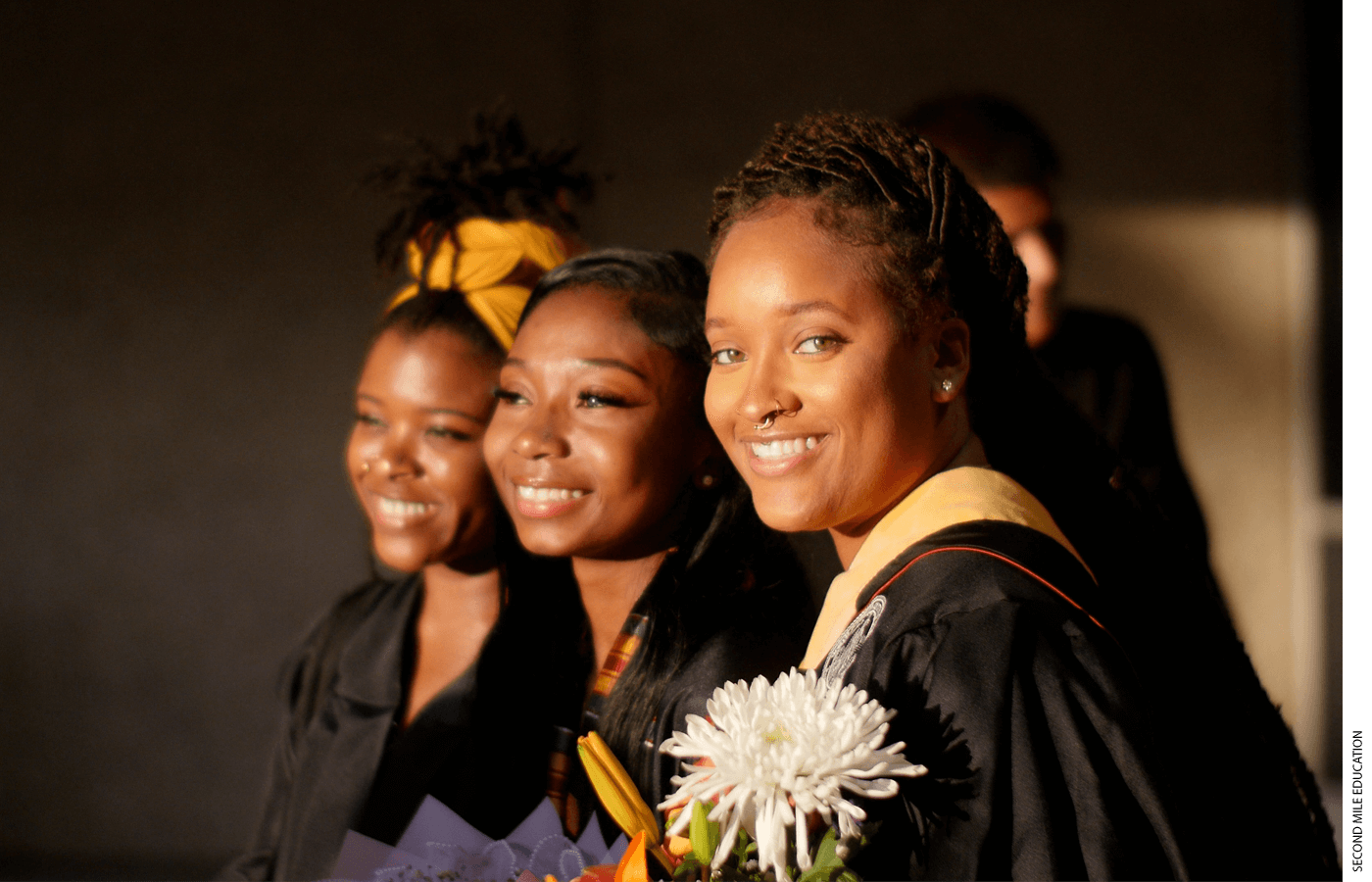
Each day at Central Wake concludes with announcements featuring an inspirational thought or new vocabulary word, culminating in the school's slogan: "Rise and thrive!" The playing of "Pomp and Circumstance" for each graduating student has become a cherished tradition, a testament to the individual journeys of accomplishment. In 2024–25, the march was played 94 times, with plans to increase that number in the coming year.





 Explore AI Teaching Tools
Comments (0)
Please login to comment
No comments yet
Be the first to comment on this article