
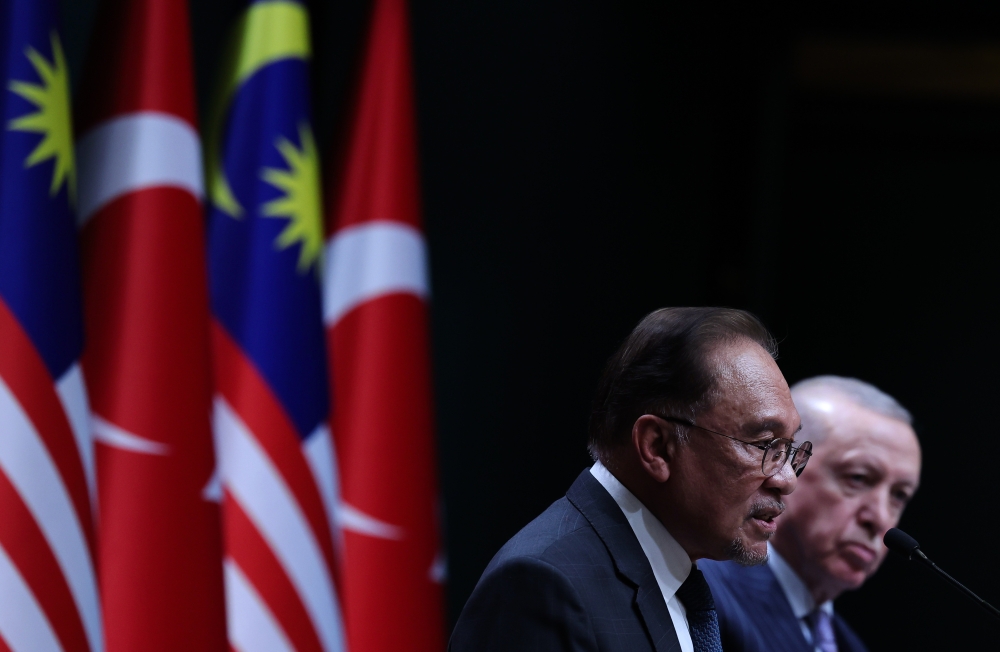
Malaysia-Turkiye Defence Ties: Beyond Deals to a Strategic Blueprint for Local Industry Growth
In a rapidly shifting global security landscape, Malaysia and Turkiye are urged to transcend transactional defence procurement and forge a deeper, strategic alliance. This evolution, experts suggest, is crucial for unlocking the full potential of Malaysia's nascent defence and aerospace sector, fostering local capabilities, and building long-term resilience.
A Call for Strategic Alignment
Dr. Kogila Balakrishnan, Director of Policy and Engagement, Business Development (South-east Asia) at the Warwick Manufacturing Group, University of Warwick, argues for a fundamental reframing of the bilateral relationship. She posits that the current focus on individual deals needs to give way to a comprehensive strategic partnership.
This elevated engagement should be anchored in shared defence policy objectives, alignment in foreign policy, and a unified industrial strategy. Such a shift, she believes, will create a more robust and mutually beneficial framework for cooperation.
Deepening the Defence Dialogue
With Malaysia already standing as Turkiye’s seventh-largest defence partner globally and its longest-standing in South-east Asia, the foundation for deeper collaboration is firmly in place. Dr. Balakrishnan highlights the imperative to expand this partnership beyond mere acquisition.
The inclusion of joint training programmes and robust research and development (R&D) initiatives is essential to significantly bolster Malaysia's defence capabilities. This is particularly pertinent given the volatile security environment in West Asia, which underscores the need for enhanced regional defence cooperation.
Integrating Policy and Industry
Malaysia's defence and foreign policy must be intrinsically linked with its industrial strategy, particularly in collaboration with Turkiye. Dr. Balakrishnan emphasizes a coherent approach to localisation, ensuring that technology transfer and industrial development benefit the Malaysian economy.
This strategic integration should also thoughtfully consider offset arrangements, which can serve as a powerful mechanism for knowledge transfer and capacity building within the local defence ecosystem.
A Blueprint for Progress
To achieve this strategic vision, Dr. Balakrishnan advocates for a systematic, "bigger systems" approach. This begins with clear strategic direction set at the governmental level, followed by structured knowledge exchange between defence institutions, research bodies, and academic circles in both nations.
This structured exchange can pave the way for the development of joint training programmes, collaborative R&D projects, and the establishment of centres of excellence. The ultimate goal is to cultivate expertise in critical areas such as systems integration, programme management, and advanced defence technology.
Nurturing the Industrial Engine
Crucially, the partnership must prioritize the commercialization and industrial growth aspects. Dr. Balakrishnan stresses that the approach should not be merely transactional, but guided by a broader, long-term systems perspective that benefits both nations.
Malaysia's National Defence Industry Policy
The recent launch of Malaysia's National Defence Industry Policy (NDIP) signals a significant step towards reducing external dependence and fostering a self-reliant defence sector. This long-term strategic plan aims to build a sustainable and resilient local industry, a move welcomed by many.
The policy acknowledges the complex and uncertain global security landscape, recognizing the need to enhance national defence capabilities through a robust domestic industry. This proactive stance is crucial for navigating future challenges.
Key Reforms and Implementation Gaps
The NDIP outlines several key reforms, including a minimum local content requirement of 30 per cent for defence procurements. Furthermore, it mandates that maintenance, repair, and overhaul (MRO) activities be conducted by local companies, with exceptions only during the warranty period.
While the policy's timing is opportune given regional geopolitical uncertainties, Dr. Balakrishnan points to potential gaps. These include the implementation structure, the commitment to defence expenditure, and clarity on capability articulation. Such clarity is vital, as capabilities directly translate into procurement-driven initiatives.
Leveraging Local Strengths
Dr. Balakrishnan suggests that while achieving the 30 per cent local content target will be a phased process, Malaysia can strategically leverage its existing strengths. Areas like MRO and semiconductor expertise offer significant opportunities to position the country as a regional hub for Turkish aircraft in South-east Asia.
This symbiotic relationship could see Malaysia becoming a vital node in the regional supply chain, enhancing its industrial base while supporting Turkiye's defence manufacturing ambitions.
Current Procurement Landscape and Future Potential
Malaysia's current defence procurements from Turkiye include armoured vehicles, drones, and naval vessels, with a growing emphasis on surveillance and maritime platforms. There is also potential for future expansion into areas like fighter aircraft, reflecting a deepening trust and collaboration.
The broader defence market in South-east Asia is experiencing significant growth, with defence spending rising substantially. While established players from the United States and Europe, along with South Korean firms, currently dominate, Turkish defence companies are increasingly recognized as key emerging players poised to expand their market share.
The strategic alignment between Malaysia and Turkiye, moving beyond transactional deals to a collaborative industrial and policy framework, holds immense promise for strengthening regional security and fostering significant local economic development.







 Explore AI Teaching Tools
Comments (0)
Please login to comment
No comments yet
Be the first to comment on this article