
Digital Alchemy: How One Blog Masters 200K Monthly Visitors with a Bespoke Notion System
Imagine a digital hub humming with activity, drawing over 200,000 unique visitors every single month. For one long-standing educational blog, this isn't a distant dream but a daily reality. The question isn't just *how* they achieve this scale, but *how* they sustain it with consistent, high-quality content production. Their secret weapon? A meticulously crafted, highly customized system built within Notion, a powerful workspace tool.
This isn't just about using a tool; it's about a strategic evolution of process. Over the years, the team has navigated through various project management platforms, from Trello to Asana and Todoist. Yet, since 2021, their adoption of Notion has marked a significant leap forward, transforming their content workflow into a finely tuned engine.
From Spark to Publication: The Content Lifecycle in Notion
The journey of a successful article begins long before the first word is typed. It starts with a fertile ground for ideas, nurtured and then systematically guided through every stage of creation. This article will delve into how this team leverages Notion to not only generate captivating article topics but also to meticulously research, write, edit, and manage post-publication tasks, ensuring a seamless flow of engaging content.
Cultivating the Seed of an Idea
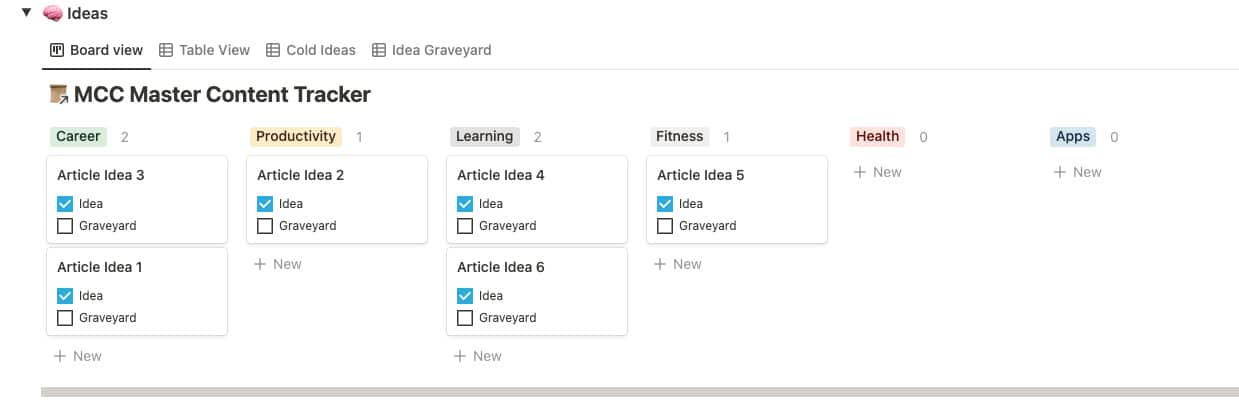
The genesis of every new article lies in a dedicated brainstorming process. Towards the close of each month, a crucial meeting takes place to explore and capture potential article topics. These promising ideas are immediately logged within the "Ideas" section of their team's Notion workspace.
This central repository isn't limited to meeting outputs. Any individual inspiration or emerging topic that surfaces outside of scheduled discussions is also funneled into this same area. This ensures a continuous stream of potential content is always at their fingertips.
Once a pool of ideas is gathered, the next critical step involves refining them. This isn't a haphazard selection; it's a strategic decision-making process. The team employs a dual approach, combining rigorous keyword research with a keen understanding of their audience's needs and interests.
This data-informed intuition allows them to identify topics that not only resonate with readers but also possess strong potential for organic discovery. With the month's content calendar taking shape, the focus shifts to the detailed planning and execution of each chosen article.
Mapping the Course: Planning and Setting the Pace
With the editorial direction firmly established, the selected article topics undergo a significant transition within the Notion workspace. Each promising idea, represented as a distinct card, is moved from the "Ideas" section to a dedicated "Planned" area.
This organizational move signifies a commitment to the topic and initiates the detailed setup for its creation. Within each article's card, a pre-defined "CIG Article" template is applied. This template acts as a structural blueprint, automatically generating essential sections designed to streamline the subsequent stages of content development.
Key among these automated sections are dedicated spaces for in-depth research and a comprehensive list of tasks specifically tied to the article's production. This templated approach ensures consistency and prevents crucial steps from being overlooked.
Following the application of the template, the next pivotal step involves assigning a publication date. This date serves as the ultimate deadline, a fixed point around which all subsequent tasks and timelines will be meticulously organized. It injects a sense of urgency and provides a clear target for the entire team.
Once the publication date is locked in, the process moves towards assembling the necessary resources and assigning responsibilities. This involves identifying and delegating the specific tasks required to bring the article to fruition, ensuring that every contributor understands their role and timeline.
The Collaborative Weave: Assigning and Orchestrating Tasks
Every article published is designed to extend its reach beyond the blog itself, with dedicated social media promotion on platforms like Twitter and Pinterest. However, before these posts can go live, a crucial visual element is required: compelling share images.
This is where the design team steps in, and their involvement is seamlessly integrated into the Notion workflow. To inform the designer about the specific share images needed for each article, a task titled "Create share images" is meticulously assigned within the Notion system.
Leveraging the pre-built "Tasks" section within the article template, this assignment process is remarkably efficient. It involves simply naming the task, setting a clear due date that aligns with the article's publication schedule, and assigning it to the designated designer.
Simultaneously, the content manager assigns themselves a corresponding task: to handle the social media sharing once the article is published and the visuals are ready. This parallel assignment ensures that both content creation and promotional assets are being managed concurrently.
The resulting view within Notion provides a clear, at-a-glance overview of all assigned tasks, their deadlines, and responsible parties. This transparency is vital for maintaining momentum and ensuring that all components of the content promotion strategy are on track, preventing any potential bottlenecks.
With the foundational tasks for each article clearly defined and assigned, the team can now transition to the most intensive phase of the content lifecycle: the in-depth research, meticulous writing, and careful editing that form the core of article creation.
Navigating the Creative Currents: Research, Writing, and Editing in Notion
Each Monday morning, the content manager initiates their weekly review of the Notion workspace. The primary focus is to identify the article slated for publication at the end of that week. Once located, its card is strategically moved to the "Research" column, signaling the commencement of its active development phase.
The research phase is typically a multi-day endeavor, its duration often dictated by the complexity and technical nature of the article's subject matter. During this period, all gathered information, insights, and relevant data are meticulously documented within the "Research/Outline" section of the article's card in Notion.
This includes not only factual notes and key points intended for the article but also crucial data derived from keyword research, ensuring that the content is both informative and optimized for search engines. This centralized note-taking process prevents information silos and ensures all relevant details are easily accessible.
Upon the successful completion of the research phase, the article's card undergoes another transition, moving into the "Writing" column. This signifies the shift from information gathering to content creation, where the gathered research is transformed into engaging prose. This writing process typically spans an additional couple of days.
Once the initial draft is complete, the article card is advanced to the "Editing" column. While the content manager handles the editing themselves, this column serves a vital purpose as a personal reference point. It provides a clear visual indicator of the article's current status in the production pipeline.
For a team managing multiple writers, this "Editing" column would offer immediate visibility into which articles are awaiting review. This allows for efficient allocation of editing resources and ensures a smooth workflow without the need for constant email or instant messaging exchanges. Tracking progress in this manner also provides managers with an effortless way to monitor project status.
With the edits finalized and the article polished to perfection, the next step is its official publication. Immediately after the article goes live, a critical piece of information is captured: the URL of the published article is pasted directly into the designated URL field within its Notion card. This creates a direct link for future reference and tracking.
This action marks the completion of the core content creation process and signals the transition to the final set of essential post-publication tasks, ensuring the article achieves its maximum impact.
Extending the Reach: Post-Publish Tasks and Archiving
Upon publication, the article's card is moved to the "Post-Publish Checklist" column. This signifies the initiation of the final steps designed to amplify the article's visibility and engagement. Unlike the more extensive checklists associated with other content formats, the post-publish tasks for articles are concise and focused.
These tasks primarily revolve around the two key promotional activities previously assigned: the creation of share images and the actual sharing of the article across social media channels. This streamlined approach ensures that the promotional efforts are efficient and targeted.
Once the designer completes the share images, they are uploaded to a shared cloud storage service. The content manager then downloads these visuals, uploads them to a social media scheduling tool, and proceeds to share the article on platforms like Twitter and Pinterest. This coordinated effort ensures the article reaches its intended audience across multiple touchpoints.
Finally, with all creation and promotional tasks successfully completed, the article's card is moved to the "Completed" column. This action serves as a final organizational step, archiving all associated information and data related to the article in a separate, designated area within the team's Notion workspace.
This systematic archiving ensures that past content remains easily accessible for future reference, analysis, or repurposing, without cluttering the active production boards. This entire process is then repeated week after week, creating a predictable and highly effective content production cycle that continues until the next brainstorming phase commences with the start of a new month.
The ability to manage such a high volume of content with consistent quality is a testament to the power of a well-defined and adaptable system. By leveraging Notion's flexibility and customization capabilities, this team has not only streamlined their workflow but has also built a robust framework for sustained growth and engagement in the competitive digital landscape.






 Explore AI Teaching Tools
Comments (0)
Please login to comment
No comments yet
Be the first to comment on this article