
Global Talent Drain: U.S. Universities Brace for Budget Shocks as International Enrollment Plummets
A stark reality is unfolding across American campuses: the once-reliable influx of international students, a vital financial engine for many universities, is sputtering. This decline is not just a statistical blip; it's a looming crisis forcing difficult choices, from program eliminations to tuition hikes, that will directly impact domestic students.
The Unseen Subsidy: How International Students Bolster University Finances
For years, international students have quietly subsidized the American higher education system. They often pay full tuition, a significant revenue stream that helps universities balance budgets, fund essential services, and even keep costs lower for their American counterparts. This financial contribution is particularly crucial at institutions heavily reliant on this demographic.
Consider the University of North Texas, where a significant drop in expected international student enrollment last fall created a $45 million deficit. President Harrison Keller described the situation as a "hell of a time to become a college president," highlighting the immediate financial strain caused by nearly 2,800 fewer students from abroad than anticipated.
This isn't an isolated incident. Federal figures reveal a continuing downward trend in international student arrivals, with notable drops in recent months compared to the previous year. This ongoing decline exacerbates budget holes, forcing universities to seek alternative revenue or implement austerity measures.
The Ripple Effect: Program Cuts and Rising Costs for Domestic Students
When the revenue from international students dwindles, the impact is felt acutely. Universities are left with a difficult choice: either increase tuition for all students or slash academic offerings and services. The University of North Texas, for instance, was compelled to eliminate 71 academic programs due to its budget shortfall.
Economists like Dick Startz of the University of California, Santa Barbara, emphasize that international students often pay significantly more than domestic students, with their tuition subsidizing financial aid for American classmates. This subsidy is now under threat, potentially leading to higher tuition fees for U.S. students.
Domenico Ferraro, an associate professor of economics at Arizona State University, notes that the financial contributions of international students are often underestimated. Research indicates that while international students represent about 6 percent of overall enrollment nationwide, they account for a disproportionately larger share of revenue, sometimes exceeding 12 percent at many universities.
A Growing Financial Strain: Universities Face Credit Risks
The sustained decline in international enrollment is not just a budgetary concern; it's becoming a significant financial stressor for universities. Bond-rating agencies are warning of potential credit risks, particularly for those institutions with a substantial international student population.
Ruth Johnston, vice president of a consulting arm for a national association of college and university business officers, acknowledges the severity of the situation. With limited revenue sources in higher education, the loss of international student tuition is a substantial blow that is difficult to absorb.
Since the beginning of 2024, hundreds of universities and colleges have reported program eliminations, departmental closures, and staff layoffs. Declining international enrollment is frequently cited as a contributing factor, alongside other financial pressures.
Examples of the Impact Across Institutions
- Northwestern University cited a projected drop in international enrollment as a reason for eliminating 425 positions, freezing hiring, and delaying building projects.
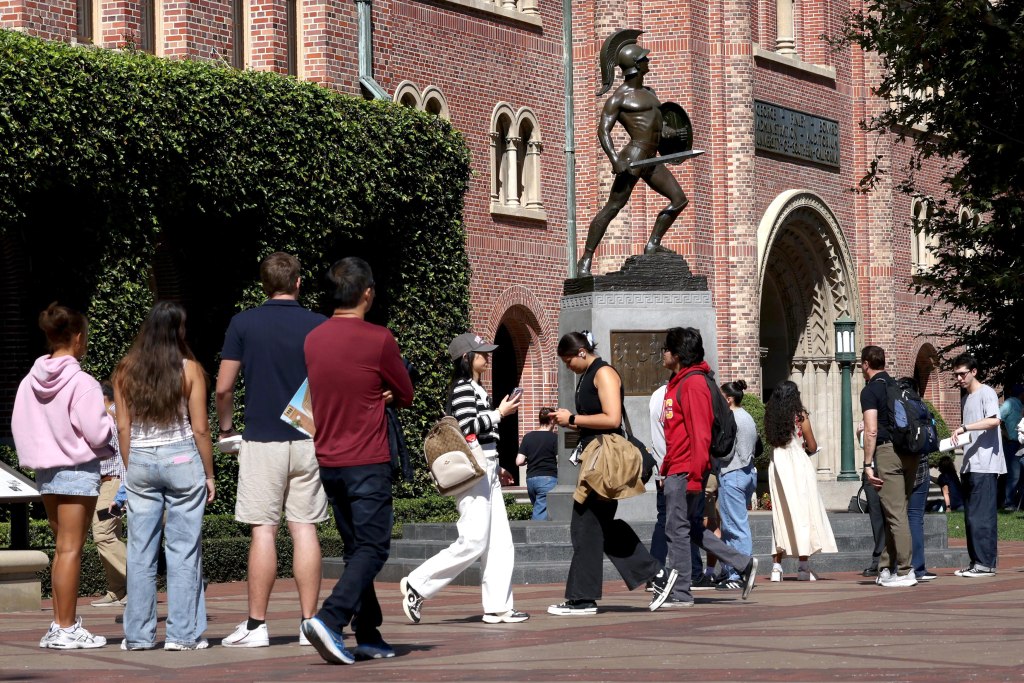
- The University of Southern California cut nearly 1,000 jobs after listing expected declines in international student numbers, with applications from this group falling by 23 percent.
- DePaul University laid off 114 employees following a 30 percent overall decrease in students from abroad, and a two-thirds drop in international graduate student enrollment.
- Boston University, Syracuse University, The New School, the University of Texas at Arlington, Niagara College, and the Stevens Institute of Technology have all reported budget cuts, deficits, or layoffs, with declining international enrollment playing a role.
Many of these institutions have also responded by increasing tuition. Syracuse University, for example, raised tuition by nearly 4 percent for the upcoming academic year, pushing the total cost of attendance to approximately $96,000 for students living on campus.
The Shifting Landscape: Competition and Policy Influence
The reliance on international students is partly a strategic response to declining domestic enrollment. Over the past decade, as the number of U.S. high school graduates choosing college has stagnated or fallen, universities increasingly looked abroad to fill seats and generate revenue. This led to a significant increase in the international student population.
For public research universities, cuts in state appropriations often correlated with increased recruitment of international students. This strategy was not solely about enrollment numbers; it was also about maintaining financial stability as American families faced rising college costs and demanded more financial aid. International students, who are more likely to pay full tuition, became a critical revenue source.
However, the international education market is increasingly competitive. Other countries are actively vying for global talent, and the U.S. share of this market has begun to shrink. This global competition, coupled with policy shifts, creates a more challenging environment for attracting international students.
Lessons from Abroad: Canada's Experience
Canada offers a cautionary tale. Facing anti-immigration sentiment and concerns about housing costs, the Canadian government implemented limits on international student numbers. This resulted in a dramatic decline of 73 percent in international enrollment.
Before these changes, international students constituted a significant portion of the student body at Canadian colleges and universities, often paying substantially higher tuition fees than their domestic counterparts. These higher fees were used to sustain services for Canadian students.
The consequence of the enrollment drop in Canada has been substantial financial losses for universities, leading to significant cuts in programs and services. While tuition for domestic students hasn't necessarily increased, the quality and breadth of their educational experience have diminished.
A Vulnerable Ecosystem: The Interconnectedness of Enrollment and Funding
The current challenges facing international enrollment in the U.S. are not occurring in a vacuum. They exacerbate existing financial vulnerabilities within the higher education sector. Universities that have become accustomed to the revenue generated by international students are now facing difficult adjustments.
The perception of value in higher education is also a factor. With a significant portion of Americans questioning the return on investment for a four-year degree, universities are under pressure to demonstrate their worth. This pressure intensifies when core academic programs are threatened by budget cuts.
The strategy of relying on international students to offset declining domestic enrollment and funding cuts has created a delicate ecosystem. Without a robust international student pipeline, many universities may struggle to maintain their current offerings and financial stability. The future of higher education, in some respects, hinges on the ability to attract and retain global talent.
Institutions with a Significant International Student Presence
Certain universities and colleges have a particularly high percentage of international students, making them more susceptible to fluctuations in global enrollment trends. These institutions often depend heavily on the revenue generated by these students to maintain their operations and academic programs.
- Longy School of Music of Bard College: 77 percent
- Brigham Young University-Hawaii: 48 percent
- New England Conservatory of Music: 39 percent
- Manhattan School of Music: 37 percent
- American Academy of Dramatic Arts-New York: 34 percent
- The New School: 34 percent
- Rhode Island School of Design: 33 percent
- School of the Art Institute of Chicago: 30 percent
- Niagara College: 30 percent
- Berklee College of Music: 29 percent
These figures underscore the deep integration of international students into the financial models of many U.S. universities. As enrollment numbers continue to shift, the strategic planning and financial resilience of these institutions will be put to the test.






 Explore AI Teaching Tools
Comments (0)
Please login to comment
No comments yet
Be the first to comment on this article