
Igniting Young Minds: How Clovis Unified is Unifying Arts Education for Preschoolers
Imagine a classroom buzzing not just with the sounds of learning, but with the vibrant echoes of creativity.
For the youngest learners in Clovis Unified School District, this isn't a far-off dream, but a tangible reality.
Leveraging crucial state arts funding, this forward-thinking district is pioneering an innovative approach to arts education, transforming preschool learning environments into immersive, interactive experiences.
This article delves into how Clovis Unified is setting a new standard for early childhood arts engagement, offering a blueprint for how other districts can unify their efforts and unlock the full potential of their students.
The Power of Play: Crafting Immersive Learning Exhibits
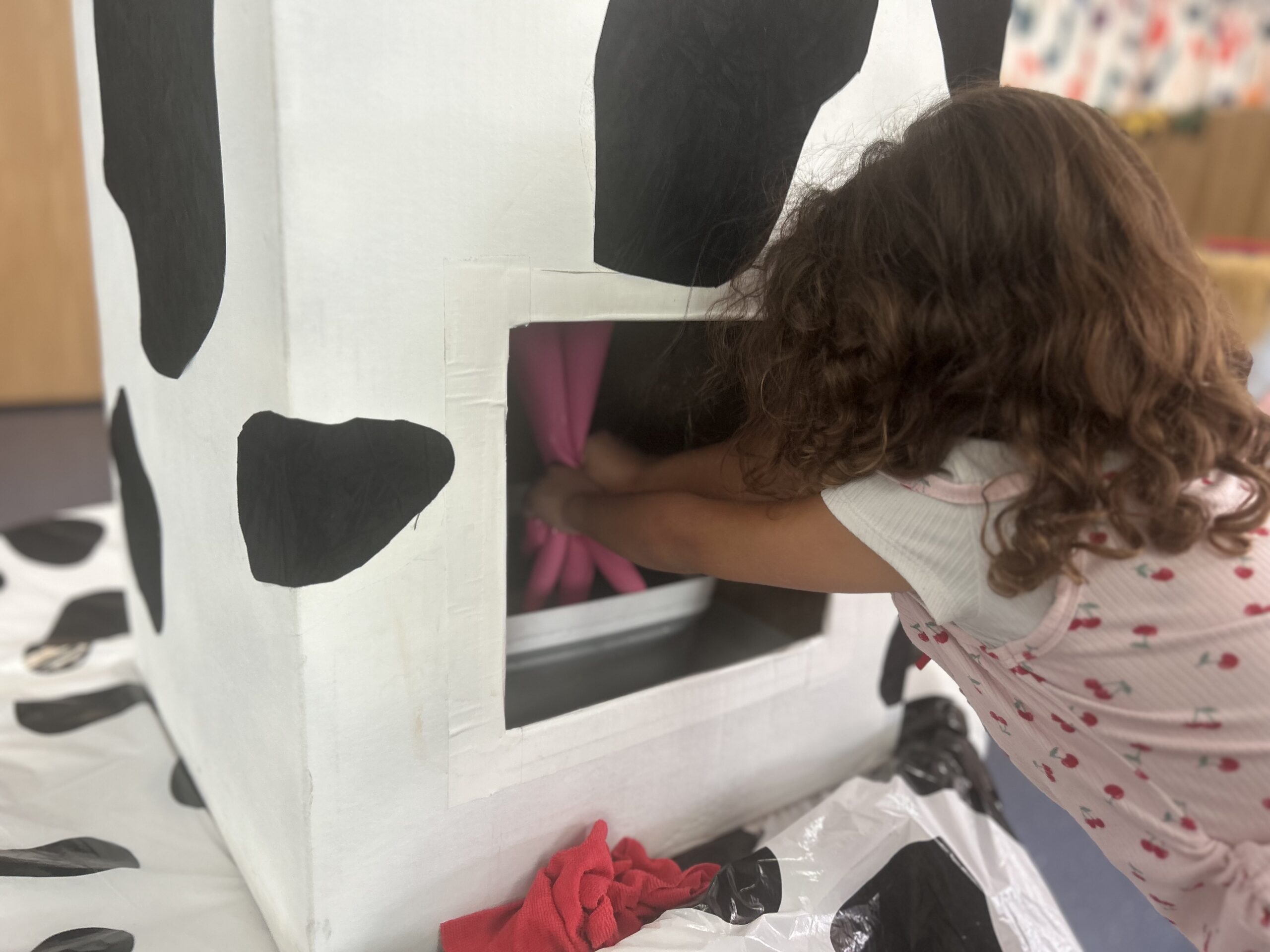
At first glance, a preschool classroom might appear to be a whimsical farm, complete with a grand red barn and the gentle sway of pretend horses.
Yet, beneath this playful surface lies a sophisticated educational strategy.
Clovis Unified has ingeniously repurposed a substantial classroom space, transforming it into a dynamic, 1,440-square-foot exhibit designed to captivate the imaginations of 3- and 4-year-olds.
This isn't just about dress-up and make-believe; it's a carefully curated environment where young students actively engage in dramatic play, a foundational element of arts education.
The air fills with the charming sounds of farm animals, fostering an auditory landscape that complements the visual and kinesthetic learning happening within.
This innovative exhibit serves as a powerful tool for early arts integration.
Children are encouraged to step into various roles – perhaps a farmer tending to a pretend market, a mechanic fixing a toy tractor, or even a curious cow.
These immersive scenarios naturally encourage storytelling, problem-solving, and collaborative play, all while exposing students to a rich tapestry of artistic expression.
The district's commitment to providing these unique opportunities underscores a deep understanding of how early exposure to the arts can profoundly impact a child's development.
Research consistently shows that engaging in dramatic play enhances language acquisition, social-emotional understanding, and cognitive flexibility.
The beauty of this approach lies in its adaptability.
What is a bustling farm exhibit today can, with a shift in theme and props, become an interstellar journey to outer space next semester.
This fluidity ensures that the learning experience remains fresh, exciting, and continually challenging for the students.
It demonstrates a commitment to creating new and engaging avenues for arts education, moving beyond traditional classroom settings to provide hands-on, memorable learning moments that resonate deeply with young children.
This strategic use of space and theme allows for a unified approach to arts education, ensuring that every child has access to these enriching experiences.
The Role of Dramatic Play in Early Arts Education
Dramatic play is far more than simple make-believe; it is a critical vehicle for developing a wide range of essential skills in preschoolers.
Within these simulated environments, children learn to:
- Develop Language and Communication Skills: By taking on roles and interacting with peers, children expand their vocabulary, practice sentence construction, and learn to express their ideas clearly.
- Enhance Social-Emotional Intelligence: Role-playing allows children to explore different emotions, perspectives, and social situations, fostering empathy, cooperation, and conflict resolution.
- Boost Cognitive Development: Pretend play encourages imaginative thinking, problem-solving, and the ability to understand abstract concepts.
Children learn to plan, strategize, and adapt their actions within the play scenario.
- Improve Motor Skills: Engaging with props, costumes, and the physical space of the exhibit helps develop both fine and gross motor skills.
- Foster Creativity and Imagination: The open-ended nature of dramatic play provides a fertile ground for children to invent stories, create characters, and explore new possibilities without limitations.
Clovis Unified's exhibits are meticulously designed to maximize these benefits, providing a rich environment where these skills can flourish organically.
The district's dedication to integrating arts into the core of preschool learning is a testament to its belief in the transformative power of early arts exposure.
Unlocking Potential: The Impact of State Arts Funding
The remarkable initiatives seen in Clovis Unified are made possible through the strategic allocation of state arts funding, specifically through California's Proposition 28.
This landmark legislation, the Arts and Music in Schools — Funding Guarantee and Accountability Act, represents a significant investment in the future of arts education across the state.
Approved by voters, Proposition 28 earmarks approximately $1 billion annually to bolster arts programs in public and charter schools from Transitional Kindergarten through 12th grade.
This funding began flowing to districts in 2024, ushering in a new era of opportunity.
Clovis Unified, a district serving over 43,000 students, is a prime example of how these funds can be utilized effectively.
For the 2023-24 school year, the district received a substantial $7 million in Proposition 28 funding, an increase from the previous year.
This financial support has been instrumental in expanding the district's arts offerings, ensuring that students at all levels, including the youngest learners, benefit from comprehensive arts education.
The district's proactive approach demonstrates a clear understanding of the funding's intent: to create new and expanded opportunities for arts instruction and engagement.
A key directive of Proposition 28 mandates that at least 80% of the allocated funds be dedicated to employing staff who can deliver arts education.
This includes hiring new arts teachers, specialists, and support personnel.
The remaining 20% is designated for crucial support elements such as professional development for educators, the purchase of essential art supplies and materials, and the cultivation of valuable partnerships with arts organizations.
Clovis Unified has diligently adhered to these guidelines, using a portion of its funding to hire additional arts educators and acquire necessary equipment, such as the sound systems that enhance the immersive exhibits.
Strategic Investment: Prioritizing Early Arts Access
The decision by Clovis Unified to channel a portion of its Proposition 28 funding into its preschool program is a strategic and forward-thinking move.
While the funding is available for all grade levels, the district recognized the profound impact that early exposure to the arts can have on a child's overall development and academic trajectory.
By investing in preschool arts education, they are laying a robust foundation for future learning and success.
This commitment to early arts access is not merely about introducing children to painting or music; it's about fostering a holistic learning environment.
The district's preschool Visual and Performing Arts (VAPA) program is designed to support critical areas of development, including:
- Language and Literacy: Through storytelling, song, and dramatic interpretation, children build essential language skills.
- Social-Emotional Growth: Collaborative art projects and role-playing foster empathy, communication, and self-regulation.
- Motor skill development: Activities like sculpting, drawing, and playing instruments refine both fine and gross motor coordination.
- Cognitive Skills: The arts encourage critical thinking, problem-solving, and creative exploration.
By prioritizing these foundational skills through arts engagement, Clovis Unified is ensuring that its youngest students are well-prepared for the academic and social challenges ahead.
This unified approach to arts education, starting at the preschool level, demonstrates a comprehensive vision for student development.
Beyond the Farm: A Unified Vision for Arts Education
The success of the farm exhibit is just one facet of Clovis Unified's broader commitment to integrating arts education across its curriculum.
The district has been diligent in its efforts to expand its arts offerings beyond traditional avenues such as student-led musicals, band, orchestra, choir, dance, and art classes.
The creation of the preschool VAPA program signifies a deliberate effort to extend these enriching experiences to the earliest learners, ensuring a seamless and unified arts education journey from preschool through high school.
This expansion is a direct response to the opportunities presented by Proposition 28.
The district has embraced the mandate to not only maintain but significantly enhance its arts programming.
The preschool exhibit, for instance, represents a significant upgrade from the previous year's mobile unit.
While the mobile exhibit offered valuable exposure, its limitations in terms of space and resources meant that a more immersive and comprehensive experience was desired.
The dedicated, larger exhibit space allows for a richer, more interactive, and multi-sensory learning environment, providing students with greater opportunities for exploration and engagement.
The impact of this immersive approach is palpable.
Educators report being awestruck by the level of student engagement.
Children are not just passively observing; they are actively participating, creating narratives, and demonstrating a deep connection to the learning environment.
The sounds of children enthusiastically mimicking animal noises, engaging in pretend transactions at a farmer's market, or meticulously working on a toy tractor highlight the effectiveness of this hands-on, play-based learning model.
This unified vision ensures that arts education is not an add-on, but an integral part of the learning experience for every student.
The Musical and Theatrical Landscape
Within the preschool exhibit, the integration of music and theater is particularly noteworthy.
A dedicated music area invites young students to explore a variety of instruments, from xylophones and guitars to drums and tambourines.
This hands-on exploration allows them to experiment with rhythm, melody, and sound, fostering an early appreciation for music.
The presence of a color-coded keyboard further simplifies musical exploration, making it accessible and engaging for even the youngest learners.
Adding another layer of artistic engagement, a wall adorned with musical notes allows students to press buttons and hear the distinct sounds of the musical scale – "Do, Re, Mi, Fa, So, La, Ti, Do." This interactive element not only introduces basic musical concepts but also encourages singing and auditory recognition.
The mirroring element further enhances this, allowing children to see themselves as they sing and experiment with sound, building confidence and self-awareness.
The exhibit also features a small theater area, complete with puppets and a designated audience space.
This encourages children to develop their storytelling abilities, practice public speaking in a low-stakes environment, and understand the dynamics of performance.
The inclusion of pretend popcorn further enhances the theatrical experience, making it a complete and imaginative journey into the world of performing arts.
These elements, woven together, create a truly unified arts education experience, demonstrating how different artistic disciplines can complement and enrich one another for the benefit of the students.
A Model for the Future: Expanding Arts Access
Clovis Unified's innovative use of state arts funding, particularly its focus on creating immersive, play-based learning exhibits for preschoolers, offers a compelling model for other school districts nationwide.
The district's commitment to providing equitable access to arts education, starting at the earliest stages of development, is a testament to its forward-thinking educational philosophy.
By transforming learning spaces into dynamic environments that foster creativity, critical thinking, and social-emotional growth, Clovis Unified is not just educating students; it's nurturing well-rounded individuals prepared for a future where creativity and adaptability are paramount.
The success of these exhibits underscores the profound impact that dedicated arts funding can have when strategically implemented.
Proposition 28 has provided a crucial opportunity for districts to innovate and expand their arts programs, and Clovis Unified has seized this opportunity with remarkable vision.
The district's approach demonstrates that arts education is not a luxury but a necessity, essential for developing the whole child.
The unified nature of their strategy, ensuring that arts are integrated from preschool through higher grades, creates a continuous and enriching learning experience for all students.
As other districts seek to enhance their arts education offerings, they can look to Clovis Unified's example for inspiration.
The district's emphasis on dramatic play, interactive exhibits, and the integration of music and theater provides a practical framework for implementation.
By prioritizing early arts access and creatively utilizing available funding, educational institutions can cultivate a generation of students who are not only academically proficient but also imaginative, expressive, and confident learners.
The ongoing evolution of these exhibits, from a farm to outer space, signifies a commitment to sustained innovation, ensuring that the pursuit of arts education remains vibrant and engaging for years to come.
Conclusion
Clovis Unified School District is setting a powerful precedent for how state arts funding can be leveraged to create truly transformative educational experiences.
By transforming preschool classrooms into immersive exhibits like the farm and soon-to-be outer space environments, the district is making arts education accessible, engaging, and deeply impactful for its youngest students.
This unified approach, prioritizing dramatic play, music, and theater, fosters essential language, social-emotional, and cognitive skills, laying a robust foundation for lifelong learning.
The district's strategic use of Proposition 28 funds serves as an inspiring model for other educational institutions, demonstrating that with creativity and commitment, we can ignite the artistic potential within every child, ensuring a brighter, more creative future for all students.




 Explore AI Teaching Tools
Comments (0)
Please login to comment
No comments yet
Be the first to comment on this article