
Unlocking Creativity: How Nature Inspires Art Education for Children
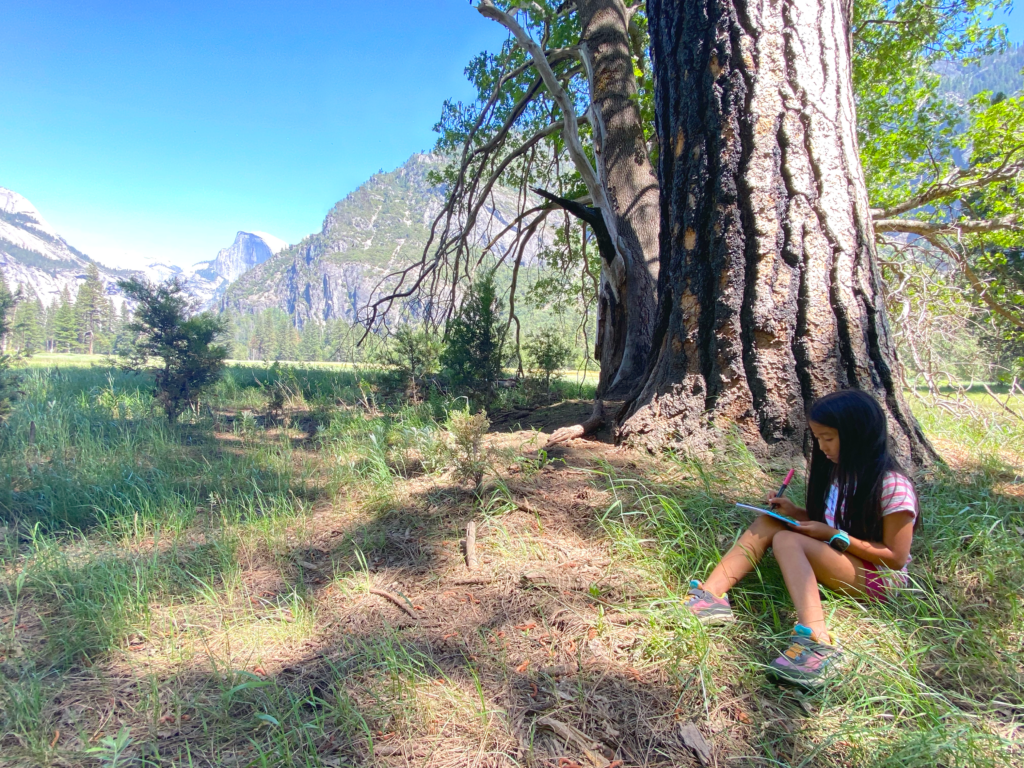
Imagine a classroom without walls, where the rustling leaves are the soundtrack and the flowing creek guides the lesson.This isn't a fantasy; it's the vibrant reality of an innovative arts education program that's transforming how children connect with their world.
At Mentofy, we believe in the power of immersive learning, and this approach, deeply rooted in the natural beauty of places like Mariposa County, offers profound insights into fostering creativity, environmental stewardship, and a lifelong love for learning in children.
This article explores how integrating the arts with the natural environment can unlock unprecedented potential for young minds.
The Power of Place-Based Arts Education
Traditional art education often confines creativity within four walls, limiting the sensory experiences that can spark imagination.However, a growing movement recognizes that the environment itself is a boundless studio.
This philosophy, often referred to as place-based education, emphasizes learning that is rooted in the local context.
For children, this means understanding their connection to the land, the water, and the living things that surround them.
When art becomes an extension of this natural world, it ceases to be an abstract concept and transforms into a tangible, deeply personal experience.
The benefits for children are multifaceted.
By engaging with their environment through artistic expression, they develop a stronger sense of place and belonging.
This connection fosters a deeper appreciation for the natural world, encouraging a sense of responsibility and stewardship.
Studies indicate that when children are actively involved in their surroundings, their engagement and retention of information significantly improve.
This approach moves beyond rote memorization, nurturing critical thinking, problem-solving skills, and a holistic understanding of complex ecological systems.
Connecting with Indigenous Wisdom
A crucial element of this nature-infused arts education is its deep connection to Indigenous cultures.For millennia, Indigenous peoples have understood the intrinsic link between art, culture, and the health of the environment.
Their traditions, passed down through generations, demonstrate how weaving, pottery, storytelling, and visual arts are not separate from nature but are born from it.
This perspective teaches that the environment is not merely a backdrop but an active participant and teacher.
When children learn to harvest native plants for dyes, weave with natural fibers, or sculpt with local clay, they are not just creating art; they are participating in a cultural legacy.
This immersion allows them to understand that the health of the land directly impacts the ability to practice these cultural arts.
It instills a profound respect for the earth as the original source of inspiration and sustenance.
This understanding is vital for cultivating a generation that values sustainability and recognizes the interconnectedness of all life.
Mariposa Creek: A Living Art Studio
Consider the example of Mariposa County, where a unique program transforms the banks of Mariposa Creek into an outdoor classroom.Here, teaching artists guide TK-6 students, using the natural landscape as their primary resource.
The creek itself becomes a source of inspiration, providing materials for art projects and a living laboratory for scientific observation.
This approach demonstrates that vibrant arts education doesn't require urban centers or elaborate studios; it can flourish wherever nature provides its bounty.
The artists involved in such initiatives often speak of a profound calling, a sense that the work chose them.
This passion is infectious and translates into an engaging learning experience for children.
They are encouraged to listen to the earth, to observe the subtle messages conveyed by the trees, the ground, and the animals.
This sensory engagement awakens all their faculties, making learning a multi-dimensional, deeply felt experience.
The Transformative Impact on Children
The impact of this outdoor, nature-based learning on children is remarkable.Anecdotal evidence and educational research suggest that spending time in nature has a significant positive effect on behavior, particularly in the post-pandemic era where challenges with classroom conduct have been noted.
The freedom to explore, to feel the earth beneath their feet, and to engage with the natural world in a hands-on manner can be profoundly calming and centering for children.
This contrasts sharply with the sedentary nature of prolonged indoor schooling.
The ability to move, to touch, and to be present in a dynamic environment allows children to release pent-up energy and focus their attention more effectively.
It fosters a sense of well-being that directly translates into a more receptive and engaged learner.
The simple act of being outdoors, surrounded by the natural beauty of a place like the Mariposa Creek watershed, can fundamentally alter a child's disposition and readiness to learn.
Integrating Art, Science, and Ecology
The most effective nature-based arts education programs seamlessly weave together artistic creation with scientific inquiry and ecological understanding.In Mariposa County, for instance, students learn about the watershed's health by studying the creek's inhabitants.
They might collect water samples to observe microorganisms, learning about the indicators of a healthy ecosystem.
Simultaneously, they might use native plants harvested from the creek banks to create natural dyes for their artwork.
This holistic approach ensures that children understand the practical applications of ecological principles and the cultural significance of their local environment.
They learn about invasive species removal as part of fire mitigation efforts, understanding how ecological balance is maintained.
They measure water quality, connecting scientific data to the visible health of the creek.
This integrated learning experience provides a comprehensive education that resonates deeply with young learners.
Fostering Environmental Stewardship
A primary goal of these programs is to instill a sense of stewardship in children.By actively participating in the care and understanding of their local environment, they develop a vested interest in its preservation.
When children are involved in restoration projects, such as removing invasive plants or monitoring water health, they begin to see themselves as caretakers of the land.
This sense of ownership is crucial for long-term environmental sustainability.
Children who grow up with a deep connection to their local landscapes are more likely to become advocates for conservation and responsible citizens.
The Mariposa Creek initiative, for example, aims to deepen children's investment in the landscape by making them active participants in its well-being.
This hands-on experience cultivates a profound respect for the natural world and its resources.
The Universality of Artistic Expression
While programs like the one in Mariposa County are set in specific natural landscapes, the underlying principle of nature-inspired arts education is universal.It challenges the notion that art is confined to galleries and concert halls.
Instead, it highlights that the impulse to create is inherent in all humans and can be nurtured by any environment.
The beauty of a rolling hillside, the intricate patterns of a leaf, or the flow of a river can all serve as powerful muses.
This perspective democratizes art education, making it accessible to all children, regardless of their geographic location or socioeconomic background.
It underscores that rich artistic experiences can be found in rural settings just as readily as in urban environments.
The key is to recognize and leverage the creative potential inherent in the natural world and to provide children with the tools and guidance to explore it.
Building Community and Civic Engagement
Beyond individual artistic development and environmental awareness, these nature-based arts programs also foster a strong sense of community and civic engagement.When children work together on projects that benefit their local environment, they learn the value of collaboration and collective action.
They see how their efforts contribute to the betterment of their community and the preservation of shared natural resources.
The enthusiasm from parents and administrators in Mariposa County is a testament to this broader impact.
Parents report overwhelmingly positive feedback, noting that their children are engaged in healthy, productive activities that promote self-expression, teamwork, and a sense of belonging.
This holistic approach to education nurtures not only academic growth but also the development of well-rounded, socially conscious individuals.
The Future of Arts Education: Embracing the Outdoors
The success of initiatives that bring arts education outdoors, like the one flourishing along Mariposa Creek, points towards a promising future.These programs are not just about teaching art; they are about cultivating a generation that is connected, conscious, and creative.
The integration of art, science, and Indigenous wisdom offers a powerful model for holistic learning that benefits children, communities, and the planet.
As educational leaders and policymakers explore new funding avenues, such as Proposition 28 in California, the potential for expanding these nature-based arts programs is immense.
The goal is to create sustainable models that can be integrated into regular school curricula, offering after-school programs and connecting outdoor experiences with in-classroom learning.
This vision promises to transform how children perceive their education and their role in the world.
Conclusion: Nature as the Ultimate Teacher
The journey of arts education along the banks of Mariposa Creek, and in similar initiatives worldwide, underscores a profound truth: nature is the ultimate teacher.By embracing the outdoors as a classroom, we unlock a world of sensory experiences, cultural wisdom, and ecological understanding for children.
This approach fosters creativity, builds resilience, and instills a deep sense of stewardship for the planet.
At Mentofy, we champion learning experiences that are engaging, impactful, and transformative, and the fusion of arts education with the natural world stands as a powerful testament to this philosophy.
It is through these immersive, place-based experiences that we can truly empower children to see their world, express themselves, and contribute to a healthier, more vibrant future for all.





 Explore AI Teaching Tools
Comments (0)
Please login to comment
No comments yet
Be the first to comment on this article