
Oakland Unified Charts New Course: Bringing Specialized Education Home for Students with Disabilities
For years, a significant number of Oakland students with complex educational needs have faced arduous daily journeys, commuting across the Bay Area to access specialized nonpublic schools. Now, in a landmark move, Oakland Unified School District (OUSD) is taking concrete steps to establish its own local nonpublic school, aiming to dramatically shorten these commutes and enhance the quality of life for these students and their families.
The Burden of the Bridge: Long Commutes and Their Toll
Imagine a child, already navigating the challenges of conditions like tuberous sclerosis complex, autism, or epilepsy, embarking on a commute that can stretch to four hours round trip. This has been the reality for many Oakland students placed in nonpublic schools, often located in counties far from their homes. These lengthy drives, facilitated by district-provided transportation, have not only consumed precious hours but have also led to significant stress and disruption for students whose routines are paramount.
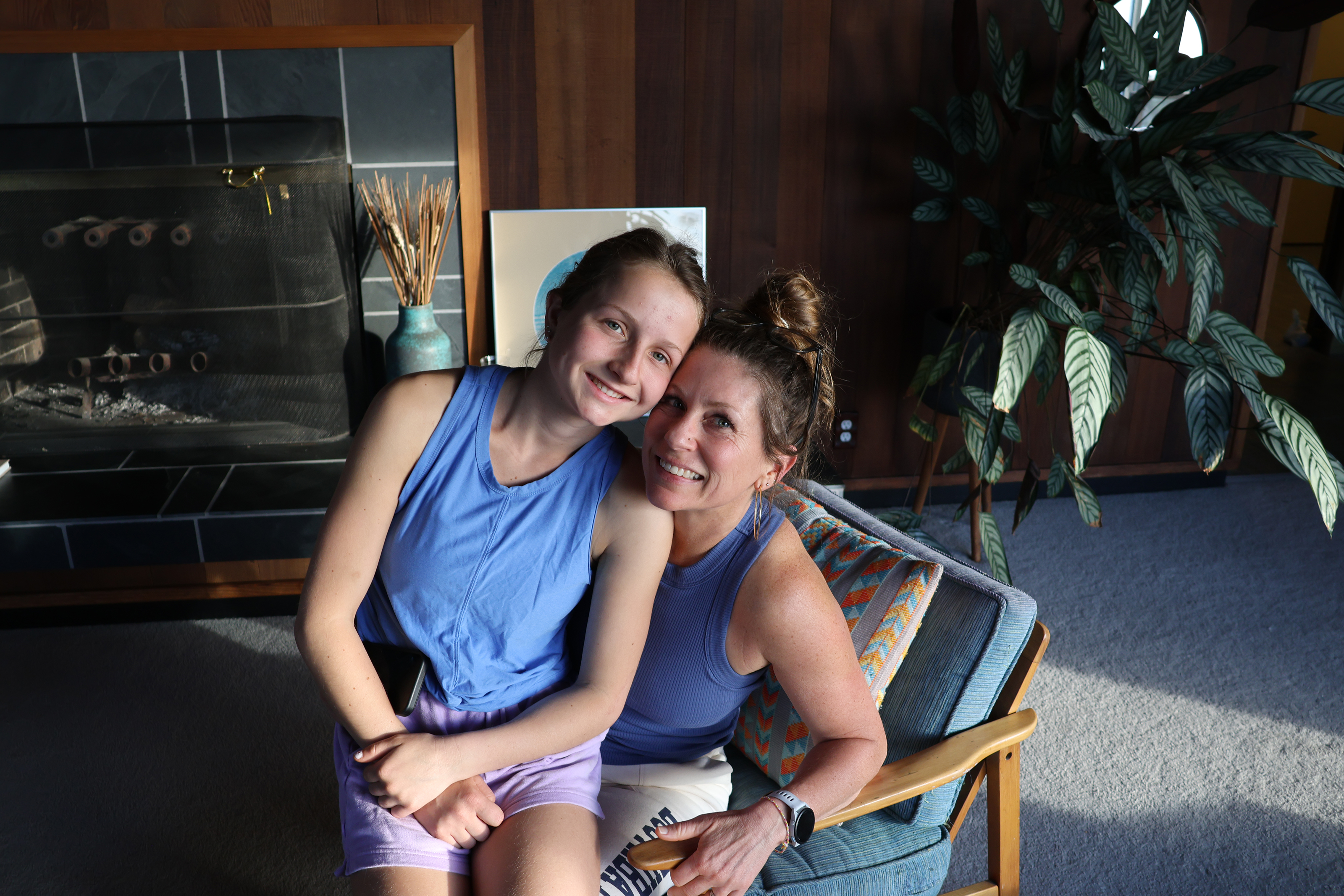
Lillian Ansari vividly recalls her daughter Atrina's experience. Atrina, then 12, would be picked up by district transport, often joining a route that included multiple stops, before heading across the Richmond-San Rafael Bridge to her school in Marin. The unpredictable nature of traffic and the extended pick-up routes meant that Atrina, who has autism and epilepsy, would often arrive home exhausted and overwhelmed, struggling to process the day's disruptions. "A mess when she got home," Ansari described, highlighting the emotional and physical toll these commutes exacted.
Currently, approximately 100 Oakland students attend nonpublic schools, specialized private institutions that offer tailored support for students with disabilities when a district determines it cannot meet their unique needs within its own facilities. The stark reality for these families has been the absence of such options within Oakland itself, forcing them to look far beyond their city's borders.
A Shift in Strategy: Oakland Unified's Ambitious Plan
This situation is poised for a significant change. For the first time, Oakland Unified is actively pursuing the creation of a local nonpublic school. This initiative, spearheaded by the district's special education department, represents a potential paradigm shift, promising to alleviate the burden of long commutes and potentially offer financial efficiencies for the district.
Jennifer Blake, head of special education at OUSD, confirmed that the idea of establishing a district-operated or partnered nonpublic school has been under consideration since 2019. The recent issuance of a formal request for proposals (RFP) marks a critical step, inviting nonpublic school contractors to bid on leasing district facilities. This move signals a serious commitment to exploring collaborative models.
Blake envisions a partnership that benefits both the district and its families. She pointed to a successful model implemented by Seneca Family of Agencies in collaboration with West Contra Costa Unified School District. In this arrangement, Seneca operates a nonpublic school within a WCCUSD-owned facility, offering reduced costs to the district while prioritizing enrollment for local students. OUSD aims to replicate this, with the goal of ensuring Oakland students receive preferential enrollment or even reduced tuition at a new local nonpublic school.
Understanding Nonpublic School Placements
The process of placing a student in a nonpublic school is intricate, typically beginning with the development of an Individualized Education Program (IEP). An IEP team, comprising parents, educators, and district representatives, assesses whether a student can receive a free appropriate public education (FAPE) within the district's existing offerings. If the team determines the district cannot adequately meet the student's needs, or if parents can demonstrate that a specialized private program would be more beneficial, a nonpublic school placement may be recommended.
Parents also have the right to request a nonpublic placement even if the IEP team does not initially recommend it. This was the path taken by Lillian Ansari and her husband when seeking support for their son, who has autism and dyspraxia. Despite attending OUSD schools through fifth grade, where he often felt compelled to "mask" his autistic traits to fit in, Ansari recognized his underlying anxiety and stress manifested at home. When the district's IEP team deemed him adequately served as long as he could access his education, the family sought external options.
Their search led them to Springstone School, a nonpublic school in Lafayette. The impact was immediate and profound. "Mommy, pinch me, I can't believe it. These kids are all like me here," Ansari's son exclaimed during a campus visit, a moment that underscored the critical importance of belonging and peer connection.
The Financial and Logistical Landscape
The cost of nonpublic school placements represents a significant financial undertaking for school districts. OUSD, for instance, projected spending $12.1 million on nonpublic school placements for the 2025-26 school year. The base annual cost per student can range from $116,000, with additional therapies potentially pushing the total tuition to $200,000 or even $250,000 annually.
Beyond tuition, districts are legally obligated to provide transportation for students attending nonpublic schools. These transportation costs can add another $20,000 to $50,000 per student each year. Establishing a local nonpublic school in Oakland offers the potential to significantly reduce these transportation expenses. Blake anticipates that with shorter routes, more students can be safely accommodated in each vehicle, leading to more efficient and cost-effective transportation services.
The federal government's commitment to funding special education, initially pledged at around 40% of costs, has dwindled to approximately 13%, leaving states and local districts to shoulder the bulk of the financial burden. This funding gap often necessitates creative solutions and can contribute to disputes over placements.
Navigating the Path to Placement
Securing a nonpublic school placement can be a challenging and emotionally taxing process for families. The journey often involves extensive advocacy, documentation, and sometimes, legal intervention. Parents, driven by a deep understanding of their child's needs, may find themselves in a difficult position when their desired placement doesn't immediately align with district recommendations or available resources.
Anjanette Pelletier, a seasoned special educator and management consultant, notes that a statewide shortage of placement options for students with more intensive needs can lead to delays. "Sometimes the delay is not that we disagree," she explained, "It's that we can't find a spot."
Furthermore, the legal framework governing special education, particularly the principle of educating students in the least-restrictive environment (LRE), can create tension. While research consistently shows benefits for students with disabilities when educated alongside their nondisabled peers, the reality for some students necessitates a more specialized setting. This can lead to a gap where parents advocate for a specific nonpublic school, while districts are obligated to explore and exhaust other service options first.
Karma Quick-Panwala, director of children and family advocacy services, emphasizes that the legal obligation to provide FAPE remains, regardless of funding challenges. "But that is not an excuse under the law, unfortunately," she stated. "So we need to look at how creative can we be to resolve disputes at the local level."
The Role of IEP Teams and Dispute Resolution
The IEP team plays a pivotal role in determining appropriate educational placements. However, the data-driven recommendations of these teams may not always align with parental desires. OUSD acknowledges this potential divergence and offers an alternative dispute resolution facilitator to help mediate disagreements between families and the district. This facilitator has proven effective in resolving many disputes without the need for attorneys or formal legal proceedings.
For the 2023-24 school year, OUSD received 38 requests for facilitation services. The majority of these were resolved without escalation, with only a small fraction proceeding to more formal dispute resolution processes. This indicates a commitment from the district to engage in collaborative problem-solving with families.
Despite these efforts, the emotional and financial strain on families seeking appropriate placements can be immense. Sara Mohn, another Oakland parent, shared her experience advocating for her daughter, Ila, who has severe dyslexia. After years of paying for private elementary school, the family sought an NPS placement through OUSD. The process, Mohn described, was "expensive, time-consuming and frustrating," with her daughter's needs not always feeling central to the decision-making process.
A Vision for Belonging and Community
The establishment of a local nonpublic school in Oakland holds the promise of more than just shorter commutes. For families like the Ansaris, who eventually moved across the Bay to Novato Unified School District to shorten Atrina's commute, the impact has been transformative. "At least to not have a bridge between us," Ansari reflected, highlighting the profound relief of reduced travel time and stress.
Beyond logistical improvements, a local school could foster stronger community connections. Many students currently attending nonpublic schools travel from various parts of Northern California, limiting opportunities for classmates to build deep friendships and for families to connect. A school within Oakland could facilitate after-school activities, playdates, and a greater sense of shared community among families navigating similar challenges.
Ila Mohn, now a student at Star Academy, a nonpublic school specializing in learning disabilities, described her school as "my home away from home." This sentiment speaks to the profound impact of finding a place where a student feels understood, supported, and truly belongs. The hope is that Oakland Unified's initiative will create such an environment within the city itself, allowing students with disabilities to thrive closer to their own communities.





 Explore AI Teaching Tools
Comments (0)
Please login to comment
No comments yet
Be the first to comment on this article