
Beyond the Bell: How Community Schools Are Redefining Student Success
Children spend a mere 20% of their formative years within the traditional school day, a surprisingly small window to achieve academic mastery, social-emotional growth, and life readiness. The remaining 80% of their lives, filled with experiences that profoundly shape their capacity to learn, often remain outside the direct influence of educators. This stark reality underscores a critical question: can schools truly equip students for the future if they operate in isolation from the complex realities of their lives?
The Hidden Hurdles to Learning
For nearly four decades, observing students in New York City schools has revealed a consistent truth: the most challenging cases are rarely those struggling solely with curriculum. Instead, they are the children whose potential is stifled by circumstances far beyond the classroom walls – hunger, exhaustion, or the weight of unresolved personal issues that teachers, in a packed academic schedule, are ill-equipped to address. These students arrive at school unprepared to engage, and the traditional school environment, focused narrowly on academic instruction, lacks the capacity to provide the holistic support they desperately need to thrive.
Mary's Story: A Glimpse into Unseen Struggles
Consider the experience of Mary, a freshman at Middle City High School. On the surface, she presented as an exemplary student – punctual, appropriately dressed, and attentive in class. Yet, beneath this composed exterior lay a turbulent personal life. Her father's recent job loss had left the family without health insurance, and Mary's own summer earnings were no longer a financial buffer. Her mother's nighttime work, essential for covering the costs of vital medication for a heart condition, was precarious and off-the-books.
Academically, Mary was faltering, not for lack of effort, but for lack of fundamental stability. Her true need wasn't for more tutoring, but for genuine human connection and a pathway to address her family's mounting crises. Fortunately, her school intervened differently. Instead of a purely academic referral, Mary was connected with a near-peer mentor who provided daily check-ins. This consistent, trusting relationship empowered Mary to share her reality, which in turn opened the door to counseling services and crucial connections to community resources that began to alleviate her family's burdens.
As the external pressures eased, Mary's academic performance began to reflect her renewed sense of security. Her story is a powerful testament to a fundamental insight: when students face academic challenges, the most effective solution is often not intensified instruction, but strengthened connections to the support systems they need to navigate life's complexities. These connections can manifest in myriad ways, transforming the educational landscape for countless children.
Weaving the Fabric of Learning and Community
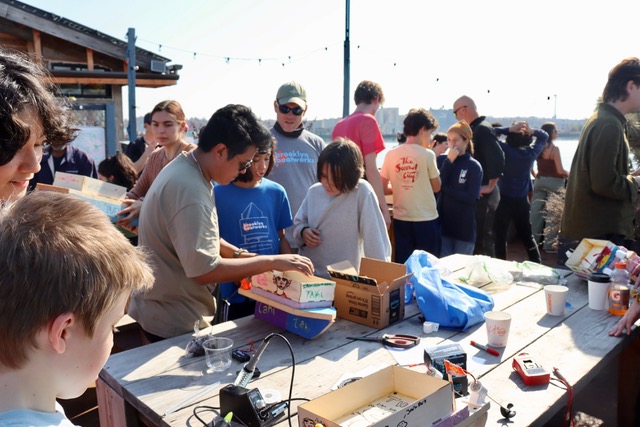
In a middle school situated near the bustling Brooklyn waterfront, a unique approach to student engagement is taking root. Here, the curriculum is intrinsically linked to the natural world that surrounds the children, bringing their out-of-school experiences directly into the classroom. Students actively participate in tending hydroponic vegetable gardens and maintaining a vibrant turtle pond, fostering a hands-on understanding of ecological principles.
The bounty from these gardens is not merely an educational tool; it directly supports an on-site food pantry, providing fresh produce and canned goods to families in need. This initiative serves as a constant reminder that learning and community well-being are inextricably intertwined, demonstrating that academic pursuits can directly contribute to the welfare of the wider community. The fifth-grade curriculum elevates this concept further, immersing students in a year-long project to construct a small wooden boat from scratch.
This ambitious undertaking cultivates essential woodworking skills, fosters robust teamwork, and instills a quiet confidence that arises from successfully completing a challenging endeavor. Throughout the process, students engage with local shipyards, meeting the skilled professionals and business owners who animate the waterfront economy. The culmination of their hard work is a moment of shared triumph: a local business transports their completed boat to the water's edge, where the students themselves get to set sail, experiencing the tangible rewards of their dedication and ingenuity.
The Community School Model: A Hub of Integrated Support
These two distinct examples, though different in their specific activities, embody a shared, transformative idea: that a school and its surrounding community are not separate entities, but rather interconnected ecosystems that mutually shape and enrich one another. New York City's Community School strategy is a deliberate effort to operationalize this philosophy, moving beyond the traditional view of a school as an isolated institution responsible solely for what transpires within its four walls.
Instead, the Community School model reimagines the school as a dynamic hub. It actively bridges the gap between students, families, and the wealth of resources available in their local neighborhoods. This includes forging vital connections with healthcare providers, social service agencies, mental health professionals, recreational facilities, and a diverse array of local organizations. In this model, the community and its environment are not mere supplements to the school; they become integral components of the educational experience itself.
Evidence of Impact: Data-Driven Transformation
The efficacy of this integrated approach is not merely anecdotal; it is supported by robust data. A comprehensive study conducted by Cornell and Harvard, which tracked over 16 million students across two decades, revealed a significant correlation between personalized community supports and improved long-term outcomes. Students who benefited from such wraparound services demonstrated higher graduation rates, increased college enrollment, and demonstrably better earning potential in their adult lives.
Within New York City, a RAND Corporation analysis of 419 Community Schools yielded compelling results. The study identified notable improvements in student attendance, academic achievement, and a heightened sense of connectedness among students, particularly in neighborhoods that have historically faced the most significant challenges. These findings underscore the profound impact that strategically integrated community resources can have on educational equity and student success.
Fostering the Whole Child Through Connection
At Counseling In Schools, an organization actively implementing this strategy in 16 New York City schools and providing mental health services in 15 more, the daily observations reinforce these findings. The core principle is simple yet profound: when students' lives outside of school are stabilized and acknowledged, their engagement and performance within the school environment undergo a positive transformation. Schools are not intended to be the sole custodians of childhood development; they are vital anchors within communities that possess the capacity to offer invaluable support.
The Community School strategy in New York City is spearheaded by mission-driven organizations that are uniquely positioned to build the essential relationships both inside and outside the school. Freed from the singular focus of academic mandates, these organizations can nurture the connections necessary to address the needs of the "whole child." By harnessing the power of these relationships, the 80% of a child's life that exists beyond the school day transforms from a potential barrier into a powerful catalyst for growth and achievement.
The integration of community resources into the school fabric is not just an innovative educational approach; it is a fundamental shift towards recognizing that a child's readiness to learn is deeply intertwined with their overall well-being. By extending the reach of support beyond the classroom, community schools are creating environments where every student has a more equitable opportunity to thrive, both academically and personally, laying the groundwork for a brighter future.





 Explore AI Teaching Tools
Comments (0)
Please login to comment
No comments yet
Be the first to comment on this article