
The future isn't a destination young people passively arrive at; they are its architects. A growing consensus, echoed by global bodies like the UN, suggests that equipping youth with agency in their own education is not just beneficial, but essential for navigating our complex world. This paradigm shift demands that educators move beyond traditional models to foster environments where young minds are active collaborators in shaping their learning journeys and, by extension, their futures.
Why Education Must Embrace Youth as Co-Creators
For too long, education systems have operated under the assumption that young people are merely recipients of knowledge, destined to inherit a world designed by previous generations. However, the challenges of the 21st century—from climate change to technological disruption—require a more dynamic approach. Young people possess unique perspectives, energy, and innovative ideas that are crucial for addressing these global issues.
This perspective is gaining traction. A recent survey of 1,500 K–12 educators revealed that 70% believe student voice is critical for curriculum development, yet only 30% feel they have established robust mechanisms for incorporating it consistently. The gap highlights a critical need for educators to actively seek and integrate youth perspectives.
"Young people are not passive beneficiaries waiting to inherit the future. They are rights holders and partners who must help design it, together with other generations."
This isn't about relinquishing control; it's about strategic partnership. When young people are involved in decision-making processes about their education, they develop a deeper sense of ownership and commitment. This enhanced participation can lead to more relevant curricula, engaging learning experiences, and ultimately, better outcomes for all.
The Transformative Power of Active Youth Participation
Meaningful youth participation in education policy and practice is a powerful catalyst for change. It moves beyond tokenistic gestures to embed young voices into the very fabric of learning institutions. This active involvement fosters critical thinking, civic literacy, and the agency necessary for young people to become effective agents of change in their communities and the wider world.
Consider the impact on engagement. When students feel their opinions matter, their motivation and investment in their education soar. This can translate into reduced dropout rates, improved academic performance, and a stronger sense of belonging within the school environment. It's about building a generation that doesn't just consume information but actively contributes to its creation and application.
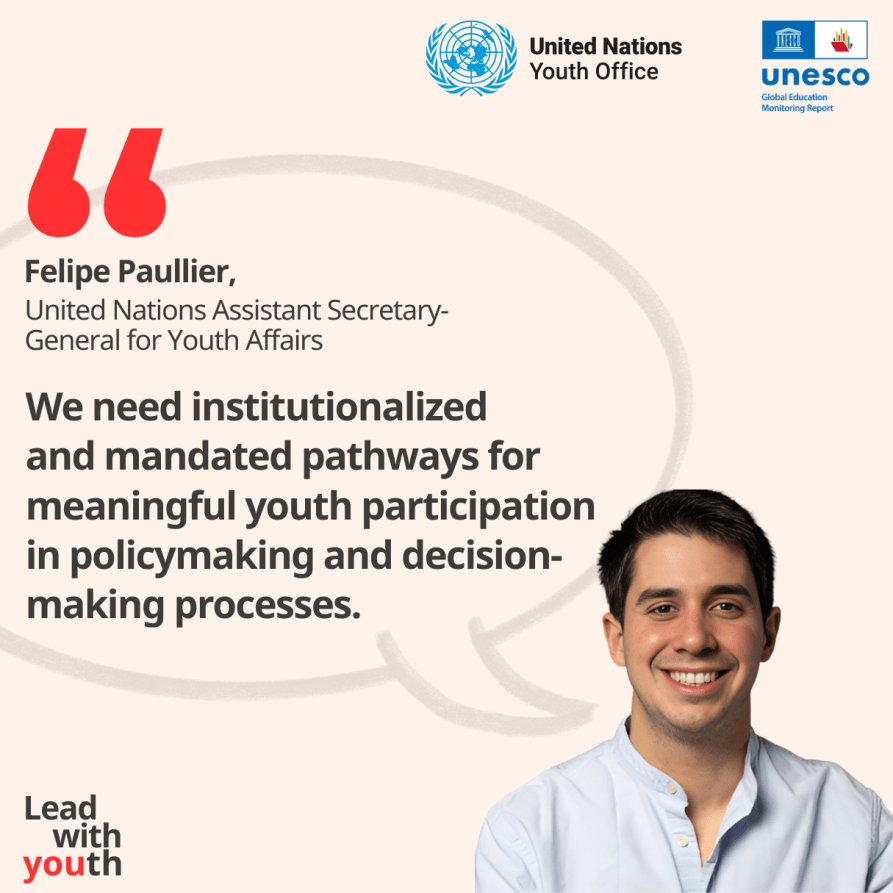
The United Nations Youth Office emphasizes that this collaboration is not just a moral imperative but a practical necessity. The interconnected crises facing our world demand innovative solutions, and young people are often at the forefront of identifying these novel approaches. Their experiences and insights are invaluable.
Moving from Aspiration to Responsibility
While the recognition of youth as change agents is growing, actual implementation often lags. Many initiatives remain symbolic, lacking the structured pathways for accountability and influence that ensure genuine impact. The challenge for educators and institutions is to move beyond mere consultation to genuine co-creation.
This requires building robust, institutionalized mechanisms for youth engagement. It means establishing clear principles for participation and ensuring these are sustained over time. The goal is to work *with* young people at every stage of educational planning and delivery, not just to inform them about decisions already made.
Innovative Strategies for Empowering Young Learners
Educators can implement several actionable strategies to foster greater youth participation and agency in the classroom and beyond. These approaches leverage technology and pedagogical shifts to create more dynamic and student-centered learning environments.
- Integrate Student Voice in Curriculum Design: Regularly solicit student feedback on topics, learning methods, and assessment strategies. Use tools like Mentofy AI lesson plan generators to adapt content based on student interests.
- Foster Collaborative Learning Environments: Utilize MentofyGroups for smart student grouping, encouraging peer-to-peer learning and shared problem-solving.
- Embrace Interactive Technologies: Employ MentofyCove classroom games like trivia and word searches to make learning fun and competitive. Use MentofyBoards for interactive displays that allow for real-time student input and feedback.
- Develop Project-Based Learning (PBL) Opportunities: Design projects that allow students to tackle real-world problems, encouraging them to research, collaborate, and present their findings.
- Create Platforms for Student Leadership: Establish student councils, advisory boards, or project teams where young people have genuine decision-making power on school-related issues.
These strategies are not just about making education more engaging; they are about cultivating essential skills for the future. By giving young people a stake in their learning, we empower them to become more responsible, innovative, and engaged citizens of the world.
"Across the globe, there is growing recognition of the role of young people as agents of change, but recognition alone is not enough."
The development of tools like Mentofy AI teaching tools, including its exam creator and AI grading capabilities, can also free up teacher time, allowing them to focus more on facilitating student-led initiatives and providing personalized support.
The Urgency of Leading with Youth
As we look towards 2030 and beyond, the call for education policies to be shaped *with* young people, not just *for* them, becomes increasingly urgent. This approach is fundamental to building inclusive, resilient, and just societies. It requires a commitment to sustained investment, intergenerational solidarity, and genuine political will.
The future of education, and indeed the future of our world, hinges on our ability to recognize and empower the agency of young people. By fostering environments where youth participation is not an afterthought but a core principle, we unlock their potential to co-create a brighter, more equitable future for everyone.
The journey towards truly empowering young people in education is ongoing, but the path forward is clear: embrace their voices, integrate their perspectives, and collaborate with them to design the learning experiences that will shape tomorrow. Mentofy is free for teachers to explore tools that can help facilitate this vital shift.






 Explore AI Teaching Tools
Comments (0)
Please login to comment
No comments yet
Be the first to comment on this article