
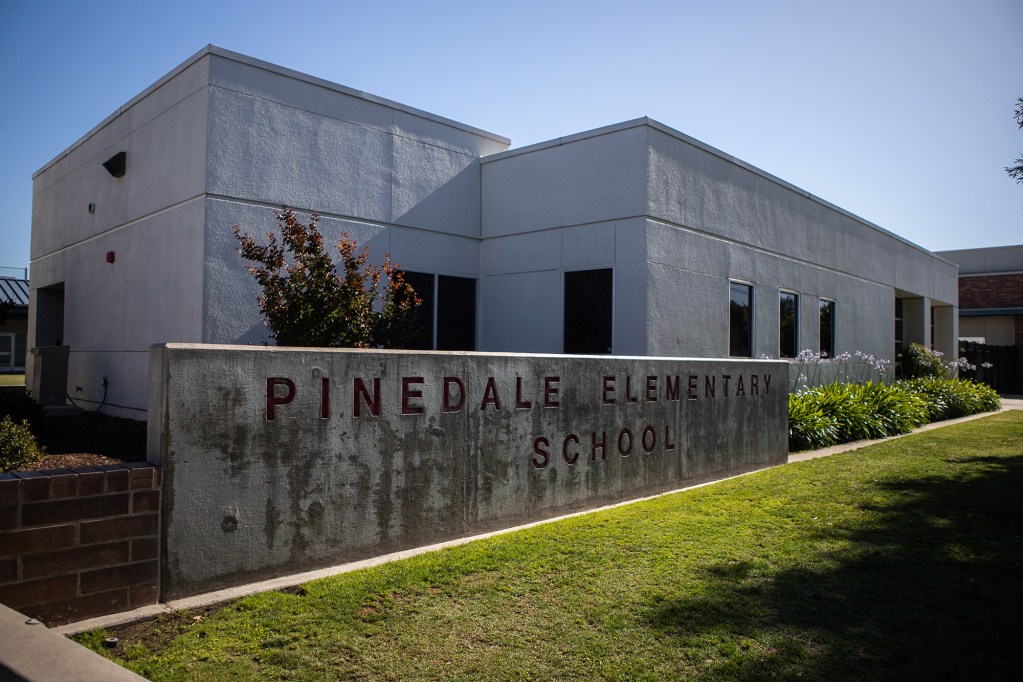
Imagine a scenario where two elementary schools, separated by less than two miles and serving remarkably similar student populations, receive drastically different levels of financial support. This isn't a hypothetical; it's the reality in California, where disparities in school funding can mean one school has ample resources for aides, tutors, and enrichment, while another struggles to provide basic necessities. This stark contrast has profound implications for educators, shaping the very environment in which they teach and the opportunities available to their students.
The Unseen Chasm: Funding Disparities Leave Schools Behind
At Pinedale Elementary in Fresno, the absence of classroom aides, after-school tutors, and behavioral counselors is a daily reality. Literacy activities and parent workshops are scarce, and field trips are virtually non-existent. This school operates on a per-pupil expenditure of just $16,700, significantly below the state average.
Meanwhile, less than two miles away, Kratt Elementary, in a different district, boasts a per-pupil expenditure of $25,000. Despite serving a nearly identical demographic of low-income and Latino students, Kratt offers amenities that are out of reach for Pinedale. This disparity highlights a fundamental flaw in how educational resources are allocated.
"When I saw what other schools provide, I was like, what? As a parent, it’s really frustrating. I’ve heard of No Child Left Behind, but this is like half the kids left behind."
Further west, in the affluent Bay Area, Portola Valley Elementary spends an astonishing $46,000 per student annually. This level of funding allows for comprehensive programs including music and art classes, mental health counselors, small class sizes, and state-of-the-art facilities. The contrast between Pinedale and Portola Valley is a stark illustration of California’s complex and inequitable school funding system.
Navigating the Labyrinth: How California's Funding Formula Creates Winners and Losers
California's Local Control Funding Formula (LCFF), enacted over a decade ago, aimed to create equity by directing additional funds to students with the greatest needs. These include students from low-income backgrounds, English learners, and those experiencing homelessness or in foster care. The intention was to ensure these students received the support necessary to succeed.
However, the formula's effectiveness has been undermined by a confluence of factors. Soaring costs, declining enrollment in some districts, and persistent inflation have exacerbated existing funding gaps. This has created a situation where schools in wealthy areas, often referred to as "basic aid" districts, can supplement their state funding with substantial local property taxes and robust parent donations.
Schools that are not "basic aid" districts rely more heavily on the state's LCFF. While this formula provides a base grant and additional money for high-needs students, it hasn't kept pace with rising expenses for many districts. Consequently, schools in areas with a lower concentration of high-needs students, even if they serve a significant number, receive less overall funding.
The "Basic Aid" Advantage
Districts classified as "basic aid" are a critical factor in understanding these disparities. These districts generate the majority of their funding through local property taxes. Wealthier communities, with higher property values, can therefore allocate significantly more money to their schools than districts that rely primarily on state funding.
This local revenue stream provides a level of financial stability and flexibility that is often unattainable for non-basic aid districts. It allows for investments in resources, staff, and programs that can directly benefit students and educators. The parent community in these areas often plays a crucial role, contributing additional money through donations and fundraising efforts.
The LCFF's Double-Edged Sword
For districts not classified as "basic aid," the LCFF is the primary source of funding. This formula is designed to provide a base allocation per student, with supplemental funding for students identified as having higher needs. The more students a district has who fall into these categories (low-income, English learner, homeless, foster care), the more supplemental funding it receives.
The intent is commendable: to direct resources where they are most needed. However, for districts where the percentage of high-needs students hovers just below the threshold for maximum supplemental funding, the overall per-pupil allocation can still be significantly lower than in wealthier districts. This creates a situation where schools serving many students with needs are still under-resourced compared to their more affluent counterparts.
The Tangible Impact: Funding and Academic Outcomes
The financial disparities between schools have a direct and measurable impact on student academic performance. At Pinedale Elementary, where funding is critically low, fewer than 30% of students met the state's English language arts standards last year, and only 23.5% met the math standard. These figures are a stark indicator of the challenges faced by students in underfunded schools.
In contrast, students at Kratt Elementary, with its higher per-pupil expenditure, scored 5 to 10 percentage points higher on both English language arts and math tests. The gap widens dramatically when compared to Portola Valley Elementary, where approximately 85% of students meet the standards in both subjects. This correlation between funding levels and academic achievement is undeniable.
"I’d say the problem is urgent. For many, many years, these kids have not gotten the same resources, and every year that goes by, it gets worse. It’s a group of students we are not treating fairly, and there needs to be a solution."
Educators in underfunded schools often find themselves stretched thin, unable to provide the same level of support or enrichment as their counterparts in better-funded districts. This can lead to burnout and a feeling of inadequacy, despite their best efforts. The lack of resources can also hinder the implementation of innovative teaching strategies and the use of effective educational technology.
Searching for Solutions: Policy Debates and Potential Reforms
Recognizing the urgency of the situation, policymakers in California are exploring various avenues to address these funding inequities. Several legislative proposals aim to bolster school funding, particularly for districts that are not classified as "basic aid" and serve a high proportion of disadvantaged students.
One significant proposal, Senate Constitutional Amendment 5, seeks to create a reserve account funded by surplus tax revenues during prosperous economic years. After the state distributes its Proposition 98 funding, this reserve would provide additional money to non-basic aid districts, with the interest generated by the account serving as the source of the extra funding. This approach aims to provide a more stable and predictable stream of resources over time.
Governor Gavin Newsom's revised budget also includes an initiative to increase school base grants by nearly $1 billion. This move is seen as a positive step by organizations like the Association of California School Administrators, who advocate for greater stability and flexibility in school funding. Increasing the base grant is considered a foundational element for improving educational capacity.
The Debate Over Base Grants vs. Supplemental Funding
Not all proposed solutions are met with universal agreement. Another bill, put forth by Assemblymember David Alvarez, aims to expand school funding for high-needs students by redirecting money from other areas. However, some administrators and educators worry that this approach could inadvertently worsen funding shortfalls for certain districts by reducing the base grant.
David Roth, superintendent of Buckeye Union Elementary School District, is a vocal advocate for increasing the base grant. He has spearheaded a campaign called Raise the Base, which uses a database to track school districts' funding disparities over the past 15 years. Roth argues that while supporting high-needs students is crucial, the base grant has not kept pace with escalating costs, leaving many districts in a precarious financial situation.
Roth's district, Buckeye Union, receives significantly less per-pupil funding than the state average. This underfunding jeopardizes long-standing programs that benefit all students, and Roth anticipates potential cuts to essential areas like P.E., libraries, counseling, and music if base funding doesn't improve. The sentiment is that these are not luxuries, but fundamental components of a well-rounded education.
The Parent Perspective: Advocacy and Everyday Struggles
The impact of funding disparities is keenly felt by parents, who often become powerful advocates for their children's schools. Tania Galeana-King, a parent of three at Pinedale Elementary, describes the frustration of witnessing the vast differences in resources available to different schools. Her community is close-knit and resilient, but the economic realities for many families mean that raising significant funds for the school is an uphill battle.
The parent club at Pinedale works tirelessly, organizing events like snack sales and jog-a-thons to raise a few thousand dollars annually. However, in a community where many parents work multiple jobs, participation can be challenging. Galeana-King emphasizes the need for understanding and reasonableness, acknowledging that families are often struggling to make ends meet.
Even with these efforts, the needs are extensive. Teachers frequently dip into their own pockets for classroom supplies, and the parent club struggles to fund everything from new chess boards to essential field trips. The desire to provide students with the best possible educational experience is a constant, but the financial limitations are a persistent barrier.
Empowering Educators with Tools
In the face of these funding challenges, educators are increasingly turning to innovative tools and platforms to maximize their impact. While no technology can replace adequate funding, resources that enhance efficiency and engagement can make a significant difference. For instance, utilizing Mentofy AI teaching tools for lesson planning and creating assessments can save valuable time.
Platforms offering MentofyCove classroom games can transform review sessions and formative assessments into engaging, interactive experiences that motivate students. Tools like these, especially when available as Mentofy is free for teachers, can help bridge some of the resource gaps by making learning more dynamic and effective, even with limited materials.
Similarly, Mentofy AI grading can streamline the assessment process, allowing teachers to dedicate more time to individualized student support and differentiated instruction. Smart student grouping with MentofyGroups can also ensure that students receive targeted instruction based on their needs, a crucial strategy in under-resourced environments.
The challenges faced by schools like Pinedale Elementary are systemic and require comprehensive policy solutions. However, by embracing innovative teaching strategies and leveraging accessible educational technology, educators can continue to foster engaging learning environments and support their students' academic journeys, even amidst financial constraints.





 Explore AI Teaching Tools
Comments (0)
Please login to comment
No comments yet
Be the first to comment on this article