
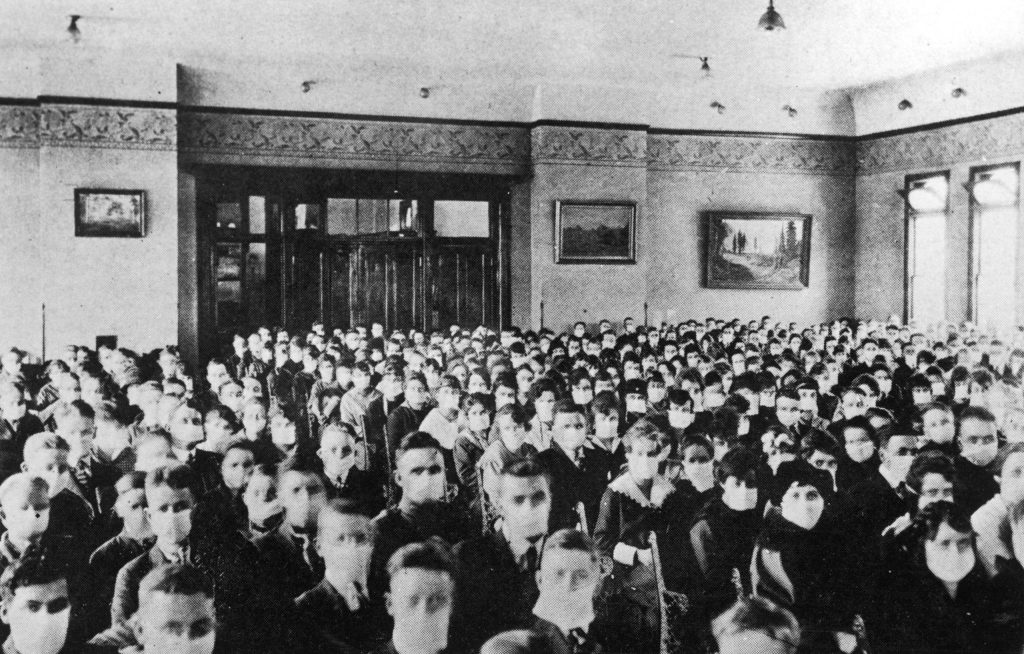
Navigating Higher Education's Resilience: Lessons from the Spanish Flu Era for Today's Students
The echoes of past pandemics resonate powerfully in our present educational landscape.
As we reflect on the profound disruptions faced by universities and their students during historical health crises, we uncover invaluable insights.
This article delves into the experiences of higher education institutions and young learners during the 1918 Spanish flu pandemic, drawing parallels and distinctions with contemporary challenges to illuminate strategies for fostering resilience and ensuring academic and personal well-being in the face of unprecedented upheaval.
1.
The Unforeseen Storm: Universities Confront the Spanish Flu
In the autumn of 1918, a shadow fell across campuses worldwide as the Spanish flu pandemic began its relentless march.
University leaders, much like their counterparts today, grappled with the dual imperative of safeguarding their student bodies while attempting to maintain the continuity of academic life.
The urgency was palpable, with administrators striving to reassure anxious parents and students amidst a rapidly evolving and terrifying health crisis.
At the forefront of these efforts was the president of a prominent American university, who, in a bid to quell rising concerns, publicly affirmed the institution's commitment to student safety.
However, the virus proved an indiscriminate adversary.
Tragically, this very leader soon fell victim to the epidemic, a fate that befell his successor mere months later.
This stark reality underscored the profound vulnerability of even the most established institutions to the devastating impact of widespread illness.
Across the globe, universities experienced a cascade of disruptions mirroring the chaos that would later define the COVID-19 era.
Large gatherings, a cornerstone of university life, were either canceled or postponed.
This included cherished traditions like orientations and commencement ceremonies, events that mark significant milestones in a student's academic journey.
The very fabric of campus community was strained as social interactions, vital for intellectual and personal growth, were severely curtailed.
Campus Adaptations and Emergency Measures
Educational institutions were forced to implement drastic measures to combat the spread of the virus.
In some cases, lectures involving more than a handful of attendees were suspended.
When initial containment efforts proved insufficient, entire campuses were shuttered, transforming familiar academic spaces into sites of quarantine and medical care.
Gymnasiums, once hubs of athletic activity, were repurposed as makeshift infirmaries to accommodate the surge in infected individuals.
Similarly, student dormitories, intended as comfortable living spaces, were converted into isolation wards as on-campus medical facilities became overwhelmed.
The impact extended beyond the immediate health crisis.
Students, facing the uncertainty of their academic progress and the pervasive threat of illness, voiced their anxieties.
Petitions circulated, requesting the suspension of academic duties and extracurricular activities until the immediate danger had passed.
This desire for a pause, a moment to regroup and prioritize safety, highlights the immense psychological toll the pandemic exerted on the young minds entrusted to higher education.
2.
The Human Cost: Students Bearing the Brunt of the Pandemic
The Spanish flu pandemic exacted a devastating toll, claiming hundreds of thousands of lives in the United States alone.
What made this particular epidemic particularly poignant for the higher education sector was its disproportionate impact on young adults.
The demographic most affected – individuals in their twenties and thirties – represented the very core of the university population, comprising both the student body and the emerging cohort of academics and researchers.
This demographic vulnerability meant that the pandemic didn't just disrupt education; it directly impacted the lives and futures of those at the heart of intellectual and societal advancement.
Research and historical accounts suggest that higher education systems, in the aftermath, struggled to adequately support this generation's recovery.
The academic, social, and psychological scars left by the intertwined crises of war and pandemic were, in many instances, left unaddressed.
The prevailing institutional response, it appears, was to move forward, to admit new cohorts of students and fill academic positions, effectively "aging out" of the immediate crisis.
This approach, while perhaps pragmatic in the context of a smaller, more elite higher education system, meant that the profound experiences of a generation were largely absorbed rather than actively processed and healed.
The relatively short timeframe of college attendance meant that those most affected often transitioned out of the university system before comprehensive support could be implemented.
The "Lost Generation" and Shifting Perspectives
The students who navigated the Spanish flu and the concurrent global conflict emerged profoundly altered.
Their educational trajectories were interrupted, their outlooks reshaped by widespread loss and uncertainty.
This cohort would come to be known as the "lost generation," characterized by a sense of disillusionment, cynicism, and a search for meaning in a world that had seemingly lost its bearings.
The shared trauma of war and disease left an indelible mark, influencing their perspectives and their engagement with society.
While the immediate impact on higher education enrollment was significant, the scale of college attendance at the time played a crucial role in how the crisis was perceived and managed.
With only a small percentage of young Americans attending university, the disruption, while severe for those affected, did not constitute an existential threat to the broader societal structure.
Institutions could, to some extent, absorb the loss and replenish their ranks with subsequent admissions.
Replacement, rather than deep-seated institutional recovery, became the de facto strategy.
However, the cultural reverberations were undeniable.
The lingering disillusionment of this generation found expression in the art, literature, and social movements of the era.
Writers and thinkers of the time chronicled the profound sense of displacement and the search for identity in a post-cataclysmic world.
The subsequent "Roaring Twenties," rather than solely signifying a period of unadulterated healing, can also be viewed as a societal counterreaction, a vibrant but perhaps superficial attempt to outrun the deep-seated anxieties that had taken root, anxieties that would later be compounded by the economic devastation of the Great Depression.
3.
Innovations and Enduring Legacies: Adapting to New Realities
Despite the immense challenges, the period of the Spanish flu and World War I also spurred innovation within higher education.
Recognizing the need to continue instruction amidst physical limitations, universities expanded their offerings in areas that foreshadowed modern distance learning.
Correspondence courses, which allowed students to continue their studies remotely, saw increased utilization.
This adaptability demonstrated a nascent understanding of how educational delivery could transcend physical boundaries.
Furthermore, the era witnessed the early adoption of new technologies for educational purposes.
By 1922, one university pioneered the use of radio for instruction, a groundbreaking step that broadened the reach of educational content beyond the traditional classroom setting.
This embrace of emerging media laid the groundwork for future advancements in educational technology.
The pandemic also coincided with shifts in enrollment demographics.
Studies indicate a notable increase in female enrollment during this period, particularly in fields like nursing, which were critically important during the health crisis.
This demographic expansion reflected both the evolving societal roles of women and the urgent need for skilled professionals in healthcare.
The Unseen Scars: Beyond Academic Disruption
While these innovations offered pathways for continued learning, the evidence for comprehensive recovery and repair within higher education systems remained limited.
The students who persevered through these tumultuous years often carried invisible burdens.
Their academic progress was disrupted, their psychological well-being compromised, and their overall outlook on life irrevocably altered.
The combined impact of global conflict and a deadly pandemic created a generation grappling with profound existential questions.
The primitive state of mental health resources at the time meant that the psychological toll was largely unaddressed.
The loss of life extended beyond students to faculty and staff, creating a pervasive atmosphere of grief and uncertainty.
The sheer scale of the combined crises – the Spanish flu and World War I – presented a challenge of unprecedented magnitude, a "harder slog" than many historical accounts convey.
The lack of robust support systems meant that the emotional and psychological recovery of this generation was a deeply personal and often solitary endeavor.
4.
Parallels and Divergences: Lessons for the Modern University
The historical parallels between the Spanish flu era and recent global health challenges are striking, yet crucial distinctions exist that significantly alter the implications for contemporary higher education.
Today, a vastly larger proportion of young adults pursue higher education, with well over 60 percent enrolling in college either immediately after high school or shortly thereafter.
This signifies a fundamental shift: higher education is no longer an exclusive pathway for a select few but a mass institution deeply intertwined with economic mobility, social identity, and individual aspiration.
The nature of modern disruption also differs.
While the Spanish flu primarily impacted physical health and interrupted academic routines, the COVID-19 pandemic imposed prolonged periods of social isolation.
For young adults and adolescents, this isolation occurred during critical developmental stages, profoundly affecting their social skills, emotional regulation, and sense of connection.
Furthermore, disentangling the effects of the pandemic from the pervasive influence of smartphones and social media presents a complex challenge, as these technologies were already reshaping interpersonal dynamics among young people.
The Viability of "Replacement" in a Mass Higher Education System
The strategy of "replacement" that characterized higher education's response to the Spanish flu is likely no longer a viable solution.
In an era when higher education serves a majority of young adults, the consequences of disruption are far more widespread and visible.
When institutions catered to a small elite, the impact of a faltering cohort could be absorbed with less societal consequence.
Today, however, widespread academic and personal setbacks for a significant portion of the young adult population have broader implications for the workforce, social cohesion, and economic stability.
The lesson from the Spanish flu is not that young people are inherently resilient and will inevitably bounce back from adversity.
Instead, it highlights how institutions endured by waiting, by weathering the storm and admitting the next wave of students.
A century ago, this approach carried a relatively limited cost due to the selective nature of higher education.
Today, with a significantly larger and potentially more psychologically vulnerable young adult population, the price of institutional inaction or delayed support may be far higher, impacting not just individual students but the very foundation of societal progress.
Conclusion
The historical experience of universities during the Spanish flu pandemic offers a profound case study in institutional resilience and the enduring impact of health crises on students.
While technological innovations and adaptations in educational delivery emerged, the overarching narrative suggests that the generation most affected by the 1918 pandemic bore a significant, often unacknowledged, price.
The shift from a selective higher education system to a mass institution means that the consequences of disruption are amplified today.
Understanding these historical lessons is crucial for contemporary universities as they strive to build more robust support systems, foster genuine student well-being, and ensure that no generation is left behind in the wake of unforeseen global challenges.
The future of higher education hinges on its ability to learn from the past and proactively address the complex needs of its diverse student population.





 Explore AI Teaching Tools
Comments (0)
Please login to comment
No comments yet
Be the first to comment on this article