
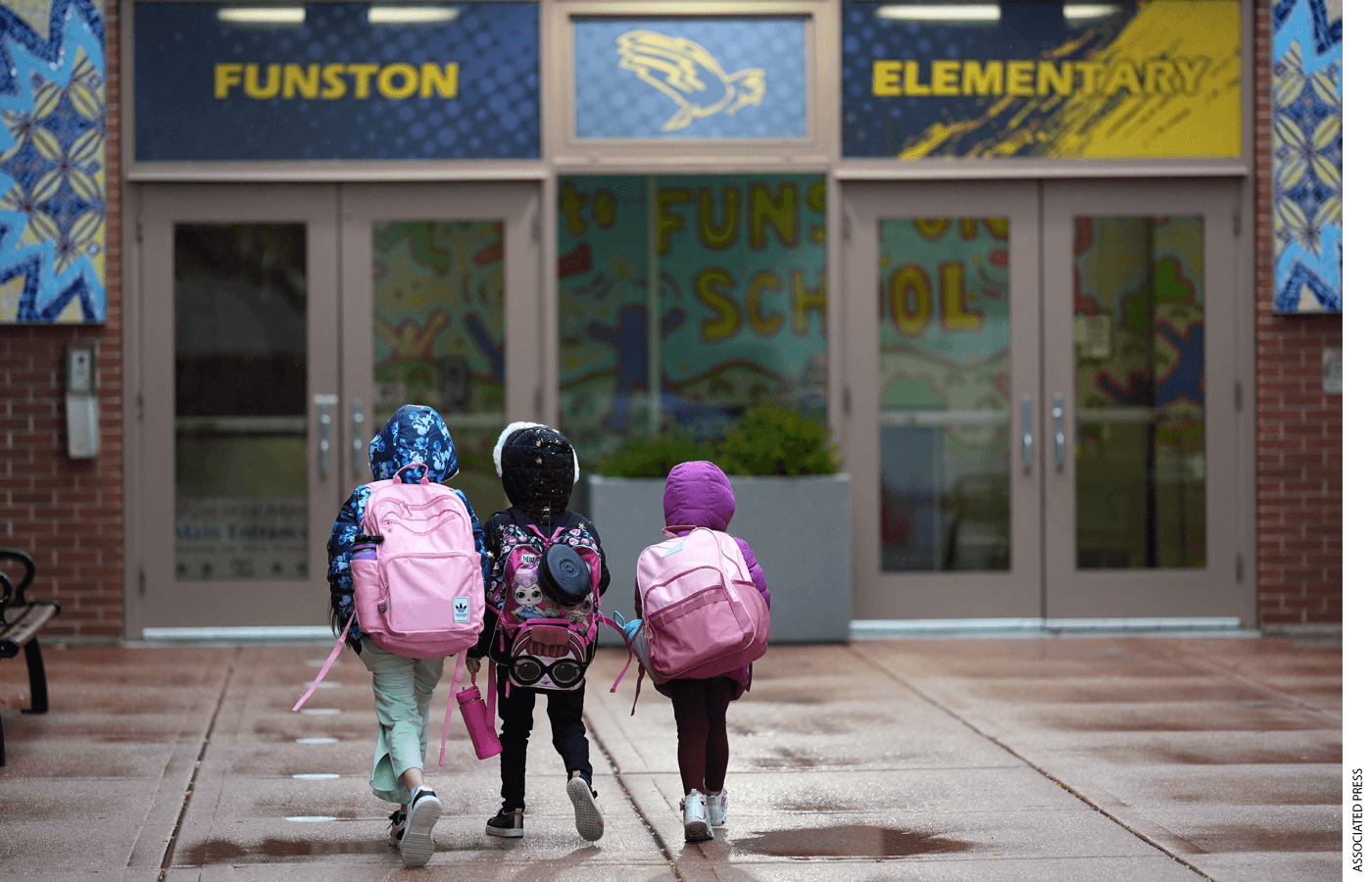
Guardians of Learning: Protecting Education Amidst Immigration Enforcement for Children
The classroom, a sanctuary for growth and discovery, is increasingly finding itself at the intersection of immigration policy and educational access.For many children, the fear surrounding immigration enforcement can cast a long shadow over their school days, leading to profound disruptions in their learning journey.
This article explores the critical challenges faced by immigrant children and their families, the legal precedents safeguarding their right to education, and the tangible impact of fear on academic outcomes, all while emphasizing the vital role of education in fostering a thriving society.
The Ripple Effect: How Immigration Enforcement Disrupts Schooling
Recent events have starkly illustrated the vulnerability of educational environments to immigration enforcement actions.When immigration raids occur, even in distant communities, the reverberations are felt acutely within school walls.
Studies indicate a significant spike in student absenteeism following such operations, with classrooms sitting noticeably emptier.
This surge in missed school days isn't confined to students directly affected by enforcement; it extends to a broader community of children, particularly those of Hispanic descent, who experience heightened anxiety and fear.
The impact of these disruptions is multifaceted:
- Increased Absenteeism: Fear of mistaken detention or family separation can deter children from attending school, even if their own immigration status is secure.
- Academic Decline: Each missed day translates to lost instruction time, leading to falling grades, poorer performance on standardized tests, and a greater risk of academic setbacks.
- Visible Anxiety: teachers report a palpable increase in stress and worry among immigrant children, affecting their ability to concentrate and engage in learning.
The consequences of these missed learning opportunities are substantial, potentially impacting a child's academic trajectory for years to come.
A Foundational Promise: The Legal Right to Education for All Children
The principle that all children, regardless of their immigration status, deserve access to education is not a new one.Over four decades ago, a landmark Supreme Court decision established a crucial precedent.
In 1982, the Court ruled in Plyler v.
Doe that states cannot deny children a free public education based on their immigration status.
This ruling recognized that conditioning educational access on a family's ability to pay or their documentation status creates insurmountable barriers to learning.
The Court's reasoning highlighted several key points:
- Equal Protection: The Fourteenth Amendment's promise of equal protection extends to all children residing within the United States' borders, irrespective of their immigration status.
- Preventing a Permanent Underclass: Denying education to undocumented children risks condemning them to a lifetime of hardship and limiting their potential to contribute to society.
- Inestimable Toll: The deprivation of education is not merely the loss of a public good; it inflicts profound social, economic, intellectual, and psychological harm on individuals.
The decision underscored that education is not a privilege reserved for a select few but a right that must be accessible to all children on equal terms, fostering a more inclusive and equitable society.
Erosion of a Promise: Challenges to Educational Access
Despite the clear mandate of Plyler v.Doe
, the promise of equal educational opportunity has faced persistent challenges.In the years since the ruling, various efforts have sought to impede access to classrooms for undocumented children.
These measures have ranged from requiring proof of legal status during school registration to legislative proposals aimed at tracking and reporting the number of undocumented students.
These challenges manifest in several ways:
- State-Level Restrictions: Some state legislatures have considered or enacted policies that mirror the tuition and enrollment requirements previously struck down by the Supreme Court.
- Federal Initiatives: At the federal level, there have been attempts to limit access to educational programs for immigrant children and to withhold funding for English Language Learners.
- Fear as a Barrier: Even when legal barriers are not explicitly erected, the pervasive fear of immigration enforcement can create a chilling effect, deterring families from enrolling their children or encouraging them to keep them home.
Doe
.While the ruling may stand on paper, the practical reality of fear and political hostility has created new obstacles, undermining the very foundation of inclusive education.
Quantifying the Impact: Data on Absenteeism and academic performance
Empirical evidence from across the United States paints a concerning picture of the tangible effects of immigration enforcement on student attendance and academic achievement.Research consistently shows a direct correlation between heightened immigration enforcement activities and negative educational outcomes for immigrant students.
Key findings from studies indicate:
- Increased Absenteeism in Affected Areas: School districts located near areas where mass deportations have occurred have experienced a notable increase in chronic absenteeism among Hispanic students.
- Widening Achievement Gaps: The gap in math test scores between Hispanic and white students has grown modestly in areas with increased immigration enforcement.
- Pronounced Effects on English Language Learners: Hispanic high school students who are English Language Learners have shown even more significant increases in absenteeism following immigration arrests.
- Lingering Consequences: The negative impact on school attendance often persists for weeks, and sometimes months, after immigration raids have concluded, demonstrating the long-term psychological toll.
Absenteeism is strongly linked to lower standardized test scores, reduced grade point averages, and a higher likelihood of dropping out of high school.
Furthermore, students who frequently miss class are also more prone to experiencing health challenges, further compounding their difficulties.
Beyond the Classroom: The Societal Costs of Educational Exclusion
The argument that immigration enforcement can be solved by simply preventing undocumented immigrants from entering the country overlooks the complex reality of individuals already living and contributing within the United States.Moreover, it betrays the fundamental spirit of the Plyler v.
Doe decision, which recognized that excluding children from education based on their parents' actions is neither just nor effective.
The Court itself addressed concerns about resource strain:
- No Improvement in Educational Quality: Barring undocumented children from schools does not necessarily improve the quality of education for other students.
- Indistinguishable Educational Needs: Undocumented children often have educational needs that are indistinguishable from those of legally resident children.
- Unjust Punishment: Punishing children for circumstances beyond their control, such as their parents' immigration status, is counterproductive and harmful.
When children are denied the tools to learn and thrive, it not only impacts their individual futures but also diminishes the collective potential of society.
As Justice Brennan wisely noted, ignoring the educational needs of select groups leads to significant social costs, as the nation misses out on the valuable contributions these individuals could make.
Conclusion: Upholding the Promise of Education for All
The ongoing challenges to educational access for immigrant children underscore the critical importance of upholding the principles established in Plyler v.Doe
.The fear and anxiety generated by immigration enforcement actions have a demonstrable and detrimental impact on student attendance and academic performance.
Denying these children equal access to a free public education strips them of the essential tools needed to become engaged and contributing members of society, potentially condemning generations to economic precarity and diminished opportunities.
At Mentofy, we believe that education is a universal right and a powerful engine for individual and societal progress.
Protecting the educational journey of every child, regardless of their background or immigration status, is not only a legal imperative but a moral one.
By fostering inclusive learning environments and ensuring that fear does not become a barrier to knowledge, we strengthen the very foundations of equality and democracy that define our nation, ensuring a brighter future for all.






 Explore AI Teaching Tools
Comments (0)
Please login to comment
No comments yet
Be the first to comment on this article