
Global Impact: California Students Forge Connections Through Transborder Service
In an era often defined by international complexities, the spirit of human connection and service transcends borders.This article explores the profound impact of California students who are actively bridging divides through dedicated volunteer work, offering essential health services and building homes in communities beyond their immediate reach.
These young changemakers, balancing rigorous academic pursuits with their commitment to global well-being, demonstrate that empathy and action can foster significant positive change, even amidst challenging geopolitical landscapes.
We delve into their motivations, experiences, and the transformative power of their efforts.
Building Bridges: Humanitarian Efforts in Tijuana
The vibrant city of Tijuana, Mexico, serves as a crucial nexus for cross-border collaboration, particularly for students from Southern California universities.Amidst evolving immigration policies and trade discussions, a dedicated cohort of students is actively engaged in projects that directly benefit its residents.
Their work highlights a commitment to shared humanity, focusing on tangible improvements in living conditions and access to vital services.
Tijuana Home Build: Constructing Futures, One House at a Time
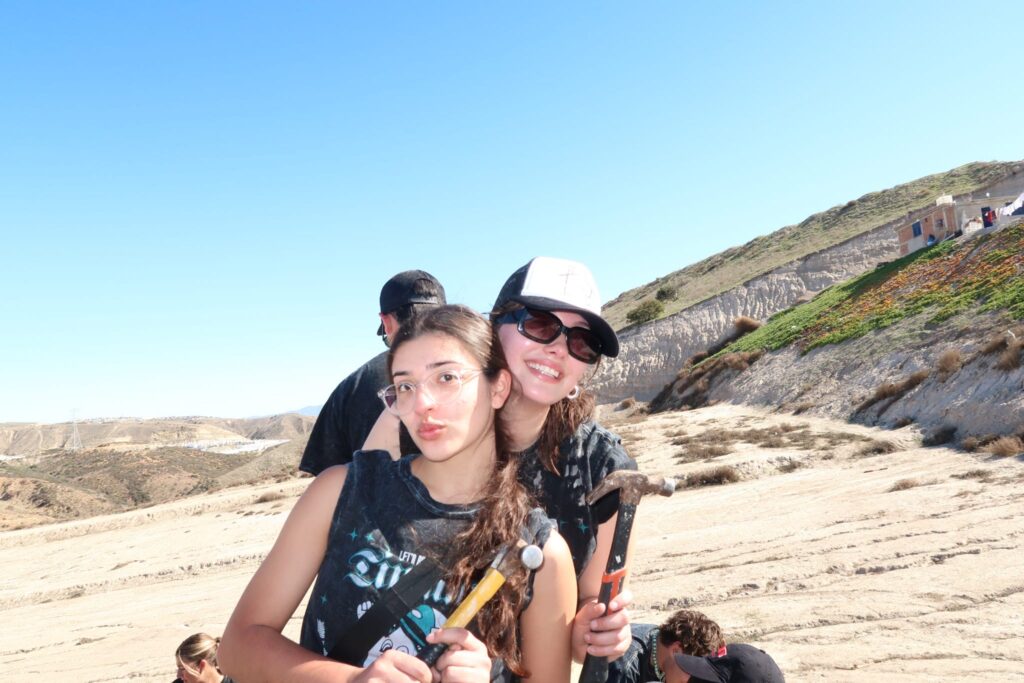
Victoria Morison, a linguistics major at San Diego State University, found her calling through the Tijuana Home Build (TJHB) organization.What began as a chance encounter on campus blossomed into a deeply meaningful commitment.
TJHB, a student-led initiative, mobilizes resources and volunteers for an annual trip to construct homes for families in need.
Morison's journey exemplifies how community service can profoundly influence academic focus and personal growth.
Morison's involvement with TJHB not only eased her transition to a four-year university but also ignited a passion for campus engagement.
Previously, she admitted to struggling with academic consistency.
However, the structure and purpose of TJHB provided a powerful motivator, encouraging her to prioritize her studies. "The more I get involved with this club, the more I'm really proud to be at SDSU," she shared. "I love this place and I love the people and I love being involved here.
I don't want my academics to suffer because I'm not taking it seriously."
Her academic path has also been enriched by her volunteer work.
As a linguistics major, Morison's desire to connect with the families she serves has fueled her pursuit of Spanish language proficiency.
This practical application of her studies has inspired her to consider a future in teaching English as a foreign language abroad.
The TJHB experience involves more than just construction; it's a comprehensive cultural immersion.
Students engage in fundraising, gather essential supplies, and dedicate time to learning about Mexican culture and basic Spanish phrases.
This preparation ensures a more impactful and respectful engagement during the build itself.
The culmination of their efforts is a transformative weekend.
A team of approximately 30 students, guided by experienced carpenters, works alongside the recipient family to erect a complete home from a pre-poured foundation.
The process involves framing, painting, roofing, and furnishing the house with donated items.
Beyond the physical labor, these weekends foster deep connections.
Shared meals, playful interactions with children, and heartfelt conversations create lasting bonds between volunteers and families.
The project culminates in a poignant "key ceremony," a moment of immense joy and gratitude as the family receives the keys to their new home, a symbol of security and opportunity.
Global Health Initiatives: Addressing Healthcare Disparities
The need for accessible healthcare is a universal concern, and students from UC San Diego are at the forefront of addressing these critical gaps through various health-focused volunteer programs.Their work in Tijuana clinics provides invaluable medical support and offers a unique educational experience that goes far beyond textbook learning.
Health Frontiers in Tijuana (HFiT): Hands-On Medical Training
Dian Murphy, a recent global health graduate from UC San Diego, actively participated in programs like the Flying Samaritans, the Asylum Seekers Clinic, and Health Frontiers in Tijuana (HFiT).HFiT, in particular, offered a structured, academic approach to international health.
This course provided students with direct experience working in a health clinic situated just across the border.
Every Saturday, students would cross the San Ysidro border and make their way to the Padre Chava Soup Kitchen, where the HFiT clinic operates.
Upon arrival, they would engage in an hour-long lecture led by the clinic's physician, Jose Luis Burgos.
These sessions delved into critical topics such as the social determinants of health, ultrasound techniques, renal disease, and the management of infectious diseases like tuberculosis and HIV.
Murphy emphasized the immediate relevance of this learning: "It's not some abstract idea that's being covered in class that you'll be tested on a couple of weeks later.
It's like, these are the actual consequences of what is going on."
Murphy's commitment extended beyond her undergraduate studies.
Post-graduation, she continued her involvement with HFiT, collaborating with UCSD, HFiT physicians, and the Universidad Autónoma de Baja California.
This partnership led to a research study focused on identifying barriers to orthopedic care in Tijuana.
Her research involves weekly trips to the clinic, where she surveys patients to understand the obstacles they face in accessing necessary medical attention.
This research encompasses a diverse patient population, including migrants, deportees, and local Mexican citizens.
The prominent barriers identified include patients prioritizing more urgent health concerns over orthopedic issues, a general lack of specialized orthopedic doctors, and limited access to essential healthcare resources.
Murphy noted that many orthopedic injuries treated at the clinic, while sometimes minor, often go unaddressed, leading to more severe complications.
A particular area of concern is the high incidence of lower leg, foot, and ankle injuries, which are especially debilitating for a population that relies heavily on walking for transportation.
Her research, which began six months prior, is expected to continue for another six months, with the ultimate goal of academic publication to inform policy and improve access to care.
Murphy's personal journey into orthopedics was sparked by her own knee injury.
A torn ACL, left untreated, resulted in prolonged crutch use and a significant reduction in knee mobility.
This experience instilled in her a profound appreciation for the medical system and the expertise of surgeons. "If I had not had that care and a really confident surgeon to deal with my complex issue, I would not be able to walk today," she reflected. "I'm super grateful for that surgeon and the system that supported it — doctors, health care, all of it — so that I'm able to walk today.
So I wanted to pass that on to people who would be in my situation, if not one worse." Her work with HFiT has not only provided practical experience but has also illuminated a clear path toward her future medical career, equipping her with invaluable skills in navigating low-resource settings and fostering deep empathy for those she serves.
Flying Samaritans: Sustainable Healthcare for La Morita
The Flying Samaritans, a San Diego State University student organization, operates a monthly free health clinic in La Morita, Tijuana.This initiative, involving a caravan of approximately 60 students, provides a wide array of essential medical services to the community.
Shawn Wong, a kinesiology major, and Daniela Cázares, a public health major, have been integral to the Flying Samaritans since their freshman year.
Cázares currently serves as the external vice president, while Wong holds the position of clinic coordinator.
The clinic offers comprehensive services, including patient registration, laboratory testing, physical examinations by licensed physicians, and specialized dental and optometry care.
A dedicated public health station provides food and clothing donations, alongside educational presentations on vital health topics like feminine hygiene and dehydration.
Cázares highlighted the overarching objective: "This is all with the end goal of improving that community's health and reaching as many people as possible to get them on track to improving their well-being." Wong emphasized the scarcity of certain services, particularly dental and optometry, in the community, underscoring the critical role the Flying Samaritans play.
The organization also aims to expand its offerings to include psychological services in the future. "The recurring aspect and the sustainability [of the clinics] is something that is extremely valuable," Wong stated. "Especially with us being so close to Mexico, building a binational relationship with them is something very fruitful as well."
Cázares has been instrumental in modernizing the clinic's operations by implementing an electronic medical record system.
This technology allows for better tracking of patient history and medical information, enhancing the quality of care provided. "I’ve been working on that for a couple of months now, so seeing it come to life at the last clinic was really fun," she expressed. "It’s a very fulfilling experience being able to bring them care and medications that they otherwise wouldn’t have access to."
Despite the rewarding nature of their work, the students have encountered increased challenges at the border crossing.
Stricter regulations and a heightened presence of Border Patrol agents have led to longer wait times, impacting their return journey.
Cázares described a "bottleneck effect" at the border, often delaying their return to San Diego until late in the evening.
To mitigate these issues, Wong and Cázares, as executive board members, have adopted a more proactive approach, ensuring all members have the necessary documentation prepared in advance. "It is definitely a large task to transport almost 60 people across the border," Wong acknowledged. "It does sometimes become a little stressful; things are bound to happen and not everything is going to go according to plan, as much as we want to keep the caravan in order." Nevertheless, the dedication and commitment of the volunteers make these long days immensely worthwhile. "Being able to give out health care to anyone, or any community, is a very fruitful experience in general," Wong concluded. "I’m grateful that, not only me, but everyone in our circle or committee here at SDSU is in the position to do so.
It’s a very fulfilling experience."
International Service: Broadening Perspectives Through Global Engagement
Beyond the immediate border region, the spirit of service extends to distant lands, offering students unparalleled opportunities for cultural immersion and global understanding.These experiences shape academic trajectories and foster a deep appreciation for diverse ways of life.
Peace Corps in Zambia: Reforestation and Community Development
Samuel King, a geography graduate student at Long Beach State, found inspiration in a simple Peace Corps sticker from his childhood.His two-year volunteer service in the Eastern Province of Zambia, through the Peace Corps' Linking Income, Food and Environment (LIFE) program, proved to be a profoundly transformative experience.
His work centered on reforestation efforts, encompassing local tree nursery management and tree planting initiatives.
King also engaged in educational outreach, teaching geography, life sciences, and climate studies at local grade schools.
Furthermore, he conducted grant-writing workshops for residents, empowering them to access agricultural resources. "Peace Corps service has profoundly impacted my awareness of the world," King stated. "It opened my eyes to a whole new way of life and culture, very different from the United States."
During his time in a rural farming community, King lived with a host family, becoming an integrated member of their village.
He actively participated in daily farm chores, from plowing fields and planting seeds to assisting with childcare.
The warmth and acceptance he received were deeply impactful, leading to him being given a Zambian name, Samuel Banda, a name carrying significant cultural meaning. "I felt like the warmth and the welcoming of the people really resonated with me and allowed me to thrive," King shared.
His immersion in the local community was extensive, with his closest neighbors residing a considerable distance away.
This isolation fostered a deep connection with the local culture, leading him to become fluent in Nyanja, a prominent language in southern Africa.
His linguistic skills were put to excellent use when he organized an educational concert featuring local musicians and traditional performances.
This event also served as a vital health clinic, offering free HIV testing in collaboration with local health ministries.
The concert aimed to raise awareness about HIV/AIDS testing and available community resources. "It was so amazing to see all of these community members work together to make it possible," King remarked.
Upon his return to the U.S., King pursued a master's degree in geography at Long Beach State, supported by the Peace Corps' Coverdell Fellowship, which provides financial aid to returned volunteers.
He is currently conducting thesis research in Zambia, examining the impact of significant cuts to USAID funding in the region.
His research involves interviewing local program leaders to understand their perspectives on the dismantling of health, climate, and governance programs.
He noted that many residents are left with uncertainty and a diminished trust in American aid. "The American partnership is compromised now," King observed. "Either it's going to change and manifest itself in a different way, or perhaps African nations will abandon America and seek help from other countries."
King anticipates completing his field research in the coming months, after which he plans to return to the U.S. to finalize his thesis, hoping it will offer valuable insights for both nations.
His long-term aspirations include returning to Zambia as an English teaching assistant through the Peace Corps’ Fulbright Scholar Program. "I want to dedicate myself to international relations and global studies," King affirmed. "The Peace Corps’ volunteer service was the perfect opportunity for me to gain this awareness and these skills."
Conclusion
The experiences of these California students underscore the profound impact of transborder service and international volunteering.Through initiatives like home building, health clinics, and community development programs, they are not only addressing critical needs but also fostering invaluable cross-cultural understanding and personal growth.
Their dedication, often achieved while managing demanding academic schedules, serves as an inspiring testament to the power of engaged citizenship and the enduring human capacity for connection and positive change.
These young leaders are truly building a better world, one meaningful interaction at a time.





 Explore AI Teaching Tools
Comments (0)
Please login to comment
No comments yet
Be the first to comment on this article