
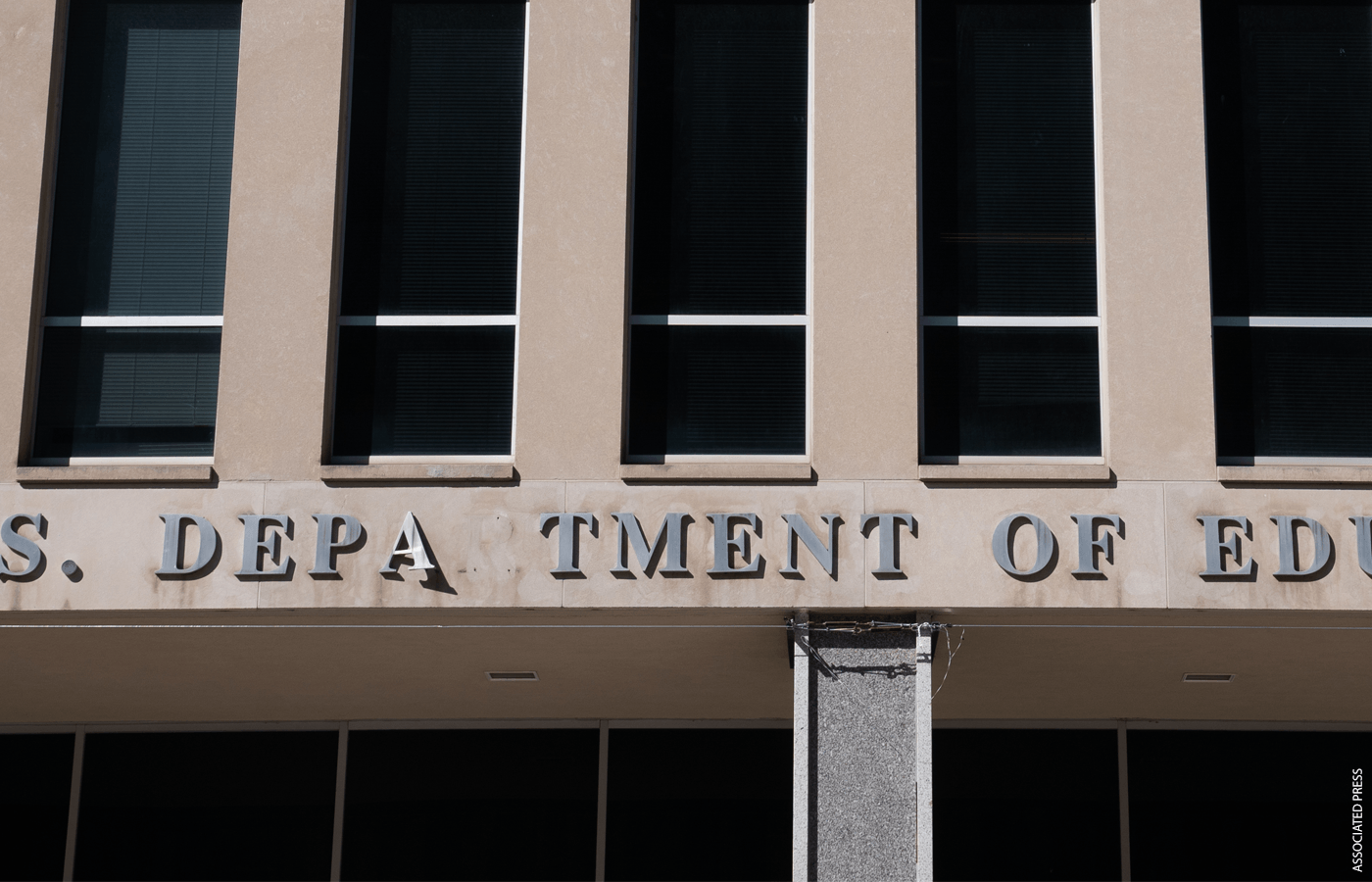
Federal Education Landscape Shifts: Key Offices Relocate Amidst Interagency Agreements
In a move that has sparked considerable debate and raised numerous questions, the federal government has initiated a series of interagency agreements that will see significant operational responsibilities for the Office for Civil Rights and the special education division depart from the Department of Education. These changes, while administrative in nature, signal a potential reorientation of how critical education functions are managed at the federal level.
Understanding the Mechanics of Interagency Agreements
At their core, these agreements are formal arrangements between federal departments designed to facilitate the sharing of resources, expertise, or operational support. For decades, such pacts have been a standard tool for agencies needing to leverage capabilities residing elsewhere within the government to fulfill their mandates.
What distinguishes the current set of agreements is their scale and the high-profile nature of the offices involved. The administration is utilizing these mechanisms to transfer substantial day-to-day operational work for key education programs to other federal bodies, while crucially retaining the ultimate legal authority within the Department of Education. This structural shift has naturally drawn attention, as these functions have historically been administered directly by the education department.
It is vital to note that these are administrative adjustments, not legislative changes. This means that a future administration could potentially reverse these arrangements, highlighting their reliance on executive branch decisions rather than statutory mandates.
The Nuance of Political Control and Operational Shifts
A common point of confusion revolves around the concept of political control when operational work moves to different agencies. Congress vests legal authority in specific departments through legislation, and this statutory power cannot be unilaterally transferred by the executive branch without congressional consent.
However, the executive branch does possess considerable flexibility in determining how the underlying work is executed. This is precisely where these interagency agreements find their utility. They cannot nullify the department's legal obligations, but they can significantly alter who performs the tasks, where personnel are situated, and how decisions are implemented.
The intricate details of how complaints and casework will be managed on a daily basis are still being finalized. Nevertheless, the fundamental principle remains: officials within the Department of Education are legally bound to maintain oversight of these programs, irrespective of where the operational work is performed. The practical realization of this structure is a subject of ongoing coordination between the department and the agencies now involved in these agreements.
Key Departures and Their Potential Ramifications
Two of the most prominent shifts involve the Office for Civil Rights moving to the Department of Justice and the special education office relocating to the Department of Health and Human Services. These moves are expected to have tangible impacts, primarily on staffing and operational workflows, rather than on the underlying programs themselves.
Some employees from the Department of Education may transition to the agencies receiving these functions, potentially working under different management structures or taking on new roles. Funding streams, while remaining appropriated to the Department of Education, will likely be administered by the receiving agencies for grants.
For schools, districts, and families, the immediate day-to-day experience may not undergo dramatic transformations. The critical questions revolve around whether these new arrangements will ultimately affect the speed of response, the quality of technical assistance, the thoroughness of investigations, or the overall consistency of federal oversight.
Timeline of Transition
While the interagency agreements technically take effect immediately, the implementation of these changes is unlikely to be instantaneous. The federal government faces the complex logistical task of relocating staff, systems, contracts, and grants between agencies.
Indications suggest that current-year special education grants will continue to be managed through the Department of Education before any future grants are transferred to HHS. It is anticipated that most schools and states will experience minimal disruption during the upcoming summer and fall, with more significant operational adjustments likely to emerge over the next year.
The Administration's Strategic Rationale
The administration appears to be pursuing a dual objective with these moves. Firstly, there is a clear intent to reduce the operational footprint and size of the Department of Education without requiring congressional action to formally dissolve it.
Secondly, administration officials contend that certain functions of the Department of Education are better aligned with the missions of other federal agencies. For instance, civil rights enforcement is seen as closely related to the core responsibilities of the Department of Justice, while certain disability-related functions are believed to overlap with the expertise housed within HHS.
Whether one agrees with this strategic reasoning is a separate matter. However, it is important to recognize that these interagency agreements are viewed by the administration as part of a broader effort to re-evaluate the optimal placement of federal education responsibilities across the government.
Assessing the Significance of These Structural Changes
Amidst the strong reactions and heightened rhetoric surrounding these moves, a measured assessment of their impact is crucial. The true significance of these changes is contingent on the timeframe considered.
In the short term, these agreements represent more of an administrative reorganization than a substantive alteration of educational policy. The underlying laws governing civil rights and special education remain unchanged, and students' rights are not diminished. Schools are still bound by the same federal requirements.
However, these shifts are far from trivial. They signify a notable change in how the federal government structures its approach to education responsibilities. Over time, such organizational realignments can subtly influence priorities, enforcement strategies, and the prevailing institutional culture.
Even if legal authority remains constant, the identity of the entity performing the work and the methodologies employed are significant factors. Therefore, it is advisable to avoid both extremes of interpretation: these moves are neither the dissolution of federal oversight nor purely symbolic gestures. They are meaningful structural changes whose long-term consequences will be determined by the effectiveness of their implementation.
What to Expect: Continuity and Change
The most critical aspect that will not change is the law itself. Protections related to civil rights will persist, regardless of which agency is responsible for their administration. What is likely to evolve are the processes and procedures associated with enforcing these laws.
For example, a key area to monitor is the handling of Section 504 complaints concerning discrimination against individuals with disabilities. While families will continue to file these complaints through the Department of Education, the investigative work may increasingly be undertaken by personnel within the Department of Justice. This means complaints might still enter through the department's established channels, but the subsequent investigative actions could be managed by a different entity.
Long-Term Implications and Cultural Integration
Looking further ahead, a significant potential implication is that each relocated office may begin to adopt the cultural norms and strategic priorities of its new host agency. This could influence how issues are framed and how resources are allocated.
The Department of Justice, for instance, typically approaches matters through a lens of law enforcement and litigation. In contrast, the Office for Civil Rights has historically operated as a more neutral fact-finding body. This divergence could lead to civil rights cases becoming more closely integrated with broader federal enforcement initiatives.
Similarly, on the special education front, greater coordination with health, rehabilitation, and human services programs might emerge, given the focus of HHS. Whether these potential shifts are perceived as improvements or drawbacks will largely depend on individual perspectives and priorities.
Navigating Enforcement Discretion and Case Processing
A point of considerable concern raised by former Office for Civil Rights staff pertains to the differing operational models of the OCR and the Department of Justice's civil rights division. The OCR's case-processing manual reportedly mandates the evaluation of every complaint received, whereas the DOJ's civil rights division operates with significant enforcement discretion and lacks such a formal obligation.
This distinction presents a critical implementation challenge. The Office for Civil Rights has long adhered to a structured system for processing complaints, with clear steps for screening, jurisdictional review, and procedural adherence. The Justice Department, like many litigating agencies, exercises broad discretion in selecting cases that align with its strategic priorities, legal significance, or potential for systemic impact.
While the Department of Education retains ultimate legal authority, the increased involvement of the Justice Department in day-to-day investigative work raises legitimate questions about potential shifts in case prioritization and resolution timelines. The answer to whether this alters the fundamental obligations of the OCR remains to be seen and warrants close observation in the coming year.
Addressing Field Concerns and Advocacy Perspectives
The field and various advocacy groups have voiced strong opposition to these changes. Leaders in special education administration have articulated that the Individuals with Disabilities Education Act (IDEA) is fundamentally an educational law, not a healthcare statute, and should continue to be overseen by experts steeped in educational policy, pedagogy, and accountability.
These concerns are understandable and merit serious consideration. Many advocates express apprehension that the migration of responsibilities outside the traditional education sphere could diminish specialized educational expertise. Conversely, proponents of the moves argue that students with disabilities often interact with a complex web of services, including health and human services, and that enhanced interdepartmental coordination could yield benefits.
The ultimate measure of success will be whether schools receive clear and consistent guidance, families obtain timely support, and student outcomes demonstrably improve. Failure to achieve these objectives could intensify criticism and potentially lead to legal challenges.
Lessons from Previous Interagency Agreements
Assessing the effectiveness of the administration's prior interagency agreements offers some insight into how these new arrangements might unfold. It is still early days, and definitive conclusions should be drawn cautiously.
Some previously announced agreements have proceeded without significant public disruption, suggesting that they can function effectively from an administrative standpoint. However, it remains unclear whether these arrangements have enhanced program effectiveness or introduced new bureaucratic hurdles. Furthermore, the implementation of some of these agreements has been protracted, with certain programs, such as K-12 formula funds like Title I, continuing under the Department of Education's administration.
The key takeaway is that the success of any interagency agreement hinges on meticulous management. A well-executed agreement can operate with relative seamlessness, whereas a poorly managed one can foster confusion and delays.
Guidance for Educational Leaders
For educational leaders seeking to navigate these evolving federal structures, staying informed is paramount. However, it is equally important to resist the urge to overreact to initial headlines, as federal reorganizations often generate considerable uncertainty but few immediate, tangible consequences.
The most impactful changes are likely to manifest in shifts in official guidance, enforcement practices, reporting requirements, and established communication channels. These are the areas that will most directly influence day-to-day operations and should be closely monitored.





 Explore AI Teaching Tools
Comments (0)
Please login to comment
No comments yet
Be the first to comment on this article