
A significant majority of parents with young children are not living the lives they envision, with a profound desire for more quality time trumping other concerns. A recent national survey reveals a stark disconnect between the ideal scenarios families want and their current realities, a gap that begins even before birth with insufficient parental leave. This sentiment underscores a critical challenge for educators: understanding the pervasive pressures on families that can impact children's readiness and engagement in school.
Parents Crave More Time, Less Chore
The simplest, yet most impactful, finding from the New Practice Lab's extensive survey is clear: parents want more time and more money. This isn't a nuanced policy request; it's a fundamental human need expressed by those navigating the demanding early years of parenthood. The desire for increased quality time with children, whether for play, outdoor activities, or travel, is almost universal.
Instead of these cherished moments, parents report that much of their limited free time is consumed by domestic tasks like cooking and cleaning. This reality holds true across diverse demographics, including income levels, geographic locations, and racial or ethnic backgrounds, highlighting a shared struggle in balancing the demands of daily life with the desire for meaningful family connection.
Nearly three in four parents said they want more quality time with their children, such as playing, being outside and traveling.
This pervasive feeling of being time-poor has direct implications for how children experience their early years and, by extension, their preparedness for formal education. When parents are stretched thin by household responsibilities, the opportunities for enriched learning experiences at home, such as reading together or engaging in educational games, can be significantly curtailed.
The Parental Leave Paradox: Wanting More, Getting Less
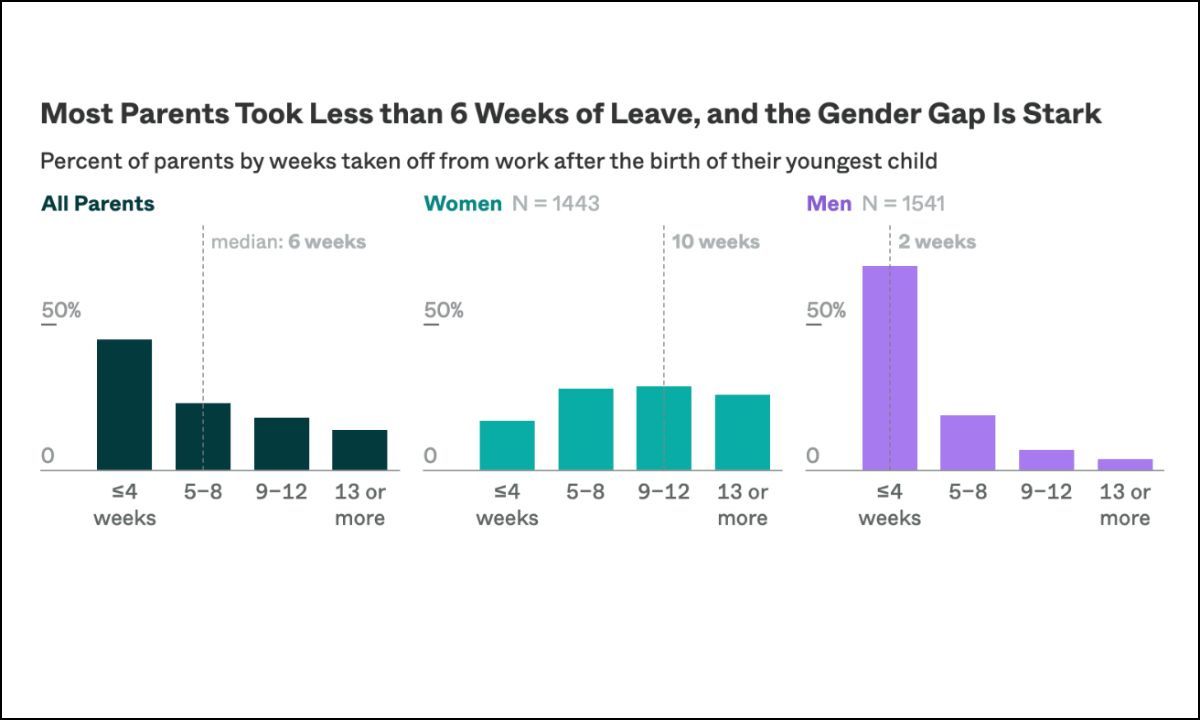
The desire for extended time with newborns is palpable, with over half of parents surveyed expressing a wish for more time off after their child's birth. This sentiment is equally strong for both mothers and fathers, indicating a shared recognition of the crucial bonding and adjustment period that new families need.
The stark reality, however, is that neither mothers nor fathers are consistently getting the parental leave they want. This lack of adequate time off can create immediate financial strain and emotional stress, setting a challenging tone for the early stages of parenthood. For educators, this means children may arrive at school already carrying the weight of family anxieties, impacting their social-emotional development and focus.
A 2024 report by the New Practice Lab at New America, surveying approximately 5,500 parents and primary caregivers of children from birth to age 5, found that 55% of parents wanted more time off after their child was born. This desire was consistent across genders.
The absence of a national paid leave program in the United States, coupled with the high cost and limited accessibility of childcare, exacerbates this issue. Families are often forced into difficult choices that do not align with their ideal scenarios, leading to a persistent sense of dissatisfaction and compromise.
Work Arrangements: A Mismatch of Desire and Reality
The survey also sheds light on the complex relationship parents have with work. The vast majority of parents—nearly nine in ten—express a desire to work in some capacity. This aspiration is nearly universal among fathers (91%) and still very high among mothers (85%).
However, a staggering 75% of parents report that their current work arrangement is not what they want. This significant disconnect suggests that while parents value the contributions and personal fulfillment that work can provide, the available options often fall short of their needs and preferences. This can lead to a feeling of being constantly pulled in different directions, unable to fully commit to either work or family responsibilities.
The Appeal of Flexible and Part-Time Work
For many mothers, especially, the ideal work scenario involves flexibility or part-time hours. While a notable percentage of dads also prefer full-time work, a substantial portion of moms indicated a strong preference for arrangements that allow for greater integration with family life. This desire for adaptable work structures is a key takeaway for understanding how families are seeking to navigate their professional and personal lives.
The challenges in finding suitable work arrangements can have a ripple effect on children. When parents are unhappy or stressed about their jobs, it can impact their presence and engagement at home. Educators can play a role by fostering a supportive classroom environment that acknowledges these external pressures and provides a stable, nurturing space for children.
A notable finding is that while 30% of moms and 64% of dads want to work full-time, a significant portion of moms (28%) and a smaller segment of dads (15%) expressed a desire for flexible work. Furthermore, 25% of moms and 12% of dads are looking for part-time work options.
Childcare Preferences: A Spectrum of Needs
When it comes to childcare, the survey reveals that parents have diverse preferences, with no single solution emerging as universally dominant. Roughly one-third of respondents ideally prefer to care for their children themselves, reflecting a strong desire for direct involvement in their children's upbringing.
Other common preferences include a combination of care arrangements, having another parent take the lead, utilizing formal childcare settings, relying on relatives or friends, or employing nannies and sitters. This mosaic of needs underscores the complexity of childcare solutions and the importance of offering a range of accessible and affordable options.
“There wasn’t a single solution that crossed the 50% threshold.”
Amira Choueiki Boland, Chief of Staff at the New Practice Lab
The lack of a one-size-fits-all approach to childcare means that families often face difficult trade-offs. These decisions can be influenced by financial constraints, availability, and personal values, all of which can impact a child's daily experience and their readiness for learning. Educators can support families by being understanding of different childcare situations and by providing resources or information where possible.
The Educator's Role in a Time-Scarce World
The findings from this national survey offer a crucial lens through which educators can better understand the home environments and pressures that children bring into the classroom. The pervasive desire for more quality time with children, coupled with the challenges of parental leave and work-life balance, creates a context where children may arrive at school with varying levels of readiness and emotional regulation.
Understanding these parental wants is not just about empathy; it's about informed practice. When educators recognize that many parents are struggling to find the time they desire for enriching activities, they can proactively integrate more of these experiences into the school day. This might involve dedicating specific time for interactive learning, incorporating more play-based activities, or providing resources for parents to engage their children at home.
Leveraging Technology to Bridge the Gap
Educational technology can be a powerful ally in addressing some of the time constraints faced by both parents and educators. Tools that streamline tasks and enhance engagement can free up valuable time for more meaningful interactions.
For instance, AI-powered tools can significantly reduce the burden of lesson planning and assessment. Platforms offering features like AI lesson plan generation and AI grading can help teachers reclaim time that can be redirected towards direct student support and engagement. The ability to quickly create varied assessments, such as those offered by an exam creator, can ensure students are challenged appropriately without overwhelming the teacher's schedule.
Furthermore, interactive classroom tools can make learning more engaging and efficient. MentofyCove classroom games, such as a live quiz or word search game, can be used to reinforce concepts in a fun, competitive environment, maximizing learning within limited class time. Similarly, MentofyBoards can provide visual cues and timers, helping to manage classroom activities effectively.
Facilitating Family Engagement
Given the parental desire for more quality time, educators can look for ways to foster stronger home-school connections that respect families' time constraints. This could involve offering flexible communication channels, providing concise and actionable tips for home learning, or organizing events that are easily accessible.
The challenge of student grouping can also be addressed with technology. Tools like MentofyGroups can use AI to create balanced groups for collaborative activities, saving teachers valuable time and ensuring equitable participation. This efficiency allows educators to focus more on the pedagogical aspects of group work rather than the administrative logistics.
When parents feel supported and understood by their children's schools, they are more likely to be engaged partners in their child's education. Recognizing the pressures they face—the desire for more time with their children, the complexities of work, and the search for reliable childcare—allows educators to build bridges of communication and collaboration that benefit everyone involved.
The insights from this survey are a powerful reminder that the well-being of children is intrinsically linked to the well-being of their families. By acknowledging and addressing the wants and needs of parents, educators can create more supportive and effective learning environments, fostering a generation of children who are not only academically prepared but also emotionally secure and well-supported.






 Explore AI Teaching Tools
Comments (0)
Please login to comment
No comments yet
Be the first to comment on this article