
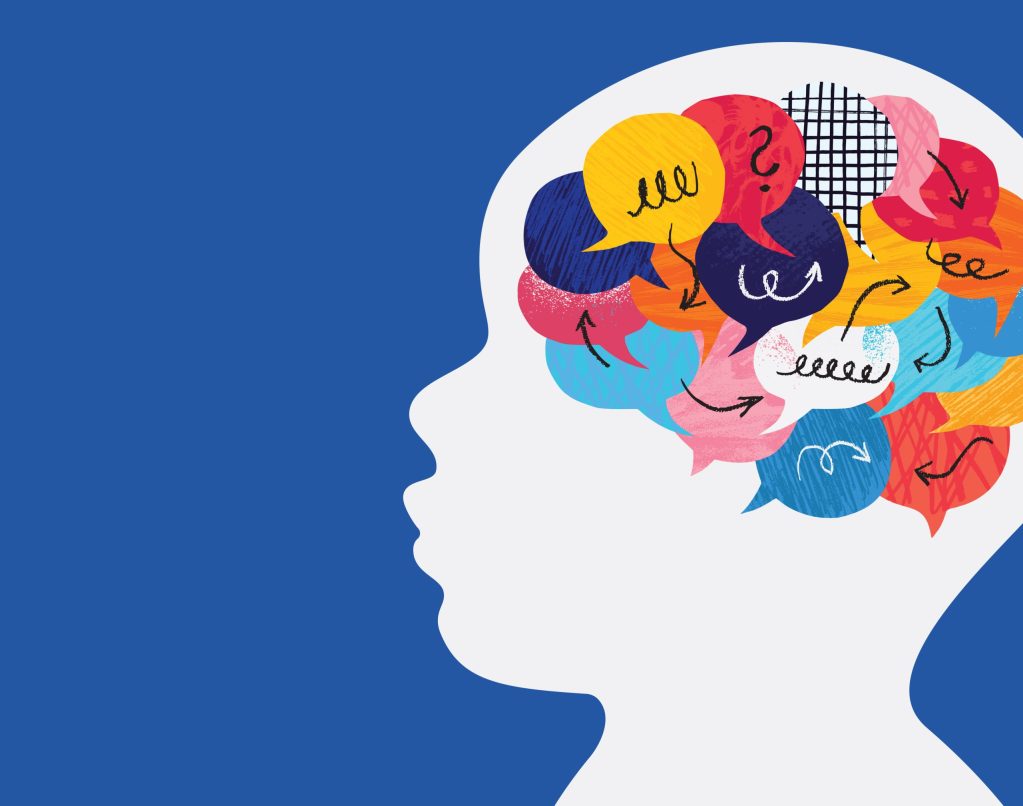
Unlocking Potential: Rethinking Early Childhood Giftedness Identification
Discover why traditional methods of identifying giftedness in preschoolers may fall short and explore more effective, equitable approaches.
This article delves into the complexities of early assessment, offering insights for educators, parents, and policymakers aiming to nurture every child's unique talents.
The Elusive Quest for Early Giftedness Identification
The journey to identify and nurture gifted children often begins at a remarkably young age.
In many educational systems, including those in major cities like New York, the process of determining who is "gifted" can start even before a child enters kindergarten.
This practice, while well-intentioned, raises significant questions about the validity and reliability of assessments administered to four-year-olds.
The desire to provide advanced learning opportunities for children who demonstrate exceptional abilities is understandable, but the methods employed are frequently debated by experts.
When we consider the developmental stage of preschoolers, their abilities are in a constant state of flux, making definitive pronouncements about their long-term academic trajectory a challenging, if not impossible, endeavor.
The very definition of giftedness itself becomes a focal point when these early assessments are made.
Historically, the identification of giftedness in young children has relied on a variety of strategies.
These often include cognitive testing, which aims to measure a child's intelligence relative to their peers, and achievement testing, designed to gauge how much and how quickly a child is learning.
Teacher evaluations also play a crucial role in many districts.
However, the effectiveness and fairness of these methods, particularly when applied to very young children, are subjects of ongoing research and discussion.
The pressure to secure a spot in specialized programs can lead parents to seek out any perceived advantage, sometimes blurring the lines between genuine identification and a competitive race for limited resources.
This creates a system where the focus can shift from nurturing potential to navigating a complex and often inequitable selection process.
Challenges with Traditional Assessment Methods
For decades, cognitive testing has been a cornerstone of gifted identification.
These tests, often in the form of IQ assessments, attempt to quantify a child's intellectual capacity.
The underlying assumption is that a higher score indicates a greater potential for academic success.
However, research consistently highlights significant limitations when these tests are applied to preschoolers.
One of the primary concerns is the inherent bias that can be present in such assessments.
Tests are often designed within a specific cultural context, potentially disadvantaging children from diverse backgrounds who may not share the same experiences or familiarity with the language and concepts used.
This can lead to an inaccurate portrayal of a child's true abilities, creating an inequitable playing field from the outset.
Furthermore, the stability of cognitive scores in very young children is a major point of contention.
Studies analyzing hundreds of research papers have found that cognitive test results for four-year-olds are not highly predictive of their performance even in the short term, let alone years down the line.
Children at this age are undergoing rapid development, and their scores can fluctuate significantly based on a multitude of factors, including their mood on test day, their familiarity with the testing environment, and even recent learning experiences.
This lack of stability makes high-stakes decisions, such as placement in a gifted program, highly problematic.
When the goal is to identify a child's enduring potential, relying on assessments that are known to be unstable is a flawed strategy.
The Equity Gap in Testing
A significant issue that has plagued cognitive testing for giftedness is the disparity in access and preparation.
In many areas, parents with greater financial resources have been able to afford private evaluations or extensive test preparation for their children.
This creates a distinct advantage for those who can pay, leading to a system where socioeconomic status can heavily influence a child's chances of being identified as gifted.
The notion of a public school system offering equitable opportunities is undermined when such disparities exist.
Even when private testing is disallowed, the prevalence of costly test preparation courses can still create an uneven playing field, teaching children specific strategies and vocabulary that may not reflect their innate abilities but rather their exposure to targeted training.
The concern about cultural bias extends beyond just language.
Nonverbal tests, designed to bypass linguistic barriers, have also been found to be less equitable than initially hoped.
While they aim to assess innate capacity rather than learned knowledge, prior experience with problem-solving, patterns, and even the concept of taking tests can still provide an advantage.
Children who have had more opportunities to engage in activities that mirror test-like scenarios are likely to perform better, regardless of their underlying cognitive potential.
This means that even seemingly neutral assessments can inadvertently favor children from more privileged backgrounds, perpetuating existing inequalities within the educational system.
Shifting Paradigms: Moving Beyond Traditional Testing
In response to the persistent concerns about equity and reliability, many educational institutions have begun to re-evaluate their methods for identifying giftedness.
New York City, for instance, has moved away from intelligence testing for kindergarten entry, opting instead to rely on prekindergarten teacher recommendations.
This shift has shown some promising results in increasing diversity within gifted programs, with a notable rise in the representation of Black and Latino children.
Furthermore, teachers have reported enrolling a broader spectrum of students, including those who are neurodivergent, suggesting a more inclusive approach.
However, this reliance on teacher recommendations also presents its own set of challenges.
When hundreds of individual teachers are tasked with evaluating four-year-olds for giftedness, consistency in defining and applying the criteria can become a significant issue.
Even with provided guidelines, teachers may interpret "giftedness" differently, leading to a dilution of its meaning.
Research indicates that teacher evaluations for very young children can be less stable and predictive than even the already unstable cognitive tests.
The human element, while valuable, is susceptible to subjective interpretations and biases, making it difficult to establish a uniform and objective standard across a large population of students.
The Importance of Multiple Measures and Holistic Assessment
Experts in the field of gifted education emphasize that no single assessment method is foolproof, especially for young children.
The most effective approach involves a multifaceted strategy that utilizes multiple measures over time.
This could include a combination of observations, portfolios of student work, performance-based assessments, and input from various stakeholders, including parents and previous educators.
The goal should be to build a comprehensive picture of a child's strengths, interests, and learning style, rather than relying on a single snapshot in time.
Furthermore, the focus should shift from labeling a child as "gifted" to identifying children who require more challenging or differentiated instruction.
This means looking for indicators of advanced learning needs, such as rapid learning, advanced vocabulary, intense curiosity, or a deep understanding of complex concepts.
The question shouldn't be "Is this child gifted?" but rather, "What additional support or enrichment does this child need to thrive?" This reframing encourages a more inclusive and responsive educational environment where every child's potential is recognized and nurtured, regardless of whether they fit a predefined mold.
Nurturing Potential: A Global Perspective
The conversation around identifying giftedness in young children is not unique to any single city or country.
Across the globe, educators and researchers are grappling with the best ways to support children who demonstrate exceptional abilities.
Many private schools, for example, routinely use early assessments as part of their admissions process, aiming to curate cohorts of high-achieving students.
While this can lead to enriched learning environments, it also raises questions about accessibility and the potential for creating elite educational bubbles.
The ideal scenario, according to many experts, involves universal screening for giftedness.
This approach, embraced by some districts, aims to identify potential talent across the entire student population, rather than relying on nominations or specific testing windows.
When implemented thoughtfully, with a variety of assessment tools and ongoing evaluation, universal screening can help ensure that no child is overlooked.
It allows for a more systematic and equitable identification process, providing opportunities for a broader range of students to access specialized support.
The key is to ensure that these screening processes are designed to be culturally responsive and sensitive to the developmental nuances of young children.
The Role of Mentofy in Fostering Talent
At Mentofy, we understand that every child possesses unique talents and potential waiting to be unlocked.
Our platform is dedicated to providing a global learning community with the resources and insights needed to foster intellectual curiosity and academic growth.
We believe in empowering educators and parents with knowledge about effective pedagogical approaches, including those that support advanced learners.
When considering the identification of giftedness, Mentofy champions a holistic and evidence-based approach.
We advocate for understanding each child's individual learning journey, recognizing that development is a continuous process.
Mentofy offers a wealth of educational content designed to support diverse learning needs.
We provide tools and strategies that can help educators differentiate instruction, create engaging learning experiences, and identify students who may benefit from additional challenges.
Our platform emphasizes the importance of early intervention and continuous assessment, moving beyond the limitations of single, high-stakes tests.
By fostering a collaborative environment where knowledge is shared and best practices are explored, Mentofy aims to equip the global learning community with the means to nurture the potential of every child, ensuring that no one is left behind in their educational journey.
Conclusion: Embracing a Future of Inclusive Talent Development
The pursuit of identifying giftedness in preschoolers is a complex endeavor fraught with challenges related to validity, reliability, and equity.
While the intention to provide advanced learning opportunities is commendable, traditional methods like cognitive testing have proven to be problematic, particularly for very young children whose abilities are still developing.
The shift towards teacher recommendations, while increasing diversity, introduces its own set of inconsistencies.
The consensus among experts is that a more nuanced, multifaceted, and ongoing approach is necessary.
This involves utilizing a variety of assessment tools, considering a child's holistic development, and reframing the conversation from labeling to identifying and supporting learning needs.
Mentofy is committed to supporting this evolution by providing resources and fostering a global community dedicated to unlocking the full potential of every child, ensuring that the quest for talent development is both effective and equitable for all.




 Explore AI Teaching Tools
Comments (0)
Please login to comment
No comments yet
Be the first to comment on this article