
California's Bold Gamble: $12 Billion Research Bond Aims to Shield State Science from Federal Uncertainty
In a move signaling deep concern over shifting federal priorities, the University of California is spearheading an ambitious $12 billion state bond initiative. This proposal, slated for potential voter approval in November, seeks to create a vital new funding stream for scientific research across the state, offering a crucial buffer against what many describe as increasingly unpredictable federal support.
A Growing Chasm in Research Funding
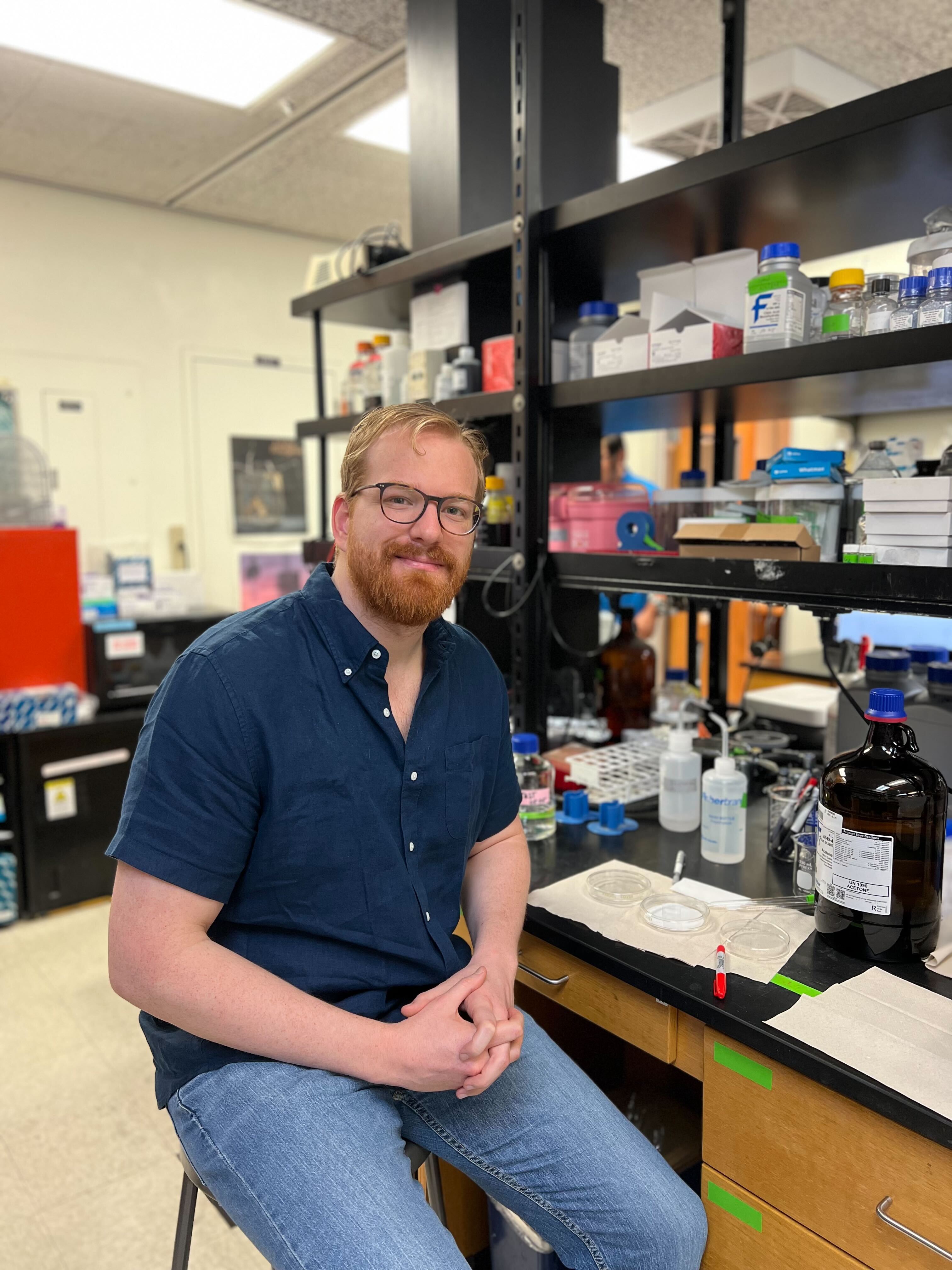
For researchers like David Boyer, a postdoctoral scholar at UCLA, the landscape of scientific inquiry has become a precarious terrain. For over 18 months, a critical grant decision from the National Institutes of Health (NIH) remains outstanding, casting a long shadow of uncertainty over his groundbreaking work on Alzheimer's disease treatments. Despite his application receiving a strong "impact score," the standard metric for NIH funding, the silence has been deafening.
The implications of this funding gap are stark. Without the anticipated financial backing, Boyer faces the daunting prospect of scaling back experiments that demand significant investment in materials and sophisticated equipment. In a worst-case scenario, his own position could be jeopardized if the grant fails to materialize, leaving his future in research hanging precariously in the balance.
"It’s really up in the air whether I would be able to continue getting funded," Boyer shared, his voice reflecting the pervasive anxiety felt by many in his field. He is part of UCLA’s Eisenberg Lab, a hub of cutting-edge scientific exploration.
Boyer's predicament is far from isolated. Federal funding for scientific endeavors, a cornerstone for institutions like the NIH and the National Science Foundation (NSF), has experienced significant turbulence. Reports indicate a trend of fewer grants being awarded and, in some instances, the outright cancellation of existing awards, creating an environment of apprehension even for those with seemingly stable financial backing.
California's Answer: A State-Led Research Lifeline
Now, a potential beacon of hope is emerging from within California itself. The University of California's push for a $12 billion state bond represents a proactive strategy to bolster scientific research, extending its reach beyond the confines of UC and California State University campuses to include private institutions like Stanford and the University of Southern California, as well as independent research institutes and private companies.
The path to this potential voter referendum hinges on the approval of Senate Bill 895 by the state Legislature. This pivotal legislation has garnered strong support from UAW 4811, the union representing a substantial workforce of 48,000 academic employees across the UC system, many of whom are directly involved in research.
The bill has already cleared a significant hurdle, passing the Senate last week, and is now making its way to the Assembly. To secure its place on the November ballot, it must be passed by both houses and signed into law by Governor Gavin Newsom before the critical deadline of June 25.
A Call to Preserve Scientific Leadership
"As the federal government cuts and destroys scientific funding, as it creates long-term instability and uncertainty, as science has now become a political football in this country, let's make sure that California retains and expands our leadership in scientific research," declared State Senator Scott Wiener, a key author of the bill, during a recent Senate floor debate. His impassioned plea underscored the urgency felt by proponents of the measure.
Should the bond measure gain voter approval, it would establish the California Foundation for Science and Health Research. This new entity would be tasked with awarding grants through a rigorous, competitive, and scientifically peer-reviewed process, ensuring that funding decisions are driven by merit and potential impact.
Addressing the Funding Gap, Not Replacing It
Proponents acknowledge that the proposed bond, while substantial, is not a panacea for the entirety of research funding needs, particularly given the immense scale of federal investment. UC alone secures nearly $6 billion annually in federal research support, a figure that highlights the critical role of national agencies.
"There is nobody else who can substitute for research funding on the scale the federal government supplies," stated Simon Atkinson, vice chancellor for research at UC Davis. He emphasized the irreplaceable nature of federal contributions.
However, Atkinson and other supporters of the bond firmly believe that diversifying funding sources is paramount, especially in light of federal budget proposals that have included significant cuts to agencies like the NIH. The prospect of an additional, state-backed funding stream offers a much-needed layer of security and stability for California's vibrant research ecosystem.
Stories of Uncertainty and Hope
The ripple effects of federal funding shifts are acutely felt by researchers like Ximena Anleu Gil, a plant biologist at UC Davis. Her work focuses on developing more environmentally sustainable methods for plant cultivation, a critical area for addressing global challenges.
Gil's current position is supported by a grant with just one year remaining. The looming possibility of non-renewal weighs heavily on her, especially as she is the primary financial provider for her family, including her partner and infant daughter. "I’m very scared of what could happen. If I’m laid off, we’re screwed," she admitted, her concern palpable.
"But having another source of potential funding, that would already feel like a big relief," Gil added, expressing the widespread sentiment of hope associated with the proposed bond.
The legislation underpinning the bond explicitly prioritizes the replacement of funding that has been curtailed or eliminated by federal actions. Data compiled by Grant Witness, a project tracking federal grant terminations under the current administration, reveals a significant impact on California, with hundreds of grants reportedly terminated since early 2025.
While many of these terminations have been reversed through legal challenges, a notable number remain canceled. One such instance involved a program at UC San Francisco’s Center for AIDS Research, which provided crucial training opportunities for undergraduate students. This grant had facilitated summer research experiences for students from nearby Hispanic-Serving Institutions, culminating in a symposium where they presented their findings.
Nurturing Future Scientific Talent
Monica Gandhi, director of the UCSF Center for AIDS Research, highlighted the program's vital role in inspiring the next generation of scientists. "There are fewer and fewer people going into infectious disease research at a time when infectious diseases are all over," she observed.
"It really just got them excited, and we thought it would help grow our biomedical research workforce in a really important topic," Gandhi continued, underscoring the program's success in fostering interest in critical scientific fields.
If California's research bond is approved, Gandhi expressed confidence that her center would immediately seek funding to reinstate the terminated program. While the broader HIV research initiatives at UCSF continue to receive federal support, the uncertainty surrounding grant renewals creates an ongoing sense of unease.
Gandhi noted that the center is awaiting formal notification from the NIH to apply for a grant renewal, a process that typically occurs much sooner. "There are all these little ways they are making it harder to get funding," she lamented.
The prospect of a state-led initiative, free from political entanglements and judged purely on scientific merit, is seen as a transformative opportunity. "Having a California-based initiative that isn’t political and will have the grants be judged on their scientific merit would be amazing. And I think it will go a long way," Gandhi concluded, her words echoing the profound potential of this state-driven investment in scientific progress.





 Explore AI Teaching Tools
Comments (0)
Please login to comment
No comments yet
Be the first to comment on this article