
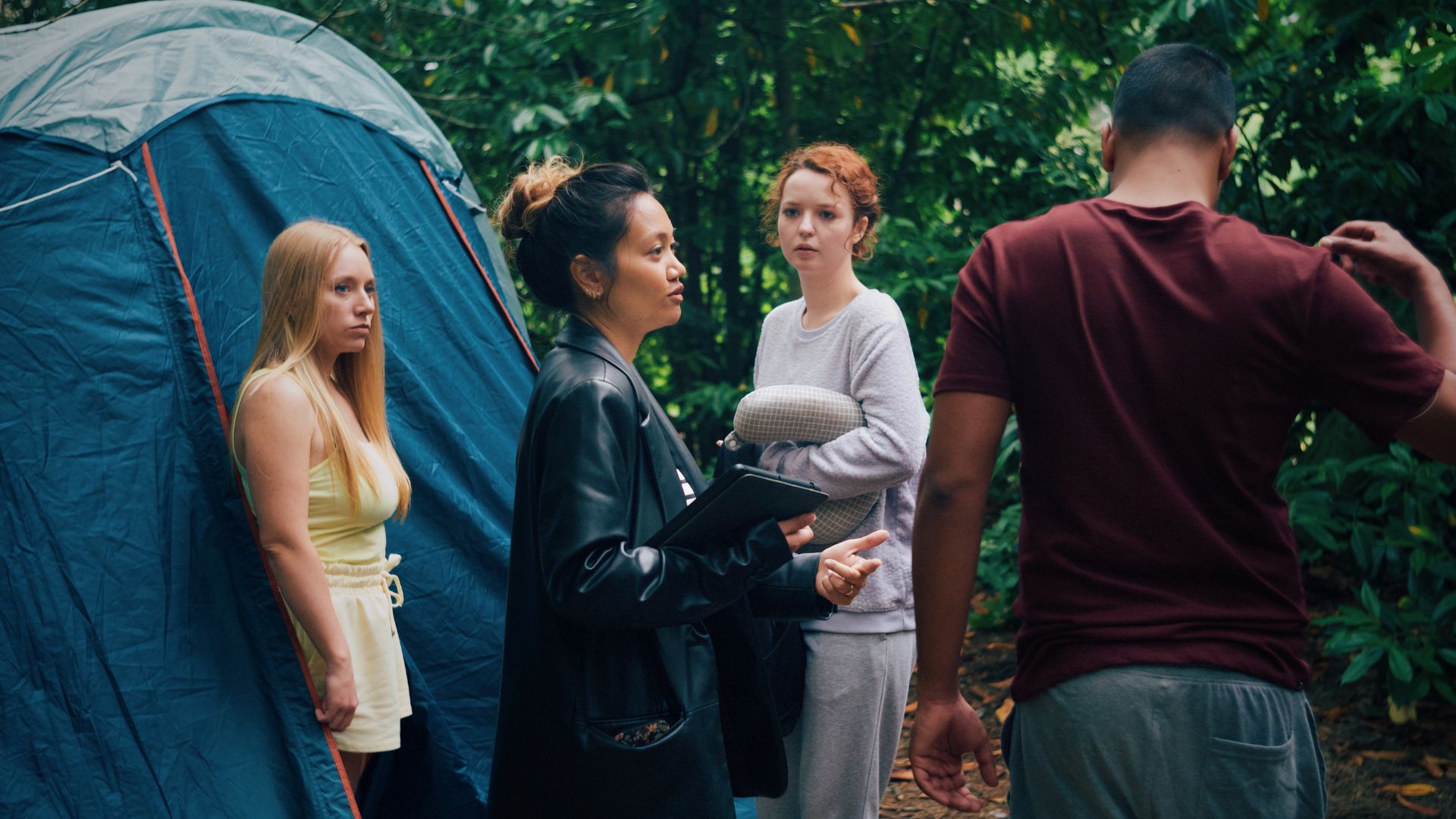
Whispers from the Highlands: How One Filmmaker is Rescuing a Culture on the Brink
Imagine a vibrant tapestry of traditions, stories, and a unique way of life, woven over centuries. Now imagine that tapestry fraying, its threads thinning with each passing generation. This is the stark reality for the Kelabit people, an indigenous group nestled in the remote highlands of Sarawak, Malaysia, numbering just 6,000 souls. For Sarah Lois Dorai, a UK-educated film director and publisher, this isn't an abstract concept; it's the very heart of her identity and the driving force behind her life's work.
The Echoes of Ancestry: A Personal Journey into Kelabit Heritage
Dorai's own heritage is a testament to the complexities of modern life. Of mixed Indian and Kelabit descent, she grew up with a foot in both worlds. Her mother, a proud Kelabit woman, would often bring Sarah and her sisters back to their ancestral village of Bario, a breathtaking plateau perched 1,000 meters above sea level. These visits were immersive experiences, filled with the rhythms of traditional dances, the tastes of ancestral foods, and the wisdom of her grandparents.
Yet, as she navigated her formative years, a question began to surface: what did it truly mean to be Kelabit, to belong to Bario, outside the comforting presence of her mother? This introspection revealed a profound truth: cultural identity is inextricably linked to ancestry, lineage, and the deep roots that bind people to their heritage. It became clear that understanding her parents and grandparents was not just an act of remembrance, but a crucial key to unlocking her own potential.
This realization profoundly shaped Dorai's path. While a natural inclination towards the arts and storytelling was always present, her burgeoning understanding of her heritage infused her ambitions with a powerful sense of purpose. She moved beyond personal aspirations, recognizing that her dreams were meant to serve a greater good, to be in service to others.
Her chosen mission became heritage work, a field that had already offered her immense clarity about herself, her family, and her community. This conviction is so strong that she believes everyone must undertake a deep exploration of their own cultural roots. This belief has propelled her into roles as a lecturer and an author of children's books, allowing her innate talents to manifest in ways that are deeply meaningful and purposeful.
The Art of Connection: Making Stories Resonate in a Globalized World
Dorai understands that art and stories, no matter how personal or culturally specific, cannot exist in a vacuum. They are ultimately created for an audience, and their impact hinges on effective communication. For her, her work must convey a message that people can understand and connect with.
She acknowledges the inherent nature of the film industry as an entertainment sector. If an audience isn't engaged, the message, however vital, may be lost. This is where artistic flair becomes paramount, bridging the gap between cultural preservation and broader appeal. Dorai believes that creativity is the essential ingredient that makes heritage accessible and compelling.
However, she doesn't allow the potential reception of her work to dictate its creation. Her conviction is that those who are meant to resonate with her stories will do so, regardless of external validation. To constantly second-guess how others might perceive her art would be to erect unnecessary barriers in her own creative process.
Her approach is driven by a powerful sense of responsibility: "If I don't do it, who will?" This personal imperative fuels her initiative to tell these stories in a way that feels authentic and true, both to her vision and to the community from which these narratives emerge. This commitment is a cornerstone of her filmmaking philosophy.
Women as Pillars: Championing Voices and Preserving Legacy
Beyond her dedication to the Kelabit culture, Dorai is a fervent advocate for women. She hails from a lineage of formidable mothers, a strength that has undoubtedly influenced her and her sisters. Within her own family, she has witnessed firsthand how women are not merely participants in the family structure but are the vital custodians of stories and heritage.
Dorai believes that women possess unique perspectives that enrich the global narrative, offering invaluable contributions when partnered with those of men. As a film director, she actively seeks to create leadership opportunities where women can express themselves and have their voices heard. This is a deliberate countermeasure to societal structures that often inadvertently favor men for leadership roles, leading women to doubt their own qualifications, even when they are demonstrably more capable.
She views her own success as a platform, a responsibility to uplift and include others in the creative process. This ethos of empowerment is woven into the fabric of her professional endeavors, ensuring that the perspectives of women are not just present but are central to the stories being told.
Forging the Path: Creating Opportunities in the Face of Adversity
The pursuit of art, the dedication to heritage work, and the effort to capture people's attention are all inherently challenging endeavors. Dorai readily admits that "nothing worth doing is not hard." Yet, in the face of these difficulties, she champions a proactive mindset.
She encourages a constant self-inquiry: "What can we do in any given situation, within our own capacity?" This question is the catalyst for action, pushing individuals to move beyond passive observation and towards active creation. The philosophy is clear: "Knock down doors if we must, or create our own doors to walk through."
The message is unequivocal: waiting for opportunities to materialize is a futile exercise. Instead, people must actively forge their own pathways. This is precisely the approach Dorai has embodied throughout her career.
A prime example of this philosophy in action is the critically acclaimed "Warrior Spirit" music video, a collaboration with musician Alena Murang. The project faced skepticism from some who deemed Kelabit singing to be inherently monotonous and uninteresting. However, Dorai and Murang chose to "silence out the noise" and remain steadfast in their belief.
Their perseverance paid off handsomely. "Warrior Spirit" went on to garner numerous international awards, a testament to the power of their vision and their refusal to be deterred by external doubts. This success underscores a crucial lesson: breakthroughs are rarely instantaneous. They are the product of relentless effort, of trying and failing, and trying again until success is achieved.
Dorai's journey, from her personal quest to understand her Kelabit roots to her global impact through film, offers a powerful blueprint for cultural preservation. It highlights the essential role of storytelling, the importance of empowering women, and the necessity of proactive creation in safeguarding the heritage of even the smallest communities. Her work serves as a vital reminder that the stories of people, no matter how few, are a treasure that must be actively nurtured and shared for future generations.





 Explore AI Teaching Tools
Comments (0)
Please login to comment
No comments yet
Be the first to comment on this article