
Rethinking Assessments: Balancing Progress and True Learning
In the pursuit of academic excellence, educational institutions worldwide grapple with a fundamental question: how do we effectively measure student progress without sacrificing the depth and breadth of genuine learning?
While assessments are undeniably crucial for tracking development and informing instructional strategies, an overemphasis on frequent testing can inadvertently narrow the curriculum and hinder the very educational goals they aim to serve.
This article explores the nuanced landscape of educational assessment, examining what happens when the focus shifts too heavily towards test preparation and what strategies can foster a more holistic approach to student success.
The Double-Edged Sword of Frequent Testing
On paper, many school districts have reported significant academic gains over the past decade.
These improvements are often, in part, attributed to the implementation of regular assessments and the strategic use of standardized test scores to guide educational approaches at individual school sites.
The data can appear compelling, showing upward trends in subjects like mathematics and reading when comparing current performance to national averages from years past.
This progress suggests that targeted interventions and a clear understanding of student proficiency are indeed valuable.
However, a critical perspective emerges from those on the front lines of education: the teachers.
They often question whether these celebrated score increases truly reflect comprehensive learning or if they are merely a byproduct of intensive test preparation.
The concern is that an overwhelming focus on preparing students for specific tests can overshadow the broader mission of educating them completely.
This intense focus, they argue, can impede rather than enhance a student's overall educational journey, consuming precious instructional time that could be dedicated to deeper exploration and critical thinking.
What Does "Testing Every Month" Mean for Education?
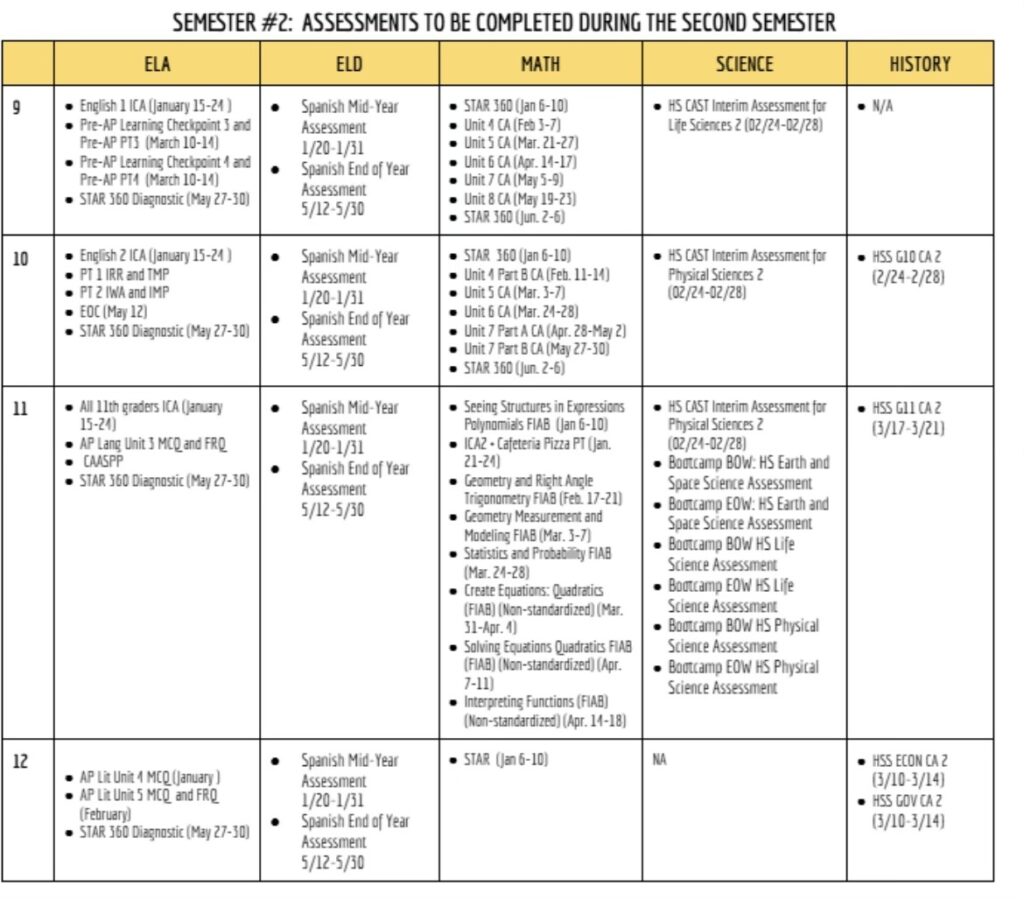
Imagine a school year punctuated by assessments almost every month.
This scenario, where students are tested in September, October, November, December, January, February, and March, raises significant questions about the allocation of valuable classroom time.
While the district may collect data that demonstrates progress, the question for many educators becomes: when does actual education happen?
Teachers, who possess an intimate understanding of their students' learning processes, often feel that they can effectively assess their students' comprehension through ongoing classroom activities and formative feedback.
The necessity of numerous large-scale, standardized tests administered monthly is therefore questioned.
The argument is that this constant testing cycle diverts attention and resources away from rich, engaging learning experiences.
This is particularly concerning when considering that the goal of education is not simply to pass a test, but to cultivate lifelong learners equipped with a broad range of skills and knowledge.
The True Purpose of Assessment: Beyond the Score
Assessments, when designed and utilized thoughtfully, can serve as powerful diagnostic tools.
They offer invaluable insights not only into student progress but also into the effectiveness of teaching methodologies.
A student's performance on an assessment, or indeed an entire class's performance, can prompt educators to reflect on their instructional practices.
This reflection is key: "What did I do that set the students up for the outcome they experienced?" This introspective approach allows for continuous improvement in teaching, ensuring that strategies are aligned with student needs and learning objectives.
Furthermore, assessments should empower students to become active participants in their own learning journey.
When students can gauge their own progress, understand their strengths, and identify areas for improvement, their learning becomes more meaningful and impactful.
This self-awareness is a critical component of developing metacognitive skills, which are essential for academic success and personal growth.
The Difference Between Assessment and Test Preparation
It is crucial to distinguish between genuine assessment and mere test preparation.
Drilling students on the specific format and content of an upcoming exam, without a foundation in the underlying concepts, is not meaningful in terms of actual knowledge and skill acquisition.
True assessment is embedded within the learning process, serving as a natural extension of instruction.
It should align with what we want students to learn within a given timeframe and reflect the teacher's ongoing efforts to facilitate that learning.
The pressure to perform well on standardized tests, often exacerbated by accountability measures, has led to a phenomenon where "test prep orientation" becomes more the norm than the exception.
This shift can be traced back to legislative mandates that emphasize measurable outcomes, sometimes at the expense of pedagogical depth.
When the end goal—the test—becomes the primary driver of instruction, the rich, scaffolded approach that truly builds understanding can be lost.
Navigating the Nuances of Test Preparation
There is a valid argument that preparing students for standardized tests can be beneficial, particularly when it involves familiarizing them with the academic vocabulary and question formats they will encounter.
For students who may not have access to private tutoring or specialized courses, district-provided preparation can help level the playing field.
Learning the language necessary to articulate their understanding on an exam is a skill that can be taught and practiced.
Consider the example of a math problem.
A student might understand the core concept, such as "five plus ten equals fifteen." However, if the test presents the same concept in a different format, like "fifteen minus a smiley face equals five," the student might be thrown off if they haven't been exposed to varied problem-solving approaches.
In such cases, educators have had to rethink their strategies, finding ways to integrate test preparation elements into hands-on, engaging activities rather than relying solely on rote memorization or repetitive drills.
The Broader Impacts of an Overly Tested Curriculum
When the pressure to perform well on standardized exams intensifies, the curriculum can inadvertently narrow.
Teachers might feel compelled to prioritize excerpts and short passages that are more likely to appear on tests, potentially sidelining the teaching of full novels.
This shift can deprive students of the rich narratives, complex character development, and nuanced themes that longer literary works offer.
The ability to delve into a novel provides a journey of discovery that cannot always be replicated through isolated passages.
This focus on test-aligned content can also impact student engagement.
If students perceive that their learning is solely about answering questions for a test, rather than exploring subjects in depth, their intrinsic motivation can wane.
This can lead to a decline in critical thinking skills, problem-solving abilities, and the development of a genuine passion for lifelong learning.
Instead of learning to think critically and rationally, they may primarily learn how to read and answer questions in a specific format.
Furthermore, an excessive focus on testing can sometimes mask underlying academic struggles.
Students who are not truly grasping foundational concepts may still perform adequately on tests through intensive preparation, leading to a disconnect between their test scores and their actual understanding.
This can have long-term consequences, as students may be placed into higher-level courses without the necessary prerequisites, setting them up for failure.
Finding the Balance: A Path Forward
The key to effective assessment lies in finding a harmonious balance.
While standardized tests can provide valuable data points, they should not be the sole determinant of a student's academic worth or a school's success.
Educators and administrators must strive for a multifaceted approach that incorporates a variety of assessment methods, including:
- Formative Assessments: Ongoing, low-stakes evaluations integrated into daily lessons to monitor student understanding and provide timely feedback.
- Performance-Based Assessments: Tasks that require students to apply their knowledge and skills in real-world contexts, demonstrating deeper comprehension.
- Project-Based Learning: Engaging students in extended inquiries that allow for exploration, critical thinking, and the development of complex skills.
- Portfolio Assessments: Collections of student work that showcase growth and achievement over time.
Moreover, a culture of continuous professional development is essential.
Teachers need support and training to develop and implement diverse assessment strategies that align with their curriculum and student needs.
This includes learning how to effectively use assessment data to inform instruction, differentiate learning, and provide targeted support to students who require it.
The goal should be to create an educational environment where assessments serve as tools to enhance learning, rather than as ends in themselves.
This means fostering a curriculum that encourages curiosity, critical inquiry, and a love for learning, while still ensuring that students are adequately prepared for the challenges they will face.
It requires a commitment from all stakeholders—educators, administrators, parents, and policymakers—to prioritize genuine understanding and holistic development over the mere accumulation of test scores.
Conclusion
The conversation around educational assessment is complex, with valid arguments on multiple sides.
While the pursuit of measurable academic progress is essential, it is equally vital to ensure that the methods used to achieve this progress do not inadvertently narrow the scope of education or diminish the joy of learning.
By embracing a balanced approach that values both formative and summative assessments, and by focusing on the development of critical thinking, creativity, and lifelong learning skills, educational institutions can truly empower students to thrive in an ever-changing world.
The ultimate aim is not just to prepare students for tests, but to prepare them for life.






 Explore AI Teaching Tools
Comments (0)
Please login to comment
No comments yet
Be the first to comment on this article