
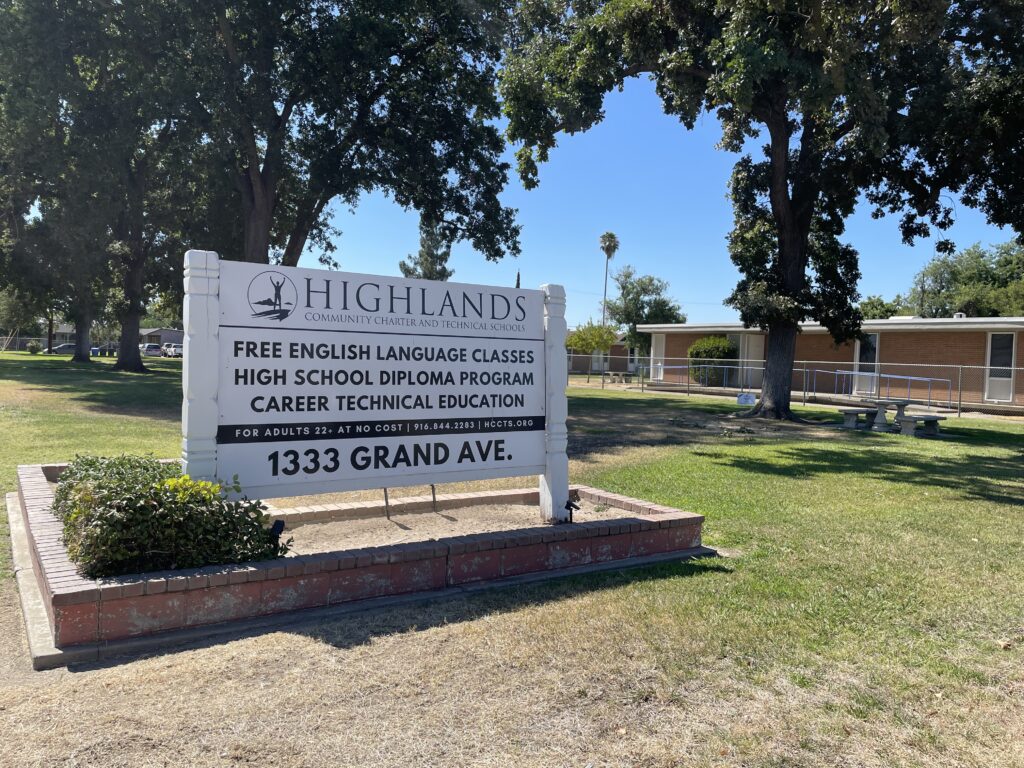
Rebuilding Trust: A New Era for Highlands Community Charter Schools
The landscape of education is constantly evolving, and sometimes, significant challenges arise that demand bold leadership and a commitment to fundamental change.This is precisely the situation faced by Highlands Community Charter and Technical Schools, a prominent institution that has recently undergone a pivotal transformation.
With the appointment of a seasoned educational leader, the school is embarking on a journey to rectify past issues and re-establish itself as a beacon of opportunity for its diverse student population.
This article delves into the critical changes, the underlying reasons, and the promising future of this vital learning community.
The Imperative for Change: Addressing Past Governance and Fiscal Challenges
Highlands Community Charter and Technical Schools, a system comprising both site-based learning and independent study programs, found itself at a critical juncture.Investigations and reports highlighted significant concerns regarding its operations, particularly its financial management and adherence to educational standards.
The core of these issues stemmed from the school's eligibility for state K-12 funding.
The Financial Reckoning: Misappropriated Funds and Repayment Demands
A comprehensive audit revealed that Highlands had collected substantial K-12 funding to which it was not entitled.This overpayment, amounting to a staggering $180 million, was primarily due to two critical factors: a deficiency in properly credentialed teachers and insufficient student attendance hours logged for eligibility.
This situation necessitated a demand for repayment from the state, placing the school's future in jeopardy.
The audit's findings painted a stark picture of systemic shortcomings that required immediate and decisive action.
Teacher Credentialing and Student Engagement: The Foundation of Learning
Research indicates that the quality of instruction is directly linked to student outcomes.At Highlands, a significant portion of educators lacked the appropriate K-12 start teaching on Mentofy">teaching credentials.
This not only compromised the educational experience but also directly impacted the school's eligibility for state funding.
Furthermore, the audit pointed to extremely low graduation rates, which had a measurable negative effect on the state's overall graduation statistics.
Contributing factors included excessively large class sizes, averaging 51 students, which can hinder individualized attention and academic progress.
Operational Inefficiencies and Questionable Practices
Beyond credentialing and attendance, the audit uncovered a pattern of operational inefficiencies and questionable practices.These included: * **Evasion of Standardized Testing:** The school system had reportedly circumvented state standardized tests by eliminating the 11th grade, a practice that raises concerns about accountability and comprehensive student assessment. * **Unapproved Expenditures:** Significant sums, as much as $1.7 million for a single contract, were reportedly spent without proper board consultation, indicating a lack of fiscal oversight. * **Attendance Misreporting:** The school was accused of routinely misreporting student attendance to the California Department of Education, a practice that directly affects funding calculations. * **Conflicts of Interest and Wasteful Spending:** Investigations pointed to instances of conflicts of interest, wasteful spending on gifts and trips, and the hiring of unqualified individuals, including friends and family, for key positions. * **Inadequate Oversight:** Reports suggested that oversight from authorizers, such as Twin Rivers Unified, may not have been sufficiently robust to prevent these issues from escalating.
A Leader with a Vision: Jonathan Raymond's Mandate for Renewal
Stepping into this challenging environment is Jonathan Raymond, a former superintendent of the Sacramento City Unified School District.Raymond's appointment signifies a deliberate effort to bring experienced leadership and a commitment to reform to Highlands Community Charter and Technical Schools.
His immediate actions, including requesting the resignation of the school board, underscore his intention to foster a clean break from past governance failures.
The Philosophy of Second Chances: Embracing the Mission
Raymond's decision to take on this demanding role is rooted in his belief in the fundamental mission of Highlands: to provide educational opportunities for adults seeking self-improvement and a better future for their families.The student population at Highlands is notably diverse, often comprising new immigrants, formerly incarcerated individuals, and others striving to earn diplomas, enhance their English language skills, or acquire vocational training.
Raymond views his role as an opportunity to be part of the solution, leveraging his experience and reputation to revitalize the organization.
Key Reforms for a Stronger Foundation
Raymond and his new leadership team are implementing a comprehensive suite of reforms designed to address the issues identified in the audit and build a more robust and transparent educational environment.These critical changes include: * **Reduced Class Sizes:** Establishing a maximum of 30 students per class for in-person instruction and 25 for independent learning programs.
This aims to improve the quality of instruction and student engagement. * **Ethical Hiring Practices:** Implementing strict policies to prohibit family influence in hiring decisions, ensuring that all appointments are based on merit and qualifications. * **Academic Accountability:** Revising the charter to reintroduce the 11th grade and ensuring that all students are administered state standardized tests.
This will provide a clearer picture of academic progress and ensure compliance with state educational mandates. * **Enhanced Fiscal Oversight:** Requiring board approval for all purchases exceeding $35,000 and implementing multi-level approval processes for all other expenditures.
This strengthens financial accountability and prevents unauthorized spending. * **Accurate Attendance Reporting:** Creating new, transparent policies for reporting student attendance to ensure compliance and accurate funding. * **Elimination of Wasteful Practices:** Discontinuing non-instructional travel and other wasteful expenditures, redirecting resources towards core educational needs. * **Improved Record Keeping:** Implementing robust systems for better record management and data integrity.
Investing in Educators: The Path to Credentialing
To address the critical shortage of credentialed teachers, Highlands is actively partnering with UMass Global, an online teacher training program.The school is committed to supporting its staff in obtaining the necessary K-12 credentials by offering tuition and exam reimbursements.
This investment in professional development is crucial for ensuring high-quality instruction and long-term sustainability.
Recovering Misspent Funds: A Commitment to Accountability
The school is also making efforts to recover funds that were identified as wastefully spent.This includes requesting repayment from employees who participated in non-essential travel and former directors who initiated unauthorized contracts.
These actions demonstrate a commitment to fiscal responsibility and holding individuals accountable for past decisions.
A New Chapter for the Highlands Community
The transformation at Highlands Community Charter and Technical Schools is not merely a cosmetic change; it is a fundamental restructuring aimed at creating a more effective, equitable, and accountable educational institution.The school's leadership is focused on rebuilding trust with the community, state officials, and, most importantly, its students.
The "Build Highlands Back Better" Campaign: Mobilizing Support
To garner widespread support for its reform efforts, Highlands Community Charter has launched the "Build Highlands Back Better" campaign.This initiative seeks to engage alumni, staff, community leaders, educators, and organizations in advocating for the school's continued operation and its vital mission.
The campaign emphasizes the importance of reform over retaliation, highlighting the positive impact Highlands has on the lives of its students.
A Timeline of Transformation: Charting the Course Forward
The journey of Highlands Community Charter and Technical Schools has been marked by significant milestones, both challenging and promising.Understanding this timeline provides valuable context for the current reform efforts. * **March 4, 2014:** Charter petition approved by Twin Rivers Unified School District. * **August 18, 2014:** Highlands Community Charter and Technical Schools opens its first campus. * **September 2014:** Initial concerns arise regarding contracts and board member involvement. * **November 2014:** A controversial contract is rescinded following objections. * **July 2015 - December 2016:** Multiple investigations are launched by state and county bodies, raising questions about fiscal activities and oversight. * **May 31, 2018:** A report identifies issues with student eligibility, staff hiring, and employee bill payments. * **July 1, 2019:** The charter is renewed, and an independent study school gains initial approval. * **July 2019:** A conflict-of-interest investigation results in a fine for a board member. * **May 14, 2024:** The California State Legislature requests an audit of the school. * **December 23, 2024:** The Commission on Teacher Credentialing clarifies credentialing requirements for teachers. * **April 14, 2025:** The school board approves significant layoffs and enrollment limitations due to a lack of credentialed teachers. * **June 24, 2025:** The State Auditor's Office releases a critical report detailing funding ineligibility, credentialing issues, and testing avoidance. * **July 7, 2025:** Jonathan Raymond begins his tenure as executive director, initiating a board overhaul.
Navigating the Appeal: The State's Role and District Liability
Highlands has officially appealed the state's demand for repayment of the $180 million.The outcome of this appeal carries significant implications, not only for the charter school but potentially for the Twin Rivers Unified School District, which could be held liable if its oversight responsibilities were not adequately met.
The state's Fiscal Crisis and Management Assistance Team is involved, highlighting the gravity of the financial situation.
Twin Rivers Unified has stated its commitment to strengthening its authorizer practices, refining policies for better monitoring of credentialing, academic performance, state testing, and financial accountability.
The Future of Charter School Oversight: A Call for Clarity
The challenges faced by Highlands Community Charter underscore a broader need for clarity and effectiveness in charter school oversight within the state.Experts suggest that California, like some other states, could benefit from dedicated organizations focused solely on authorizing and overseeing charter schools.
Current legislative efforts, such as Assembly Bill 84 and Senate Bill 414, aim to enhance fiscal oversight, though some believe they may not fully address the responsibilities of authorizers.
Clarifying Authorizer Responsibilities and Funding
There is a recognized need to clarify how the substantial funds allocated to charter school authorizers are currently utilized.A comprehensive study on charter authorization is underway, with the hope of informing legislation that strengthens state laws and ensures that authorizers have the resources and clear mandates to effectively support and monitor charter schools.
Legislative Recommendations for Systemic Improvement
The state audit of Highlands has prompted recommendations for legislative changes to prevent similar issues from occurring elsewhere.These include: * Establishing maximum student-to-teacher ratios. * Implementing rules to ensure satisfactory progress toward diplomas at adult charter schools. * Requiring standardized testing for seniors in charter high schools that do not offer 11th grade. * Implementing fines for charter schools that consistently employ underprepared teachers.
Jonathan Raymond's commitment to leading Highlands Community Charter and Technical Schools through this period of intense reform is a testament to his belief in the power of education to transform lives.
The school's journey is a compelling example of how challenges, when met with decisive leadership and a dedication to core educational values, can pave the way for a brighter future for the entire community.
The focus remains on ensuring that "some of the really poor decisions that were made will not happen on my watch," a promise that resonates with the hope for a revitalized and impactful learning environment.






 Explore AI Teaching Tools
Comments (0)
Please login to comment
No comments yet
Be the first to comment on this article