
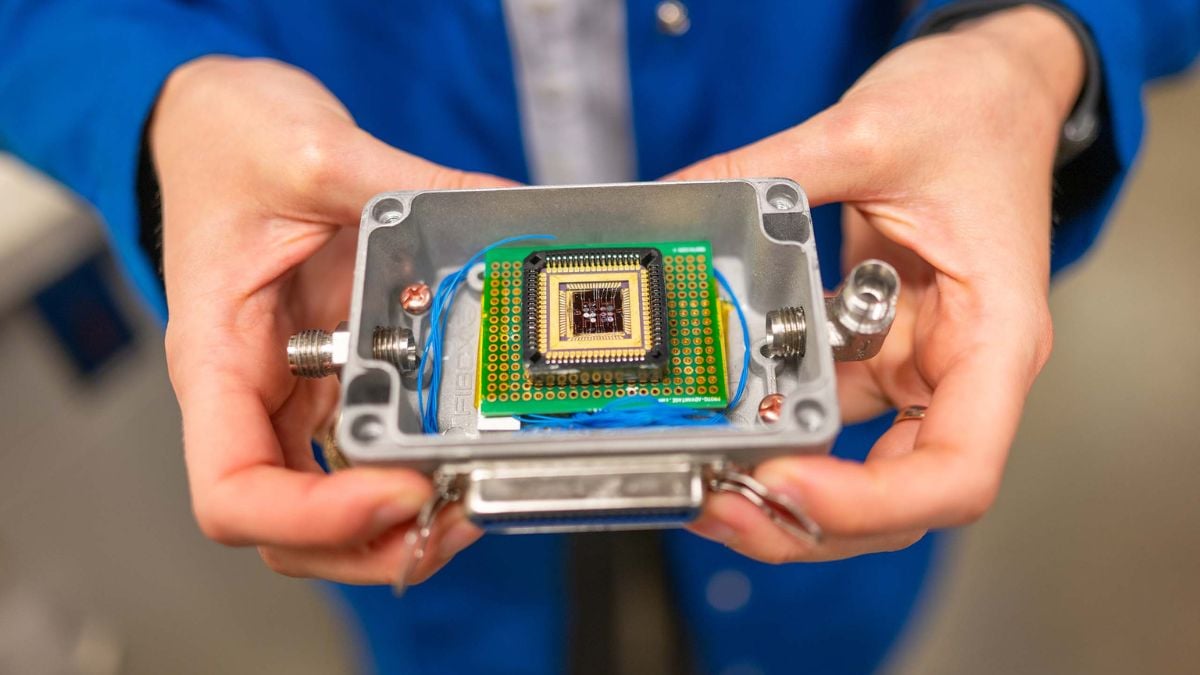
Imagine a world where a tiny, unobtrusive device, developed with ingenious scientific minds at Berkeley, could act as a silent guardian, helping to save millions from the debilitating grip of food poisoning. This isn't science fiction; it's a tangible reality on the horizon, and for educators, it signals a profound shift in how we approach health and safety education, empowering students with knowledge that can protect them and their communities.
A Silent Watcher in Our Food Supply
Foodborne illnesses are a pervasive global challenge, impacting public health and economies alike. The sheer scale of the problem is staggering, with countless individuals falling ill each year due to contaminated food. Traditional methods of detection often rely on laboratory testing, which can be slow and resource-intensive, leaving a critical window for contamination to spread.
This new technology, however, promises a more immediate and accessible solution. Developed at Berkeley, this tiny sensor is designed to detect specific pathogens and toxins in real-time. Its small size and potential for low cost mean it could be integrated into various stages of the food supply chain, from farm to fork.
"The potential impact of this technology is immense. We're talking about preventing outbreaks before they even begin, safeguarding public health on a scale we've only dreamed of."
For educators, this development is more than just a scientific breakthrough; it's a powerful teaching tool. It offers a concrete example of how innovation can directly address significant societal problems, fostering critical thinking and problem-solving skills in students.
Empowering the Next Generation of Food Safety Advocates
The implications for education are far-reaching. Understanding the science behind such a device can demystify complex biological and chemical processes for students. It provides a tangible link between classroom learning and real-world applications, making subjects like biology, chemistry, and even engineering more engaging and relevant.
Imagine incorporating lessons about this technology into your curriculum. You could use it as a springboard to discuss:
- The microbiology of foodborne pathogens.
- The principles of sensor technology and its applications.
- The importance of supply chain integrity and food safety protocols.
- The role of innovation in public health.
This tiny device developed in Berkeley could literally help save millions from food poisoning, and by extension, help save countless educational opportunities from being missed due to illness. It’s a powerful reminder that science education has the potential to create tangible, life-saving change.
Bridging the Gap Between Lab and Classroom
While the technology itself may seem complex, the underlying principles can be broken down for students of all ages. Educators can leverage this development to create dynamic learning experiences. For instance, a live quiz or a trivia game could be designed around the basics of food safety and the function of such sensors.
Furthermore, the development process itself offers valuable lessons. Students can learn about the iterative nature of scientific research, the importance of collaboration, and the dedication required to bring a groundbreaking idea to fruition. This is where tools like Mentofy AI teaching tools can be invaluable, helping educators develop engaging lesson plans that incorporate these cutting-edge concepts.
The ability to create an AI lesson plan that explores the science behind this food safety innovation, or to use an exam creator to assess student understanding of its implications, can significantly enhance the learning experience. This technology provides a compelling narrative for the power of STEM education.
The Ripple Effect: From Berkeley to Global Health
The impact of this Berkeley-developed innovation extends far beyond the laboratory. Its potential to help save millions from food poisoning means a healthier global population, leading to increased productivity and reduced healthcare costs. For developing nations, where access to advanced food safety infrastructure may be limited, such a portable and potentially affordable device could be transformative.
Consider the economic implications. Foodborne illnesses cost economies billions annually, not just in direct healthcare expenses but also in lost productivity and trade disruptions. A technology that can significantly mitigate these risks offers a substantial return on investment.
This is where educators play a crucial role. By bringing these advancements into the classroom, we equip students with the knowledge and awareness to become informed consumers and responsible citizens. They can understand the importance of hygiene, proper food handling, and the role of technology in ensuring the safety of what they eat.
A Call to Action for Educators
The development of this tiny food safety device is a testament to human ingenuity and our capacity to solve complex problems. It’s a story that deserves to be told and explored in classrooms everywhere.
Here are some actionable steps educators can take:
- Research and familiarize yourself: Explore current scientific literature and news regarding food safety technologies, particularly those emerging from research institutions like Berkeley.
- Integrate into existing curricula: Find natural points within science, health, or even social studies lessons to discuss food safety and technological solutions.
- Utilize educational technology: Leverage platforms that can help you create engaging content, such as interactive presentations, classroom games, or even virtual field trips to simulated food production environments.
- Encourage critical thinking: Prompt students to consider the ethical implications, accessibility, and future development of such technologies.
- Promote healthy habits: Use the discussion of advanced technology as a backdrop to reinforce fundamental food safety practices that students can implement immediately.
This tiny device, developed with such promise at Berkeley, is more than just a scientific marvel; it’s a beacon of hope. It offers a glimpse into a future where food poisoning is significantly reduced, a future we can help build by educating and inspiring the next generation. With tools like MentofyGroups for effective student grouping and MentofyBoards for dynamic classroom displays, educators have more resources than ever to make learning about vital topics like this both impactful and fun. And remember, Mentofy is free for teachers to get started.






 Explore AI Teaching Tools
Comments (0)
Please login to comment
No comments yet
Be the first to comment on this article