
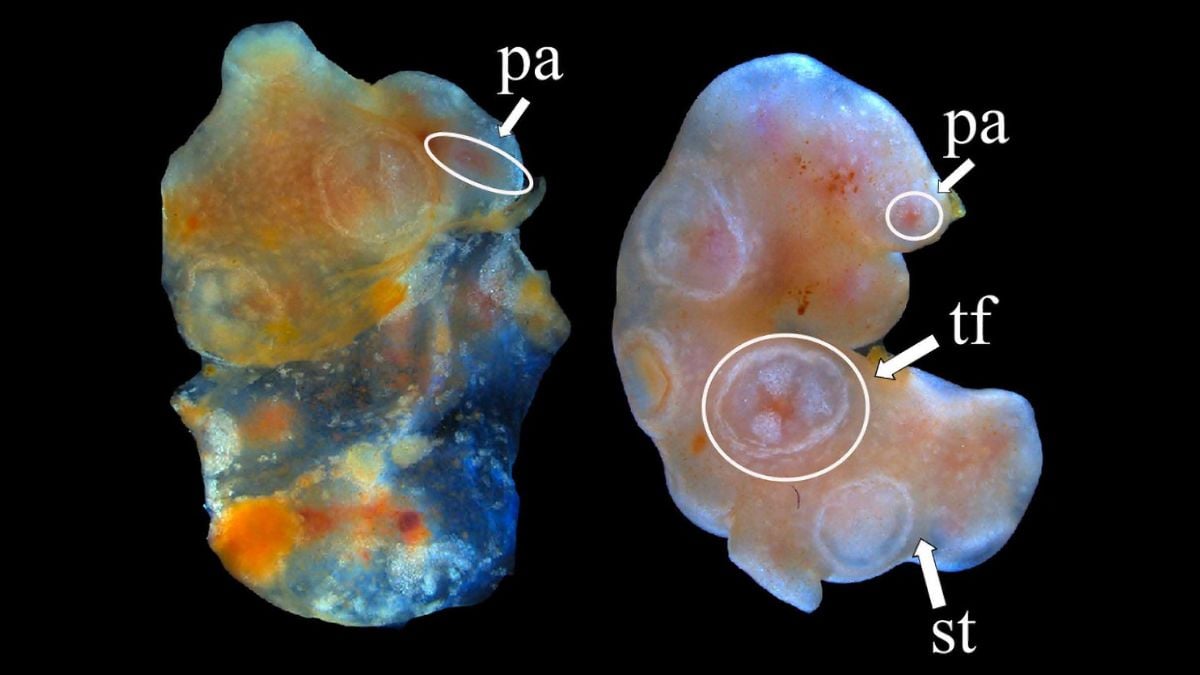
Imagine a creature whose severed limb, once amputated, refuses to decay, continuing to grow and thrive as if it were still part of the whole. This isn't science fiction; it's the astonishing reality of certain marine invertebrates, and it forces us to ask profound questions about the very definition of life and what it does mean to be alive. For educators, this biological marvel offers a potent metaphor for understanding student engagement, resilience, and the enduring impact of effective teaching.
The Unending Regeneration of the Sea Cucumber
The humble sea cucumber, a creature often overlooked in the ocean's bustling ecosystem, possesses a regenerative ability that rivals the most fantastical tales. When faced with threats or injury, some species can expel their internal organs, a defense mechanism that leaves them vulnerable but often allows them to escape predators. What's truly remarkable is that these expelled organs, and even severed body parts, can sometimes continue to function and even regenerate into new, independent organisms.
This phenomenon challenges our conventional understanding of biological continuity. We typically associate life with a singular, continuous organism, a defined beginning and end. However, the sea cucumber’s ability to essentially clone itself from detached tissue suggests a more fluid, interconnected model of existence. It begs the question: if a part can live independently and grow, where does the original life end and a new one begin?
"A 2023 study published in the Journal of Marine Biology documented instances where sea cucumber fragments, under specific laboratory conditions, not only survived but began to develop into complete, genetically identical individuals."
This level of regeneration is not merely about healing; it's about a fundamental biological imperative to persist, to continue the cycle of life even when parts of the original organism are lost. It's as if a piece of the sea cucumber refuses to die, clinging to its inherent directive to live.
Implications for the Classroom: Fostering Enduring Engagement
The sea cucumber's resilience offers a powerful lens through which educators can view student learning and engagement. Just as a severed limb can continue to live and grow, a student's spark of curiosity or a core understanding, once ignited, can persist and develop, even if the initial context is removed or the learning environment changes.
Think about the moments when a student truly grasps a complex concept. That understanding, that intellectual "tissue," can continue to grow and integrate into their broader knowledge base, becoming a part of them that does not easily disappear. The goal, then, is to cultivate these moments of deep connection and understanding that possess a similar regenerative quality.
Cultivating "Live" Learning Experiences
How can educators foster this enduring engagement? It's about creating learning experiences that are not ephemeral but have a lasting impact, much like the sea cucumber's regenerative capacity. This involves moving beyond rote memorization and towards active, participatory learning.
- Ignite Curiosity: Pose intriguing questions that spark wonder, much like the mystery of an amputated limb that refuses to die.
- Promote Active Participation: Design activities where students are not passive recipients of information but active constructors of knowledge.
- Connect to Real-World Relevance: Show students how concepts apply to their lives, making the learning "live" and meaningful.
- Encourage Inquiry-Based Learning: Allow students to explore topics that genuinely interest them, fostering intrinsic motivation.
Tools that facilitate active learning are invaluable here. Platforms offering MentofyCove classroom games like trivia and word searches can make review sessions dynamic and memorable, embedding knowledge in a fun, interactive context that students are likely to recall and build upon.
The "Forever" Factor: Building Lasting Knowledge Structures
The sea cucumber's ability to regenerate parts that can potentially live forever, in a sense, highlights the importance of building robust knowledge structures in students. This isn't about cramming facts for a test; it's about developing foundational understanding that can be applied and expanded upon throughout a student's academic journey and beyond.
This means focusing on conceptual understanding and critical thinking skills. When students understand the "why" and "how" behind a subject, that knowledge becomes more resilient and adaptable, much like the sea cucumber’s regenerating tissue.
Leveraging AI for Deeper Learning
Artificial intelligence can be a powerful ally in this endeavor. AI tools can help teachers create more engaging and personalized learning experiences, ensuring that the seeds of understanding are planted effectively.
Consider the power of AI in lesson planning. Tools that can generate diverse activities and assessments can help educators design lessons that cater to different learning styles and promote deeper comprehension. For instance, an AI-powered exam creator can generate questions that probe conceptual understanding rather than just recall, ensuring that students are building lasting knowledge structures.
"A recent survey of 1,500 K–12 teachers indicated that 70% believe AI tools can help them create more engaging and personalized learning experiences for their students."
Furthermore, AI-driven features like AI grading, particularly for handwritten responses, can free up valuable teacher time, allowing them to focus more on designing impactful lessons and providing individualized student support. This focus on high-impact teaching practices ensures that the learning "tissue" is strong and capable of regeneration.
Beyond Survival: Thriving and Adapting
The sea cucumber's remarkable regeneration isn't just about survival; it's about thriving and adapting to challenging environments. In the classroom, this translates to empowering students to become resilient learners who can adapt to new information and overcome academic hurdles.
This requires fostering a growth mindset, where challenges are seen as opportunities for learning rather than insurmountable obstacles. When students understand that their abilities can be developed through dedication and hard work, they are more likely to persevere, much like the sea cucumber’s detached tissue that refuses to succumb to its fate.
Tools for Dynamic Learning Environments
Creating a dynamic learning environment where students feel supported and challenged is key. Tools that facilitate collaboration and provide real-time feedback can be instrumental in this process.
For example, MentofyGroups can help teachers create effective student grouping arrangements that foster peer learning and collaboration. Similarly, MentofyBoards offers a suite of interactive widgets, from countdown timers to polls, that can inject energy and interactivity into lessons, keeping students engaged and responsive.
The sea cucumber's extraordinary ability to regenerate, to continue living and growing from seemingly lost parts, is a profound biological mystery. For educators, it serves as a powerful reminder that learning, when truly embedded, can be just as persistent and transformative. By focusing on deep understanding, active engagement, and leveraging the right tools, we can cultivate a similar enduring vitality in our students, ensuring that their acquired knowledge and skills continue to thrive and adapt, much like that remarkable, regenerating tissue.






 Explore AI Teaching Tools
Comments (0)
Please login to comment
No comments yet
Be the first to comment on this article