
Utah's Bold Math Overhaul Hits Snag: Data Science Dreams Delayed Amidst Standards Debate
In a move that surprised many, Utah's ambitious plan to weave data science into the fabric of its K-12 math curriculum has been put on hold, leaving educators and students at a crossroads. The state, aiming to equip its youth for a data-driven future and re-engage those struggling with traditional math, now faces a period of review and uncertainty.
A Taste of Data Science: From Marmite to Models
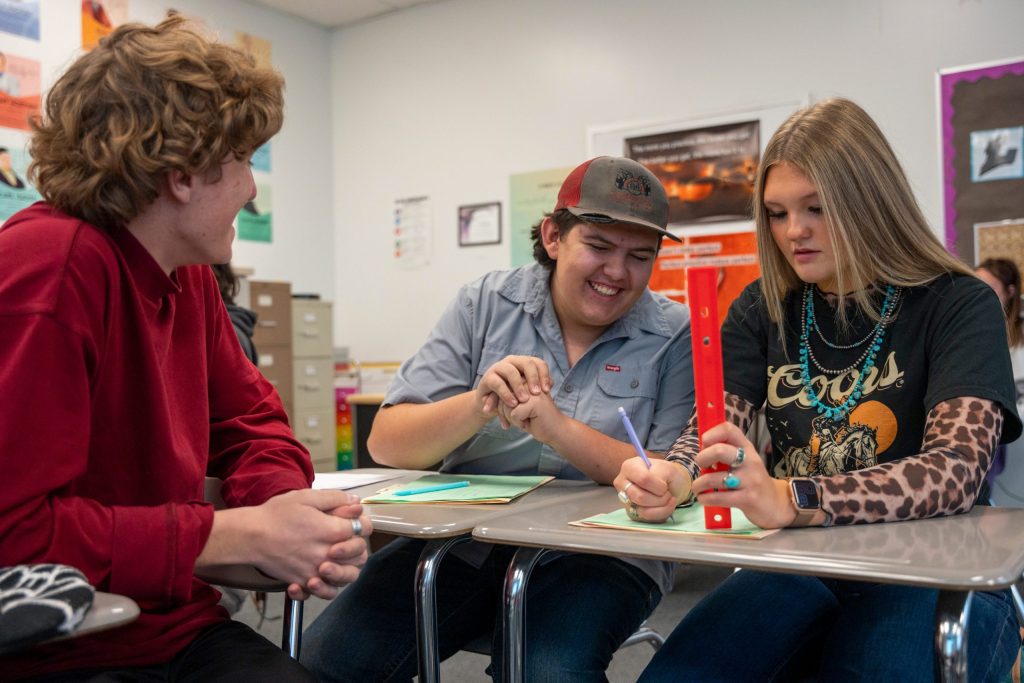
The aroma of Marmite, a potent yeast extract spread, filled Sarah Gale's high school classroom in Lehi, Utah. It wasn't a culinary experiment, but a gateway to understanding complex data. Gale, a math teacher at Lehi High School, used the polarizing spread to illustrate a study on doctor-patient communication and compliance.
Students, armed with school-issued laptops, loaded data from the study into a coding platform. They then crafted statistical models to analyze how a doctor's tone influenced a patient's willingness to consume a prescribed, unusual treatment. This hands-on approach aimed to answer critical questions about the data, moving beyond rote memorization.
This innovative lesson was part of a pilot program launched three years prior. Gale and 15 other math teachers across northern Utah volunteered to introduce data science to their high school students. The initiative, funded by a $20,000 state grant, empowered teachers to design their own courses, focusing on gathering, analyzing, and interpreting the vast streams of information that shape modern life.
The Promise of Data Skills in a Booming Economy
State education officials harbored significant hopes for the data science initiative. They envisioned it as a pathway for graduates to secure well-paying jobs in Utah's rapidly expanding technology sector. Furthermore, they believed it could reignite interest in math for students who felt disconnected from conventional approaches.
Utah is not alone in this educational evolution. A 2025 report highlighted that approximately 14 states are offering pilot data science courses or teacher training, with an additional seven establishing formal standards. Proponents argue that data science skills are crucial for careers in fields like healthcare, manufacturing, and transportation, often without requiring a four-year college degree.
However, this expansion hasn't been without its critics. Concerns have been raised that an overemphasis on computing and coding might detract from foundational math subjects like algebra and calculus. These traditional disciplines are often prerequisites for admission to selective universities and form the bedrock of many high-paying careers in science, engineering, and mathematics.
A Proposed Overhaul Sparks Controversy
The debate intensified last fall when Utah education officials proposed a sweeping overhaul of K-12 math standards. The plan included introducing data science concepts as early as preschool and allowing local school boards to offer standalone data science courses for juniors and seniors. These courses were intended as an alternative for students who might not be academically inclined towards or interested in college-level mathematics.
Simultaneously, the proposal aimed to streamline access to calculus by removing a prerequisite of two years of honors math. This dual approach—expanding data science while easing access to calculus—raised alarms among some parents and educators who feared a dilution of academic rigor.
The proposed changes were met with significant pushback, with protestors arguing that the standards would lower the bar for Utah graduates. In response, state officials revised the proposal, reinstating the two-year honors math requirement and positioning data science as an elective option in the third year.
A Political Pause: Standards Shelved Amidst Election Year
Despite the revisions, the divided Utah State Board of Education voted in January to postpone the implementation of the new math standards. The decision, made at the start of an election year, cited the need for a comprehensive review of the draft standards and an examination of how high school students in other countries approach mathematics.
This unexpected delay caught state officials by surprise, underscoring the complex challenges in adapting math education to meet evolving societal and economic demands, even as national math scores continue to decline.
Utah's proposed data science integration had, in some ways, sidestepped pitfalls encountered elsewhere. For instance, it avoided issues similar to a California policy that had allowed data science to substitute for Algebra II in university admissions, a move that was later reversed. Yet, Utah's own path forward was unexpectedly halted.
"We couldn’t have anticipated this delay," stated Molly Basham, a mathematics specialist at the state education agency. The pause highlights the delicate balance between innovation and tradition in curriculum development.
The National Math Crisis and Utah's Position
The decision comes at a critical juncture for mathematics education nationwide. National Assessment of Educational Progress (NAEP) data from 2024 revealed that a mere 22 percent of high school seniors tested at or above proficient in math, marking the lowest performance in nearly two decades. Even in Utah, where students generally outperform the national average, scores have not yet recovered to pre-pandemic levels.
Meanwhile, the economic landscape in Utah presents a compelling case for data literacy. A 2024 report indicated that approximately a quarter of all job postings in the state require some data science skills. Despite this demand, fewer than one percent of Utah high schoolers had received any formal instruction in data science.
In response to this growing need, political and tech leaders advocated for a statewide expansion of data science education at a September summit on artificial intelligence and data science. The state had, at that time, just launched pilot courses, including Gale's, across 18 schools as part of a seven-year review of its math standards.
A Vision for Data Literacy from Preschool to High School
The original proposed standards painted a vivid picture of how data science could be integrated across all grade levels. Preschoolers might learn basic counting and categorization by collecting data on classroom pets. Middle school students could analyze weather patterns using scatter plots and linear equations.
For high schoolers, the vision included a standalone data science course for juniors and seniors, allowing them to apply their skills to diverse fields such as nursing, psychology, and beyond. This comprehensive approach aimed to build a strong foundation in data literacy throughout a student's educational journey.
The pilot program, which began in 2023 with 18 schools including Lehi High, was poised for potential statewide expansion. The curriculum was designed to offer a more engaging and relevant alternative to traditional math pathways.
Navigating Alternative Math Pathways
Utah mandates three years of foundational math for high school graduation. However, students can opt for an alternative third-year course, provided parents acknowledge in writing that it may not prepare them for college. These alternatives include subjects like Accounting, Math of Personal Finance, and Medical Math.
Data suggests that a higher proportion of male and Native American students tend to choose these alternative courses over traditional algebra and pre-calculus sequences. This trend has led some educators to view certain alternate math courses as less rigorous options for students needing to fulfill a credit requirement.
"We have some alternate math courses that some schools use as a dumping ground for kids who need a third, easy math credit," commented Kyle Peterson, a secondary math specialist for the Alpine School District, which encompasses Lehi High. Advocates for data science hoped a dedicated course would offer a more challenging yet practical final math experience for students who had lost interest in traditional math or saw no relevance for algebra and calculus in their future careers.
The subject was actively marketed as a valuable option for aspiring history majors, psychologists, and nurses, highlighting its broad applicability.
Student Voices: Data Science Ignites Engagement
Hailee Kubbe, a junior at Taylorsville High School, exemplifies the potential impact of data science education. Entering her junior year with a struggling math average, she was advised to take an easier, alternative math course. Instead, Kubbe chose data science.
Months into the course, her verdict was clear: "I like this a lot more than regular math. I actually understand it. There’s a lot of visuals, and there’s no dumbing things down." While she understands the class won't earn her college credit, Kubbe, who plans to become a certified nursing assistant, values the challenging and relevant math experience.
"I work with lots of numbers from lots of patients," Kubbe shared. "What’s in the numbers is way more interesting than you think." Her experience suggests that data science can provide a crucial entry point for students who might otherwise disengage from mathematics.
Expert Endorsement and Shifting Job Markets
Jeff Strohl, director of the Center on Education and the Workforce at Georgetown University, praised Utah's proposed standards for their thoughtful integration of data science skills from early grades through high school specialization. "Every future data scientist needs that base of knowledge," Strohl noted.
However, he also acknowledged the evolving job market, particularly the impact of artificial intelligence on technology roles. "Clearly they are getting hit by some of the disruptions brought about arguably by AI," he observed, referring to potential instability for computer scientists and coders.
Zarek Drozda of the Data Science 4 Everyone coalition indicated that several other states are considering similar updates to their math standards. Yet, Utah's path to joining them remains uncertain, contingent on the upcoming review and board changes.
The Road Ahead: Awaiting Review and New Board Members
The Utah State Board of Education's decision to pause the math standards hinges on a thorough review of the state's current math instruction methods. This includes an examination of the widely adopted Algebra I, Geometry, and Algebra II (AGA) sequence, as well as Utah's own integrated math approach, which blends subjects to foster connections.
The agency anticipates a three-to-five-month bidding process for an international review of Utah's math education, with the full review and data delivery expected to take up to a year. By the time this process concludes, the state board will likely have a new set of members, influencing the final vote on the math standards.
In the interim, teachers like Sarah Gale are determined to continue offering their pilot data science courses. Gale is one of the few original pilot teachers still providing the class, as many high schools have dropped it due to the evaporation of state funding. The board's postponement raises questions about the future viability of these programs and whether more schools will abandon them.
"Our entire math curriculum is calculus-based, but things are kind of changing in the real world," Gale reflected. "Every big company uses data to make decisions. It’s more important than ever." Her sentiment echoes the growing consensus that data literacy is no longer a niche skill but a fundamental requirement for navigating the complexities of the 21st century.





 Explore AI Teaching Tools
Comments (0)
Please login to comment
No comments yet
Be the first to comment on this article