
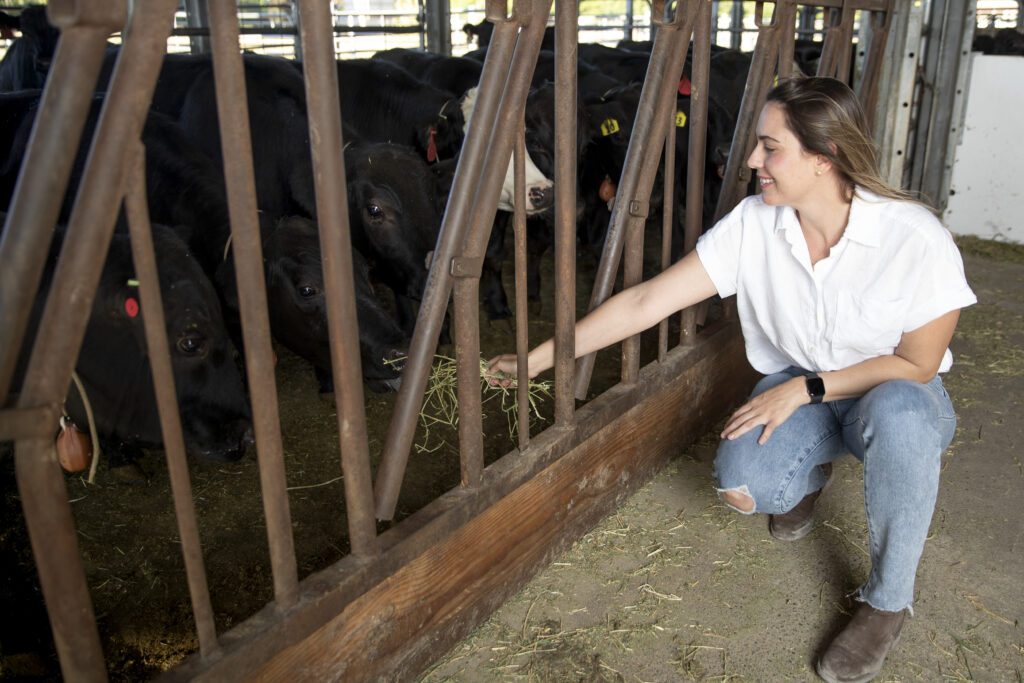
Embark on a Rewarding Career: Top Universities Shaping the Future of Animal Sciences
Are you passionate about the welfare of animals and eager to contribute to a healthier planet?
A career in animal sciences offers a dynamic pathway to transform that dedication into tangible action.
Imagine a future where you're instrumental in safeguarding diverse species, enhancing agricultural sustainability, or pioneering innovative approaches to animal health.
The field of animal sciences is expanding, driven by a global need for experts who can bridge the gap between animal well-being and environmental stewardship.
Leading universities are at the forefront, developing cutting-edge programs that equip students with the knowledge and skills to tackle complex challenges.
This article explores how select university departments are revolutionizing animal sciences education, preparing a new generation of professionals for impactful careers that benefit both animals and society.
1.
Cultivating a Sustainable Future: The Role of Modern Animal Sciences
The realm of animal sciences is far more expansive than many realize, encompassing a broad spectrum of disciplines dedicated to understanding, managing, and improving the lives of animals.
This vital field directly influences human society through its contributions to food security, public health, conservation efforts, and even our understanding of biological systems.
At its core, animal science is about the intricate relationships between animals, their environments, and humanity.
As global challenges like climate change and resource scarcity intensify, the importance of sustainable practices within animal-related industries becomes paramount.
Universities are responding by integrating principles of sustainability into their curricula, ensuring that graduates are equipped not only with scientific expertise but also with a deep understanding of ecological responsibility.
The modern animal sciences curriculum often delves into areas such as animal nutrition, genetics, reproduction, health, and behavior.
However, the emphasis has shifted significantly towards a holistic approach.
This means exploring how these biological and management aspects intersect with broader environmental concerns.
For instance, understanding animal welfare in agricultural settings now involves evaluating the environmental footprint of feed production, waste management, and land use.
Similarly, wildlife conservation programs are increasingly incorporating ecological modeling, genetic diversity studies, and community engagement strategies to ensure long-term success.
The science behind these disciplines is complex, requiring a robust foundation in biology, chemistry, and statistics, but the ultimate goal is practical application for the betterment of animals and the planet.
The career opportunities stemming from an animal sciences degree are incredibly diverse.
Graduates can pursue roles in:
- Animal Husbandry and Production: Improving the efficiency and sustainability of livestock operations.
- Wildlife Management and Conservation: Protecting endangered species and their habitats.
- Animal Nutrition and Feed Science: Developing optimal diets for various animal species.
- Animal Health and Veterinary Support: Contributing to disease prevention and treatment.
- Animal Behavior and Welfare: Researching and improving animal living conditions.
- Zoos and Aquariums: Caring for and educating the public about diverse animal populations.
- Research and Development: Advancing scientific understanding in all areas of animal science.
- Environmental Policy and Consulting: Advising on regulations and practices that impact animals and ecosystems.
The integration of sustainability into animal sciences is not merely an academic trend; it's a critical necessity.
Universities that champion this approach are preparing students for careers that are not only personally fulfilling but also socially and environmentally impactful.
They are fostering a generation of thinkers and doers who can innovate solutions for a world where human needs and animal welfare coexist harmoniously.
2.
Oregon State University: Pioneering Accessible and Impactful Animal Sciences Education
Oregon State University (OSU) stands out for its commitment to making high-quality animal sciences education accessible to a wider audience, embodying its land-grant mission of serving the public good.
Recognizing that traditional on-campus learning isn't feasible for everyone, OSU has developed robust online programs that deliver the same rigorous academic standards and practical insights as their in-person counterparts.
This innovative approach allows individuals from diverse geographical locations to pursue their passion for animal sciences without the need for relocation, breaking down barriers to education and career advancement.
The Department of Animal and Rangeland Sciences at OSU is a hub of research and teaching excellence.
Faculty members are actively engaged in addressing real-world agricultural and environmental challenges across Oregon and beyond.
This practical, research-driven philosophy permeates every aspect of their educational offerings, including their online programs.
Students benefit from a curriculum that is not only scientifically sound but also highly relevant to current industry needs and flexible enough to accommodate personal and professional commitments.
The university’s dedication to connecting teaching with practical application ensures that graduates are well-prepared for the demands of the modern animal sciences landscape.
OSU offers distinct pathways within its online offerings, catering to a variety of interests and career aspirations:
Online Bachelor of Science in Animal Sciences
This comprehensive program focuses on domesticated animals and their integral role in human society.
Students delve into the fundamental sciences underpinning animal life, including biology, genetics, nutrition, and behavior.
The curriculum is structured to build a strong foundation, progressively introducing more complex concepts and mirroring the challenges faced in real-world animal agriculture, agribusiness, and animal care professions.
A key feature of the online experience at OSU is the incorporation of virtual field trips and industry video demonstrations.
These digital tools bring the hands-on learning experience directly to the student, bridging the gap between theoretical knowledge and practical application in a remote learning environment.
Online Bachelor of Science in Sustainability (Double Degree Option)
For students seeking an interdisciplinary approach to environmental challenges, OSU offers an online Bachelor of Science in Sustainability.
This program can be pursued as a double degree, allowing current OSU students to enhance their primary major or enabling individuals with an existing bachelor's degree to earn a postbaccalaureate credential.
The curriculum tackles pressing sustainability issues through a multifaceted lens, examining human impact on ecosystems, environmental sociology, and natural resource economics.
It encourages students to connect ideas across various disciplines and career paths, fostering a holistic understanding of how to create a more sustainable future for both human and animal populations.
Through these thoughtfully designed programs, Oregon State University empowers individuals to gain critical knowledge and skills in animal sciences, preparing them for careers that contribute to a better tomorrow.
The university's commitment to accessible, high-quality education ensures that a passion for animals can indeed be transformed into a meaningful and impactful career.
3.
Kansas State University: Equipping Future Leaders in Animal Sciences and Industry
Kansas State University (K-State) has long been a leader in distance education, boasting over five decades of experience in delivering high-quality academic programs to students worldwide.
With a vast portfolio of over 100 online programs, K-State has successfully guided hundreds of students to graduation each semester, demonstrating its capacity to support diverse learning needs and career aspirations.
For those drawn to the animal sciences, K-State offers a compelling online Bachelor of Science in Animal Sciences and Industry, meticulously designed to prepare graduates for impactful roles in agriculture and the food sector.
The K-State program is built upon a solid foundation of scientific principles, covering essential areas like animal biology, nutrition, genetics, and the business aspects of animal agriculture.
A significant emphasis is placed on sustainable practices, ensuring that students understand how to manage animal populations responsibly while minimizing environmental impact.
This comprehensive approach equips graduates with the knowledge and skills necessary to excel in a variety of careers, including livestock management, feed production, food processing, and other vital areas within the agricultural ecosystem.
The university's extensive experience in online learning means that students receive a robust educational experience, complete with dedicated faculty support and access to relevant resources.
K-State's Animal Sciences and Industry bachelor's degree is strategically structured with two distinct tracks, allowing students to tailor their education to their specific interests and future career goals:
Management and Industry Track
This track is ideal for individuals who are passionate about the practical aspects of animal care, feeding, and breeding.
It combines coursework in animal production, nutrition, and management, providing students with the hands-on knowledge required to oversee and optimize animal operations.
Students also have the flexibility to select elective courses that align with their personal interests, enabling them to develop specialized expertise within the broader field.
This track prepares graduates for roles in farm management, agribusiness operations, and other industry-focused positions where practical application and leadership are key.
Science/Pre-Veterinary Track
For students aspiring to pursue advanced studies in veterinary medicine, research, or other scientific fields, the Science/Pre-Veterinary track offers a rigorous academic foundation.
This pathway emphasizes core scientific disciplines such as chemistry, physics, biology, microbiology, and mathematics.
The intensive coursework ensures that students develop the analytical and problem-solving skills necessary to succeed in demanding graduate programs and research environments.
Graduates from this track are well-prepared for the challenges of veterinary school or for careers in scientific research and development.
Graduates of K-State's Animal Sciences and Industry program are highly sought after across various sectors, including the food industry, zoos, government agencies, farm management, and research institutions.
The university's commitment to providing a flexible yet comprehensive online education empowers students to confidently embark on careers that merge their love for animals with a desire to make a meaningful difference in the world.
4.
Atlantic International University: personalized learning for Animal Science Enthusiasts
Atlantic International University (AIU) distinguishes itself through its unique approach to distance learning, prioritizing an experiential and non-traditional educational model.
The university empowers students to take complete control of their learning journey, offering a flexible framework that eliminates the constraints of fixed classrooms and rigid schedules.
At AIU, education is a collaborative process, where students work closely with academic tutors to design personalized study plans that precisely align with their individual goals, interests, and career ambitions.
This student-centric approach ensures that learners can explore their passions deeply while simultaneously acquiring in-demand skills.
The online Bachelor of Science in Animal Science program at AIU is a testament to this philosophy.
It provides a broad and deep understanding of animal life, covering critical areas such as biology, genetics, nutrition, behavior, and health.
The curriculum is designed to foster an appreciation for the diversity of the animal kingdom, with students studying a wide array of species, from beloved pets and essential farm animals to fascinating wildlife and zoo inhabitants.
A central tenet of the program is the exploration of the interconnectedness between human choices and environmental impact.
Sustainability is woven throughout the coursework, guiding students to understand how to promote animal welfare, practice responsible resource management, and implement environmentally conscious solutions within animal-related industries.
The inherent flexibility of AIU's programs allows students to deeply engage with the aspects of animal science that resonate most with them.
Whether a student's ambition lies in wildlife conservation, the development of ethical farming practices, or the innovation of cutting-edge animal care techniques, they have the autonomy to shape their educational experience.
This includes selecting specific courses, undertaking relevant research projects, and utilizing materials that best support their unique aspirations.
This personalized pathway ensures that each graduate emerges with a highly tailored skill set, ready to make a significant contribution to their chosen field.
By offering a learning environment that is adaptable, individualized, and focused on student-driven exploration, Atlantic International University provides a distinctive avenue for individuals to pursue a career in animal sciences.
The university's commitment to experiential learning and flexible pathways makes it an ideal choice for those who seek an education that truly fits their life, their pace, and their passions.
Conclusion
The field of animal sciences is a dynamic and essential discipline, offering a wealth of opportunities for individuals passionate about animal welfare and environmental sustainability.
Universities like Oregon State University, Kansas State University, and Atlantic International University are at the vanguard, innovating educational models to meet the evolving needs of this sector.
Whether through accessible online programs that break down geographical barriers, specialized tracks that cater to specific career goals, or personalized learning pathways that empower student autonomy, these institutions are dedicated to preparing a new generation of experts.
By fostering a deep understanding of animal biology, behavior, and health, alongside a strong commitment to sustainable practices, these leading university departments are equipping students with the knowledge and skills necessary to make a profound and positive impact on the lives of animals and the health of our planet.
Pursuing a degree in animal sciences is more than an academic choice; it's a commitment to a future where compassion and science converge to create a better world for all living beings.







 Explore AI Teaching Tools
Comments (0)
Please login to comment
No comments yet
Be the first to comment on this article