
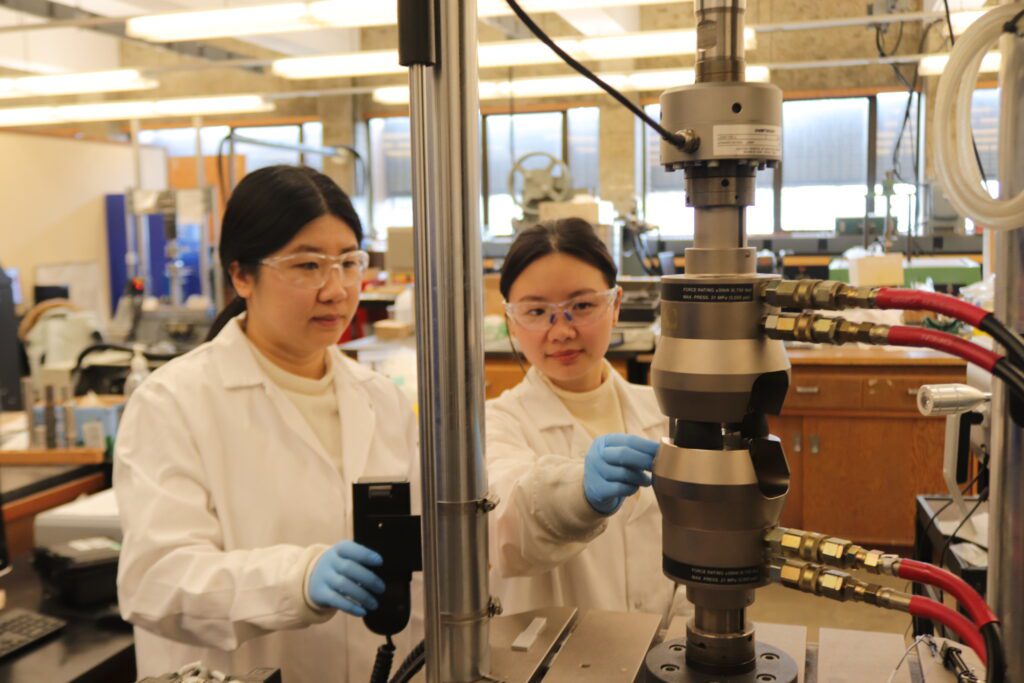
Engineering Tomorrow's World: A Deep Dive into Materials Science Innovation
Embark on a journey into the heart of innovation where the very building blocks of our world are being redefined.This article explores how cutting-edge research and dedicated students are shaping the future across diverse industries, driven by a profound understanding of materials.
Discover how a commitment to interdisciplinary collaboration and hands-on experience is empowering the next generation of engineers and scientists to tackle global challenges.
The Crucial Role of Materials in Modern Engineering
Materials engineering stands as a cornerstone of technological advancement, bridging fundamental scientific principles with practical applications that impact every facet of our lives.From the aerospace industry to sustainable energy solutions, the properties and potential of materials are constantly being pushed to new frontiers.
Research in this field is not merely academic; it's a vital engine for progress, enabling the creation of lighter, stronger, more efficient, and environmentally conscious products and infrastructure.
Students entering this dynamic domain are poised to become architects of the future, equipped with the knowledge to innovate and solve complex problems.
Understanding Material Behavior and Processing
At its core, materials science research involves a deep exploration of how different substances behave under various conditions and how they can be manipulated and processed to achieve desired outcomes.This includes studying the atomic and molecular structures of materials, their mechanical properties, thermal characteristics, and electrical conductivity.
The ability to predict and control these behaviors is paramount for developing new alloys, advanced polymers, high-performance ceramics, and novel composites.
The department's focus on these fundamental aspects ensures a robust theoretical foundation for all students.
Driving Innovation Through Advanced Research
The pursuit of groundbreaking discoveries in materials engineering is fueled by a vibrant research ecosystem.Leading academic departments are fostering environments where students and faculty collaborate on projects that address pressing global needs.
This research often involves exploring novel materials, developing innovative manufacturing techniques, and understanding the long-term impact of material choices.
The emphasis is on creating solutions that are not only technologically superior but also sustainable and economically viable.
Interdisciplinary Research Opportunities
A hallmark of leading materials engineering programs is their embrace of interdisciplinary collaboration.Research initiatives frequently extend beyond the confines of a single department, involving partnerships with fields such as chemistry, physics, biology, and computer science.
This cross-pollination of ideas and expertise allows for the exploration of entirely new material functionalities and applications.
For instance, understanding the interaction of materials with biological systems can lead to advancements in medical implants, while integrating computational modeling can accelerate the discovery of new materials with specific properties.
These collaborations are essential for tackling complex, multifaceted challenges that no single discipline can solve alone.
Empowering Students with Hands-On Experience
The transition from theoretical knowledge to practical application is a critical phase in a student's educational journey.Top-tier programs recognize this by integrating extensive hands-on learning opportunities.
These experiences range from laboratory experiments and simulations to real-world projects and internships.
Such practical engagement is vital for developing essential skills, building confidence, and preparing students for the demands of the industry.
The Value of Co-op and Industry Placements
Many universities offer robust co-op programs that allow students to gain invaluable professional experience while still pursuing their degrees.These placements provide a unique opportunity to work alongside seasoned professionals, contribute to ongoing projects, and gain firsthand insight into the day-to-day operations of various industries.
Students often find that these experiences significantly enhance their understanding of theoretical concepts and expose them to the practical challenges and innovative solutions prevalent in the field.
They learn to apply their academic knowledge in a professional setting, developing critical problem-solving abilities and a strong work ethic.
Collaborative Research Projects with Industry Partners
A significant aspect of advanced materials engineering education involves direct collaboration with industry leaders.These partnerships are instrumental in bridging the gap between academic research and real-world application.
Students often have the chance to work on projects that are directly relevant to industry needs, utilizing state-of-the-art equipment and methodologies.
They learn to communicate effectively with industry sponsors, present their findings, and understand the commercial implications of their research.
These collaborations not only provide practical experience but also foster professional networks that can be invaluable for future career prospects.
The department's strong ties with major companies underscore the relevance and impact of their research.
Cultivating Future Leaders in Materials Science
The ultimate goal of a comprehensive materials engineering program is to cultivate graduates who are not only technically proficient but also equipped with the leadership qualities necessary to drive innovation and shape the future of their chosen fields.This involves fostering critical thinking, encouraging creativity, and instilling a sense of responsibility towards societal and environmental well-being.
Mentorship and Guidance for Student Success
Effective mentorship plays a pivotal role in a student's academic and professional development.Experienced faculty members provide structured guidance, offering support and expertise as students navigate their research projects and career aspirations.
This mentorship often evolves, starting with foundational instruction and gradually transitioning to a more consultative approach as students gain independence and confidence.
The goal is to empower students to become self-directed learners and researchers, capable of tackling complex challenges with creativity and resilience.
Access to State-of-the-Art Research Facilities
World-class research facilities are indispensable for pushing the boundaries of materials science.Universities investing in advanced laboratories equipped with cutting-edge instrumentation provide students with the tools they need to conduct high-impact research.
These facilities enable detailed materials characterization, sophisticated mechanical testing, and advanced manufacturing processes.
Students gain hands-on experience with the same technologies that are driving innovation in industry, accelerating their learning and enabling them to produce research of significant value.
The ability to collect real-time data and integrate it with computational models further enhances the depth and impact of their work.
Impactful Research in Action: A Case Study
To illustrate the profound impact of materials engineering research, consider the work of students and faculty engaged in critical areas like sustainable resource extraction.Research into novel electrochemical methods for recovering valuable elements from natural sources exemplifies the practical application of materials science.
Such projects not only contribute to scientific knowledge but also offer tangible solutions for resource management and environmental sustainability.
Developing Sustainable Extraction Techniques
One area of significant research focus involves developing innovative methods for extracting critical materials from abundant, yet previously inaccessible, sources.For example, research into electrochemical direct lithium extraction from water bodies represents a paradigm shift in how we can secure essential resources for renewable energy technologies.
This type of research requires a deep understanding of electrochemistry, materials science, and chemical engineering principles.
Students involved in these projects gain invaluable experience in designing and optimizing complex processes, contributing directly to a more sustainable future.
They learn to approach challenges with a problem-solving mindset, transforming complex scientific hurdles into opportunities for innovation.
Bridging Lab Discoveries with Industry Relevance
A key objective in advanced materials engineering is to ensure that laboratory discoveries translate into real-world impact.This is achieved through close collaboration with industry partners, who provide valuable insights into practical challenges and market needs.
Students working on such collaborative projects gain direct experience in connecting fundamental scientific principles with industry-relevant applications.
They learn to adapt their research methodologies to meet specific industrial requirements, fostering a pragmatic and results-oriented approach to scientific inquiry.
This synergy between academia and industry is crucial for accelerating technological progress and ensuring that research efforts yield meaningful societal benefits.
Conclusion
The field of materials engineering is a dynamic and essential discipline, driving innovation across a vast spectrum of industries.Through rigorous research, comprehensive educational programs, and a strong emphasis on hands-on experience, leading academic departments are empowering students to become the architects of tomorrow's technologies.
By fostering interdisciplinary collaboration, providing access to cutting-edge facilities, and nurturing strong industry partnerships, these institutions are preparing a new generation of engineers and scientists to tackle the world's most pressing challenges and build a more sustainable and prosperous future.
The dedication to research and the development of new materials ensures that the impact of these advancements will be felt globally for years to come.







 Explore AI Teaching Tools
Comments (0)
Please login to comment
No comments yet
Be the first to comment on this article