
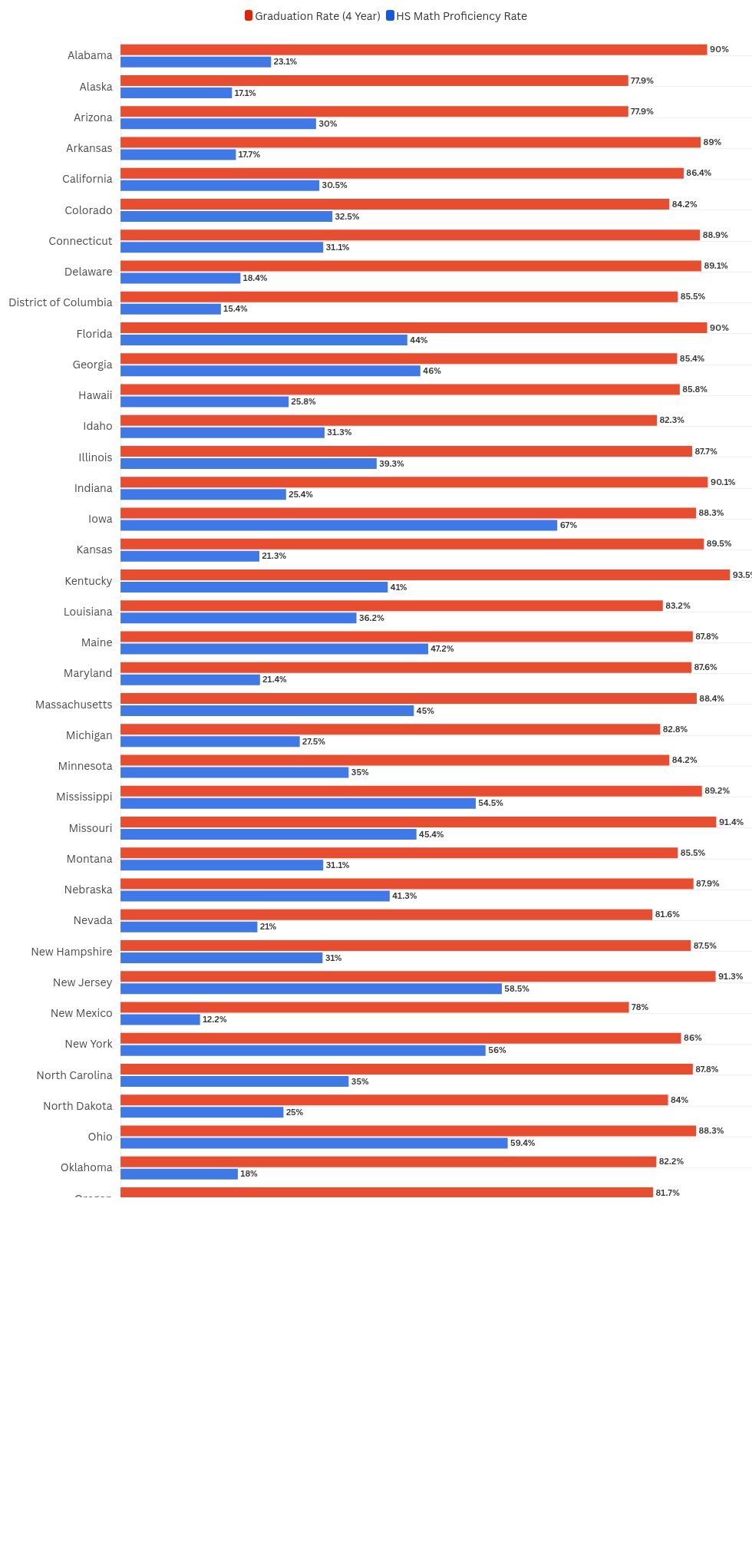
Congratulations! High school graduation rates in your state are hitting all-time highs! But before you crack open the champagne, you should know that only a small fraction of those students can do high school-level math. This disparity, which we're calling the "Graduation Gap," means many graduates may struggle in college, military service, or technical training, suggesting a critical disconnect between earning a diploma and demonstrating actual readiness. Educators must grapple with how to bridge this widening chasm.
The Alarming Reality: Diplomas Without Proficiency
Across the United States, a striking trend is emerging: the percentage of students earning a high school diploma significantly outpaces the percentage demonstrating mastery in mathematics. This isn't a minor discrepancy; in many states, the gap stretches to 30, 40, or even 50 percentage points.
Consider California, where 86% of students graduate within four years, yet only 30% of 11th graders pass the state math test. Similarly, Florida boasts a 90% graduation rate, but a concerning 44% of students only reach a middle proficiency level on end-of-course exams. These figures, while specific to individual states, paint a national picture of a system that may be awarding credentials without ensuring fundamental academic competence.
Across the country, the percentage of high schoolers who earn diplomas far exceeds the percentage who can demonstrate mastery in math, often by 30, 40 or even 50 percentage points.
This focus on math is particularly critical. Research indicates that these gaps tend to be larger in math than in reading. For instance, while 51% of Minnesota's 10th graders were proficient in reading, only 35% showed proficiency in math. This suggests a foundational issue that can cascade into future academic and career pathways.
Why Math Matters Most for Future Success
The emphasis on math proficiency isn't arbitrary. Foundational math skills are the bedrock for a vast array of post-secondary pursuits. Without them, students face significant hurdles when entering college, vocational training, or the modern workforce.
As Jim Cowen, director of The Collaborative for Student Success, has noted, these gaps signal that students are leaving high school ill-equipped for the demands of college coursework, apprenticeships, or jobs that require even basic mathematical reasoning. The long-term economic implications are also substantial, with lower math skills likely correlating to reduced earning potential over a lifetime.
The problem isn't confined to general proficiency. Data reveals that the gaps are often more pronounced among specific student subgroups. In Indiana, for example, while 25% of students overall met a college-readiness benchmark in math on the SAT, the rates plummeted for low-income students (12%), students with disabilities (5%), and English learners (3%). Addressing these disparities requires targeted interventions and support systems.
The Influence of State-Specific Testing Regimes
An intriguing pattern emerges when examining how states assess math proficiency. States that rely on externally validated exams like the SAT or ACT often report lower math proficiency rates compared to those that develop their own assessments.
In Nevada, a mere 21% of students met the ACT's college-ready benchmark in math. New Hampshire saw only 31% of 11th graders meet the SAT benchmark. In stark contrast, states like New Jersey (59%), Ohio (59%), Iowa (67%), Texas (78%), and Virginia (81%) reported significantly higher proficiency rates when using their own state-developed exams.
In many places, the disparities are shockingly large.
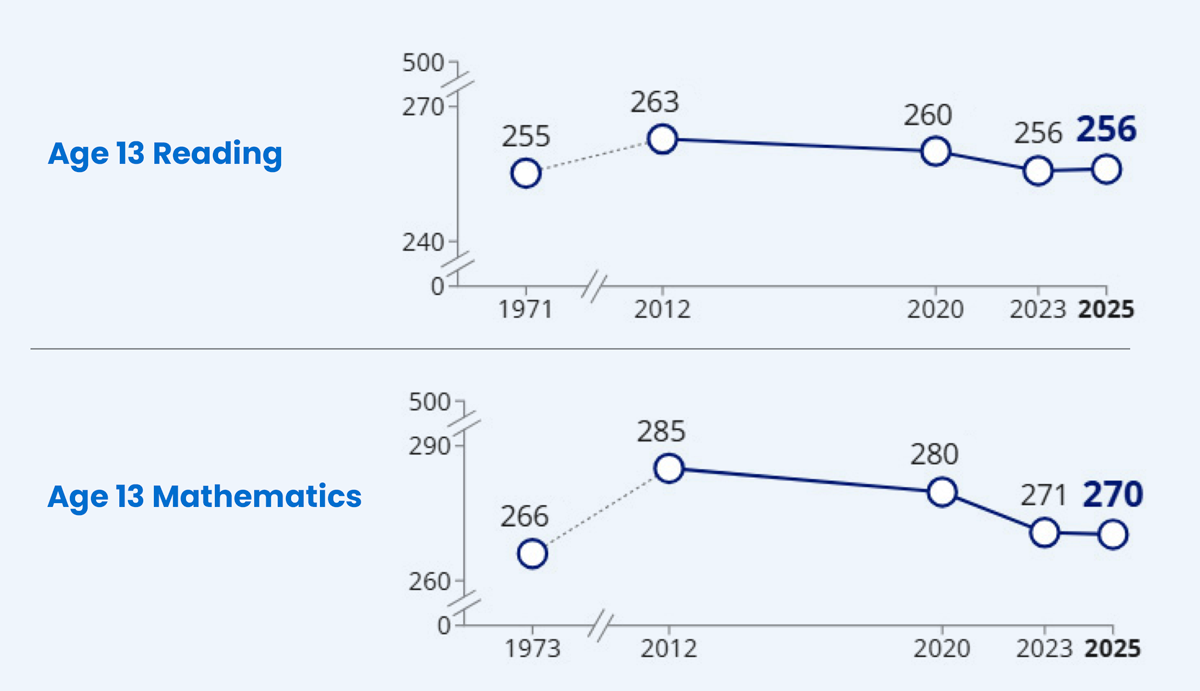
While these higher numbers might seem encouraging, a closer look suggests they may reflect lower standards rather than superior student performance. When comparing these results to the performance of eighth graders on nationally comparable exams, the data indicates that states with their own tests might be setting a less rigorous bar for proficiency.
This highlights a crucial point for educators and policymakers: the definition and measurement of "proficiency" can vary dramatically, impacting the perceived success of students and schools. Understanding these nuances is key to interpreting graduation rates and achievement scores accurately.
Rethinking High School Math: From Early Intervention to Authentic Assessment
The solution to the Graduation Gap isn't to lower graduation standards or eliminate diplomas. Instead, it requires a multifaceted approach that begins early and extends through the high school years, focusing on genuine skill development and honest assessment.
Early Foundations: Building Math Fluency from the Start
The most effective interventions often start long before students reach high school. A strong foundation in basic arithmetic is paramount. Struggles with addition and multiplication in early grades can foreshadow difficulties with fractions, algebra, and more advanced mathematical concepts.
Math proficiency tends to decline as students progress through the grades, not necessarily because they forget what they know, but because they fall progressively further behind their peers. This underscores the urgent need for early identification and support for students struggling with foundational math skills. Investing in early math education is an investment in future academic success.
Balancing Accountability and Opportunity in High School
Once students are in high school, states must strike a delicate balance in how they utilize math assessments. The era of high-stakes exit exams, which were once prevalent, often led to a dilution of standards and the creation of alternative pathways that bypassed rigorous content.
A more constructive model, seen in states like Georgia, Virginia, and the Carolinas, involves integrating end-of-course exams into students' final course grades. These tests are directly aligned with the curriculum taught throughout the year, and their results contribute a meaningful percentage (10-20%) to a student's overall grade. This approach can motivate students to engage deeply with the material without creating an insurmountable barrier to graduation.
The Power of Engaging Instruction and Practice
For educators, fostering genuine mathematical understanding requires dynamic and engaging teaching methods. Moving beyond rote memorization to conceptual understanding is key. Tools that allow for interactive learning and immediate feedback can be invaluable.
For instance, incorporating MentofyCove classroom games like trivia or word search games can make practicing math concepts enjoyable and competitive. These games, alongside other interactive tools like Mentofy AI teaching tools for lesson planning and generating assessments, can help reinforce learning in a way that resonates with today's students.
Consider how Mentofy AI teaching tools can help teachers craft engaging math problems, or how MentofyCove offers a variety of live quiz options that can be customized for math practice. These resources can transform tedious review sessions into exciting learning experiences.
Ensuring Diplomas Truly Signal Readiness
Ultimately, the most critical step is for states to be transparent and honest about what a high school diploma signifies. It should be a reliable indicator that a graduate is prepared for the next stage of their journey, whether that's college, a career, or military service.
When states award diplomas while a significant portion of students remain below grade level in math, the credibility of that credential erodes. Families, employers, and higher education institutions rely on the diploma as a benchmark of readiness, and the Graduation Gap data reveals this assumption is increasingly shaky.
To rectify this, states must prioritize:
- Paying closer attention to gaps in foundational math skills from the earliest grades.
- Implementing more honest and accurate measures of student learning, reflecting true academic achievement.
- Ensuring that the diplomas awarded genuinely reflect the preparedness that the public believes they represent.
This requires a recalibration of priorities, shifting from simply tracking graduation numbers to ensuring that those numbers are accompanied by demonstrable academic proficiency. The future success of countless students depends on closing this critical gap.






 Explore AI Teaching Tools
Comments (0)
Please login to comment
No comments yet
Be the first to comment on this article