
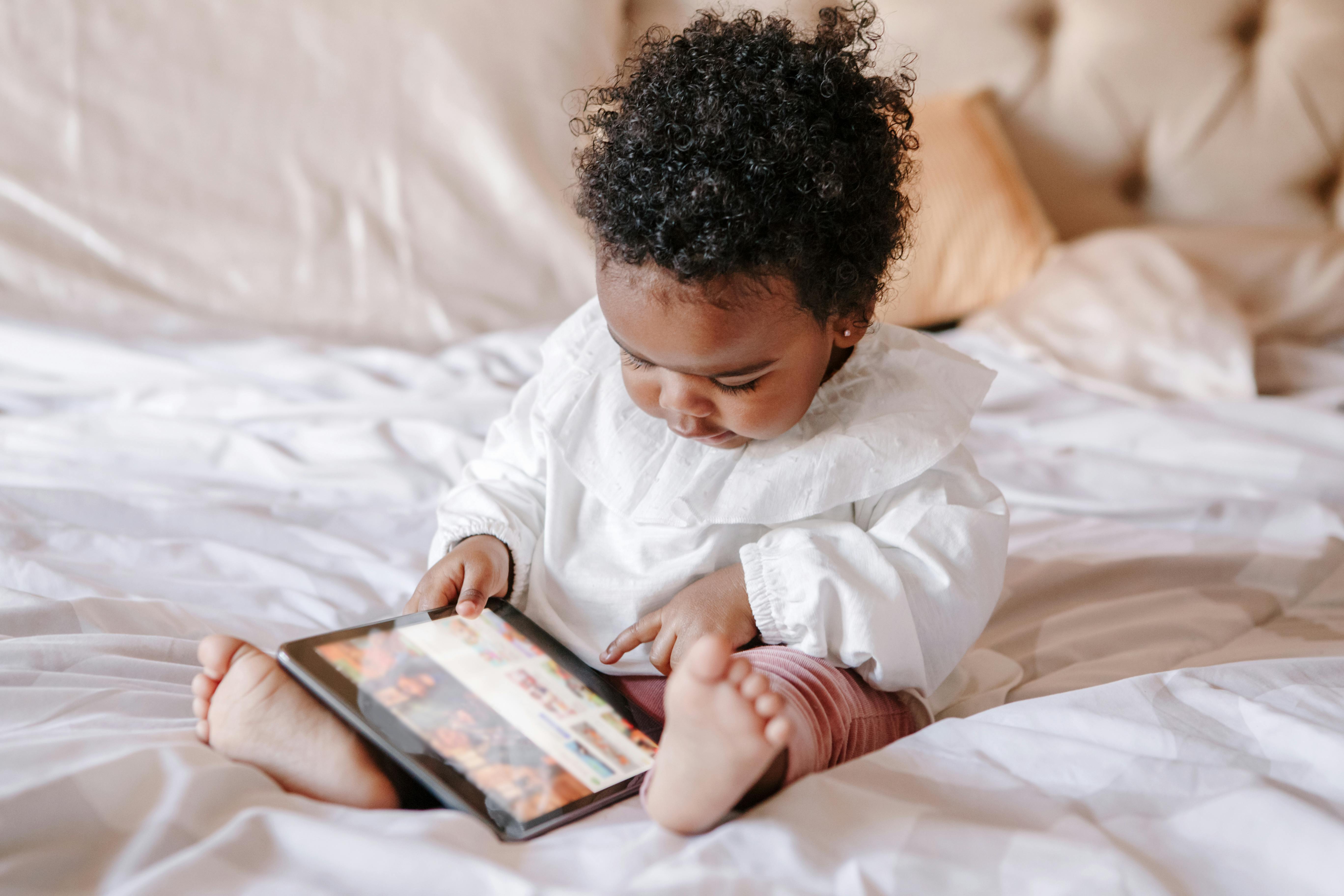
Hospital Room Revelation: The Unexpected Screen That Redefined My Daughter's First Days
The first screen my daughter encountered wasn't a toy, a tablet, or a television. It was a phone, held aloft in a sterile hospital room, just hours after her birth. This initial digital introduction, starkly at odds with the extensive research I'd meticulously compiled during my wife's pregnancy, was born not of choice, but of necessity.
A NICU Debut and a Digital Introduction
Our newborn, a tiny fighter, was immediately whisked away to the Neonatal Intensive Care Unit, a delicate tableau of tubes and wires. Meanwhile, my wife, recovering from surgery and facing potential complications from preeclampsia, was being transported in the opposite direction. She couldn't hold our baby.
For the first 24 hours of her life, our daughter's world was confined to the NICU. To bridge the physical distance, I held up my phone. Through a video call, my wife met the child she had just brought into the world. A screenshot from that moment remains a poignant reminder of our unconventional beginning.
Navigating a Screen-Saturated World
Once we finally brought our baby home, our initial intention was to create a screen-free sanctuary. We were armed with the prevailing guidance: infants should have minimal to no exposure to digital devices. However, the reality of our environment quickly challenged this ideal.
We became parents during a global pandemic, a time when venturing into public spaces, even a simple grocery store, felt like a calculated risk. Consequently, our daughter's introductions to grandparents, cousins, and friends were mediated through screens. This digital connection became our lifeline, allowing us to maintain vital family bonds despite the physical isolation.
Unexpected Developmental Milestones
As parents of a premature infant, we were hyper-vigilant, scrutinizing every subtle cue – each eye movement, every gurgle, every attempt to lift her head. Our developmental pediatrician had cautioned us about potential delays, making us keenly aware of every developmental milestone.
Ironically, it was a screen that offered one of our most surprising and reassuring moments. During the Summer Olympics, our infant, barely two months old, tracked a ping-pong rally across the television with remarkable focus. Her head moved in sync with the ball, her eyes following its rapid trajectory. Another time, the familiar, catchy theme song from a beloved 90s sitcom would instantly halt her cries or elicit giggles. These sensory experiences, amplified by the quiet of our lockdown environment, became unexpected markers of her developing awareness.
Co-Viewing: The Power of Shared Media Experiences
As our daughter transitioned into toddlerhood, we cautiously began to explore age-appropriate children's programming. We curated a selection of shows designed for engaging learning, including programs that offered culturally relevant and playful introductions to phonics, object identification, and scientific concepts. Other shows proved invaluable for reinforcing vocabulary and encouraging early language development.
Crucially, our approach was rarely passive. We made a conscious effort to watch with her, actively participating by singing along, repeating sounds, and posing questions. This practice, known as co-viewing, is a cornerstone of effective media engagement for young children.
Research indicates that when caregivers actively interact with children during media consumption, discussing what's on screen, asking probing questions, and connecting the content to real-world experiences, children are better equipped to process and retain information. The screen itself is not the sole educator; significant learning occurs through the dialogue and context built around it.
The Challenge of Overstimulation
However, it's essential to acknowledge that we haven't achieved perfect balance. Parenting and technology are in a constant state of evolution, a rapid dance that often leaves us adapting on the fly. There have been moments, admittedly, where the allure of a few minutes of quiet led us to hand over a tablet, a strategy we quickly learned was counterproductive.
When screen time extends beyond reasonable limits, the effects can be detrimental to a child's developing brain. Young children's executive functions – the skills that govern attention, emotional regulation, and self-control – are still maturing. These abilities are heavily reliant on the prefrontal cortex and develop gradually throughout childhood.
Highly stimulating digital media, characterized by rapid pacing, constant motion, vibrant colors, and quick scene changes, can overwhelm these developing neural pathways. Studies have shown that exposure to such fast-paced content can temporarily impair executive function in preschool-aged children. The very design elements that capture a child's attention can, paradoxically, lead to overstimulation.
Evolving Guidance: Beyond the Minutes
This complexity is a key reason why pediatric guidance surrounding screen time is continuously evolving. For years, the conversation primarily revolved around the sheer quantity of minutes children spent in front of screens. However, emerging research suggests that the focus needs to broaden.
A significant shift in scientific understanding highlights that the *quality* of the digital environment surrounding children is as crucial as the duration of their screen exposure. This nuanced perspective is reflected in updated recommendations from leading pediatric organizations.
Instead of solely emphasizing minute counts, these updated frameworks encourage adults to consider a child's "digital ecosystem." This encompasses the broader landscape of devices, the specific content consumed, the underlying algorithms that shape media delivery, and the interactive experiences that define a child's engagement with technology.
A Framework for Mindful Media Use
While the specifics of the guidance may evolve, core principles remain consistent. These include:
- Avoiding screen exposure for children under 18 months, with the exception of video calls for connection.
- Ensuring that media use does not disrupt essential activities like sleep, physical activity, or social interaction.
- Prioritizing high-quality, educational programming that is both engaging and developmentally appropriate.
- Practicing co-viewing whenever possible to maximize learning and connection.
This updated framework acknowledges a fundamental truth: screens are an increasingly integral part of children's lives, and their presence often begins at a very young age. The goal is not to eliminate them but to cultivate a thoughtful and intentional approach to their integration.
For my family, the journey toward this understanding began with that glowing phone screen in a hospital room. It served as a powerful, albeit unconventional, introduction to the idea that screens themselves are not inherently problematic. What truly matters is the intentional environment we build around them, guiding our children's experiences with technology in a way that supports their healthy development.






 Explore AI Teaching Tools
Comments (0)
Please login to comment
No comments yet
Be the first to comment on this article