
Beyond the Algorithm: Districts Forge Human-Centered Systems Where Technology Falls Short
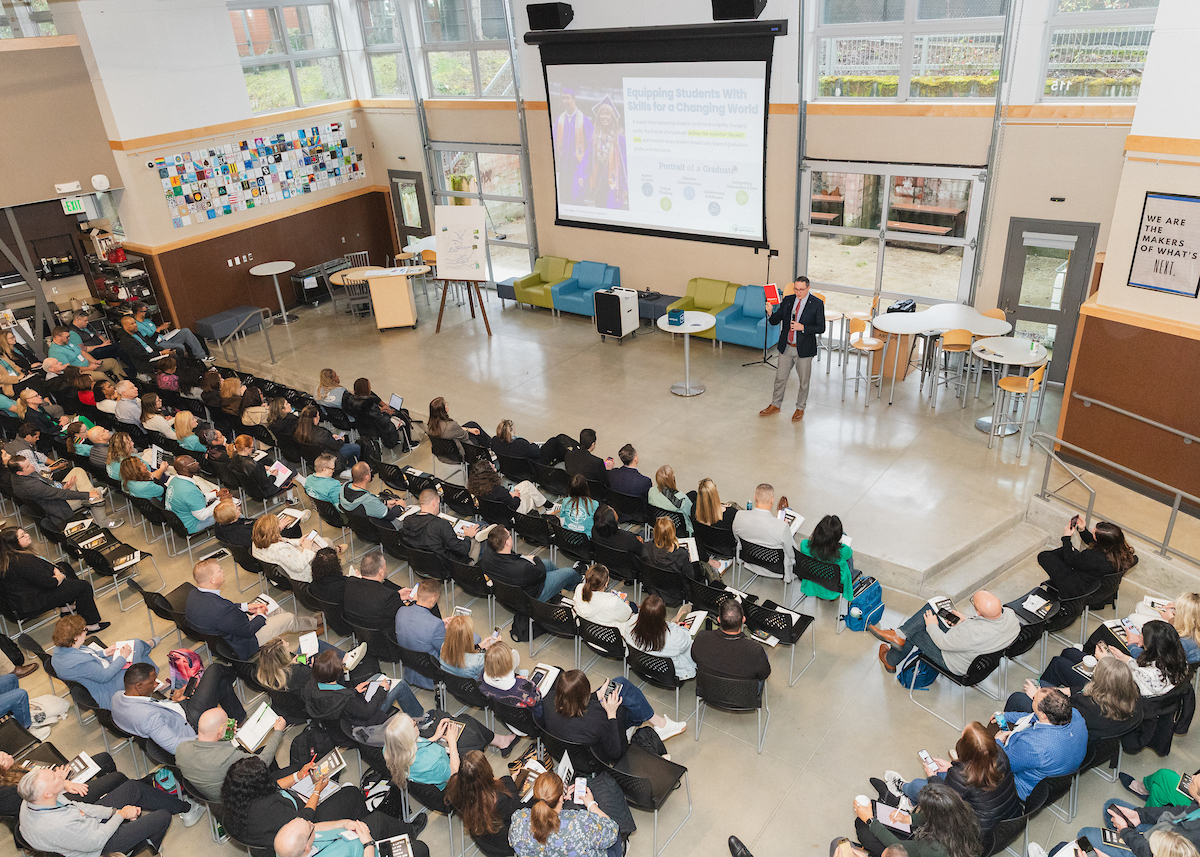
In an era where artificial intelligence promises to revolutionize nearly every aspect of our lives, a crucial question echoes through the halls of education: what truly matters when machines can do so much? A recent gathering of innovative school leaders revealed a profound shift in focus, moving away from the allure of the next digital tool and toward the irreplaceable human elements that define a thriving learning environment. These educators are not just adopting technology; they are redesigning the very fabric of their educational systems to cultivate a deep sense of belonging.
The Irreplaceable Core: Cultivating Human Connection in a Digital World
The conversation among superintendents and district teams was not about disruptive software or shiny new devices. Instead, it delved into the urgent and fundamental question of what cannot be replicated by even the most advanced technology. This gathering, part of a national network of 165 districts committed to innovation, highlighted a grounded dedication to the human aspects of the educational system. Leaders recognized that true innovation is born from diligent work, often amidst uncertainty.
This commitment to the human element is not a rejection of technology, but rather a strategic prioritization. It acknowledges that while digital tools can enhance efficiency and access to information, they cannot replace the nuanced interactions, emotional support, and genuine connection that foster student growth and well-being. The work ahead involves intentionally designing systems that amplify these human capacities.
Kent Valley: Engineering Equity Through Purposeful Pathways
In the Kent Valley, a district steeped in industrial heritage, the pursuit of student potential is deeply intertwined with its unique geography. Under the leadership of Superintendent Israel Vela and Associate Superintendent Rebekah Kim, the district has moved beyond mere data collection. They have embraced a human-centered design process, prioritizing student voice as a primary data set.
Their methodology, anchored in an Equity Transformation Cycle and driven by what they call "Street Data," emphasizes intentional, two-way listening. This process centers the experiences of students who have historically been marginalized, identifying critical areas for system improvement and fostering a stronger sense of belonging. By meticulously analyzing how learners have been underserved, Kim and her team are actively redesigning access points throughout the entire educational system.
This is not simply an exercise in data analysis; it is a fundamental design decision. Kent treats equity as a guiding principle that shapes every pathway, rather than an outcome to be measured retrospectively. In a region where a major aerospace manufacturer relies on a vast network of over 300 vendors, Kent has forged a direct bridge between the classroom and the industry.
Industry leaders, like Holly Miles of the aerospace company, are clear about their needs: they seek "evidence of projects, because projects build skills and give students a story," not just credentials. Through partnerships with organizations like Skills Inc., which champions workforce accessibility, Kent supports students with diverse needs, facilitating their transition into direct-hire roles and dual-credit programs. From elementary students engaging with aviation history to high schoolers in advanced manufacturing labs, the district is meticulously aligning learning experiences with tangible opportunities.
This represents system-level belonging, where educational pathways are constructed around the unique needs and aspirations of students, rather than expecting them to conform to pre-existing structures. It's about building a system that truly serves every learner.
Issaquah: The Courage to Co-Design for Lasting Change
Issaquah is demonstrating a powerful model for navigating system transformation through disciplined research and development. Superintendent Heather Tow-Yick and Principal of Innovation Julia Bamba have championed an approach that scales experimentation to match the complexity of the challenges they face, utilizing classrooms, cohorts, and microschools as distinct levels of design.
They are not content with superficial pilots; their work involves a deep interrogation of existing infrastructure to create authentic spaces for co-design. This allows for the genuine implementation and long-term sustainability of new educational models. Their efforts span from small-scale, interdisciplinary cohorts in middle schools to entirely reimagined learning environments like Gibson Ek High School.
Principal Tonja Reischl emphasizes a philosophy of growth over time, a principle that applies as much to the educational system itself as it does to individual students. Gibson Ek stands as a testament that reimagined learning does not necessitate exclusive budgets or privileged zip codes. Instead, it requires a deliberate re-evaluation of time, relationships, and what constitutes meaningful evidence of progress.
By leveraging the microschool model as a protected policy space, Issaquah can rigorously test competency-based progressions, unburdened by traditional constraints such as rigid seat-time requirements. In Issaquah, co-design has evolved into a form of governance, with insights gleaned from these learner-centered environments now actively shaping the architectural plans for a new open-enrollment high school. This strategic alignment ensures that the physical space will embody the community's shared vision and its Portrait of a Graduate.
This is the essence of moving from isolated pockets of innovation to systemic coherence. The district is prioritizing learning before scaling, diligently working to embed a profound sense of belonging into the very design of its systems, and consistently demonstrating a commitment to putting their research and development into practice.
What AI Cannot Replace: The Human Imperative
The convening concluded with a compelling perspective from Justin Spelhaug of Microsoft Elevate, whose insights into the evolving AI economy underscored the urgency of the discussions. We are transitioning from the Information Age to a probabilistic era, moving beyond deterministic systems with singular right answers. In this new landscape, AI excels at handling routine expertise, freeing human intellect for more complex challenges.
If AI can master the known, then educational institutions must dedicate themselves to exploring the unknown. While AI can efficiently surface research, it cannot, for instance, physically participate in restoring a local salmon habitat. It can analyze vast patterns, but it cannot cultivate the conditions for a student to feel truly seen, understood, and valued.
As Digital Promise CEO Jean-Claude Brizard recently articulated, we are entering an era where human intelligence is the key differentiator. Students must be active participants in shaping how technology is utilized, rather than passive recipients of its output. The human skills that districts are increasingly prioritizing—belonging, real-world application, and relational trust—are not merely "soft" outcomes; they are the essential work of education.
As AI assumes more routine tasks, the value of education shifts dramatically towards fostering curiosity, developing sound judgment, and building meaningful connections. These are not secondary skills; they are the very foundation of future success. The most courageous leadership observed was not characterized by finished products, but by a profound willingness to navigate uncertainty as leaders fundamentally redesigned schedules, budgets, and entire systems.
This is where Collaborative Innovation becomes indispensable. Through initiatives like the Center for Learner Pathway Innovations, led by Kimberly Smith and Viki M. Young, Ph.D., districts are leveraging Digital Promise's proven community-centered co-design process. This collaborative approach is building cross-sector pathways that position belonging as a core design principle within the educational system. Yet, many existing systems remain optimized for knowledge delivery, rather than for cultivating the conditions that enable learners to access opportunities, participate fully, and ultimately thrive.
From Vision to Practice: Building Enduring Systems
Sustainable educational systems are forged when leaders intentionally redesign the underlying conditions that allow a compelling vision to take root and flourish. The experiences in Kent and Issaquah powerfully illustrate that the most challenging periods are precisely the conditions necessary for building systems that endure. The true obstacle is rarely a lack of vision; most districts already possess a clear Portrait of a Graduate.
The critical challenge lies in whether their existing systems are adequately designed to bring that vision to life. To guide your own district toward that horizon, consider these five strategic moves:
- Identify the Infrastructure Barrier: Pinpoint the specific systemic constraint that is impeding your vision's realization. This could be an outdated bell schedule, a rigid grading policy, or a legacy transcript system.
- Activate Uncommon Alliances: Identify and engage other stakeholders within your learners' broader educational ecosystem to co-create innovative solutions. Dissolve current pathway roadblocks by fostering collaboration across K-12, postsecondary education, industry, and community organizations to keep pace with evolving learner needs and a dynamic workforce.
- Choose Your R&D Container: Match the scale of your experimentation to the complexity of the problem you are addressing. A single classroom might suffice for testing grading shifts, a cohort for interdisciplinary work, or a microschool for comprehensive system redesign.
- Document the Friction: Go beyond studying successes; meticulously examine what breaks. These pressure points reveal where the established system is actively resisting the implementation of a new vision.
- Audit for Agency: Assess whether students are primarily engaged in deterministic tasks with predictable answers. Actively seek opportunities to incorporate probabilistic work that demands critical judgment and iterative problem-solving.
- Redesign for Human Connection: Strategically determine how AI can manage routine tasks, thereby freeing up valuable human energy for mentorship and authentic real-world application.
- Learn from Peers: The kind of innovative thinking required for agile, strategic change is most effectively cultivated within a supportive community. Tap into professional learning networks to identify promising ideas and rigorously test them with fellow leaders and districts.
In the age of AI, the ultimate goal is not merely to keep pace with technological advancements. It is to achieve profound clarity about what is truly irreplaceable and to build educational systems that actively protect and expand those essential human elements over time.






 Explore AI Teaching Tools
Comments (0)
Please login to comment
No comments yet
Be the first to comment on this article