
Beyond Grades: The Unseen Architecture Crafting Students' Real-World Power
Imagine a classroom where students don't just learn facts, but actively shape their futures. This isn't a distant dream; it's a tangible reality unfolding in schools across the nation, revealing a consistent blueprint for cultivating durable skills that extend far beyond graduation.
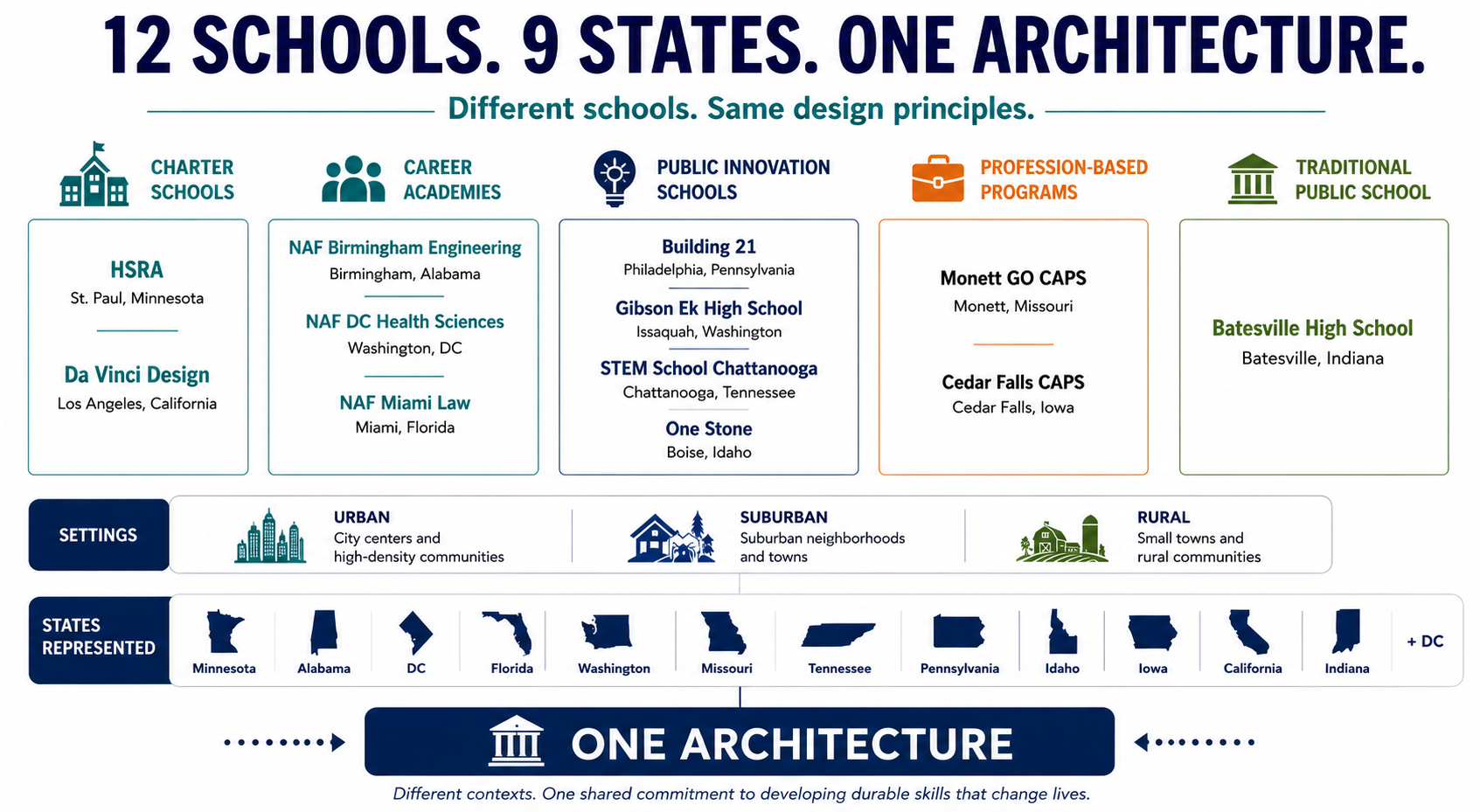
A recent extensive study, spanning sixteen months and twelve diverse schools, has uncovered a surprising commonality in how these institutions are fostering genuine student agency, professional identity, and a clear vision for life. The findings challenge conventional educational models, suggesting that the path to developing these critical skills lies not in specific pedagogies or school types, but in a foundational design architecture.
The Three Pillars of Durable Skill Development
At the heart of this transformative approach are three core principles that, when consistently applied, create the fertile ground for deep learning. These aren't rigid mandates but flexible design choices that empower schools to adapt while maintaining a clear focus.
Making Skills Explicit and Trackable
Students need to understand what they are learning and how their progress is measured. This principle emphasizes clarity, ensuring learners can articulate the skills they are developing, pinpoint their current proficiency, and visualize the path to mastery.
Implementation varies dramatically. Some schools utilize sophisticated digital platforms that offer real-time visibility into a student's competency progression across multiple domains. Others have developed detailed "Portrait of a Graduate" frameworks through extensive community collaboration, ensuring a shared language for growth that resonates with students themselves.
Learning Through Authentic, Consequential Experiences
The most profound skill development occurs when students engage in work that has real-world implications. This principle moves beyond theoretical practice to embrace challenges where student performance carries genuine weight and impact.
Examples abound: a student sending dozens of emails to secure a real internship, another defending a design project to industry professionals, or a peer passing a certification exam required in a professional field. These experiences solidify skills not through repetition in safe environments, but through the tangible consequences of work that matters to an audience beyond the classroom.
Integrating Skill Development Holistically
A common pitfall for many skills initiatives is their isolation. Standalone workshops or elective courses can introduce concepts, but they rarely embed them deeply enough to foster lasting capability. The schools excelling in durable skills development weave this learning into the very fabric of every academic and extracurricular endeavor.
In these settings, professional skills and habits of mind are not add-ons but integral components of a student's assessment and progression. Every project, internship, and exhibition directly contributes to a student's demonstrable competency, creating a seamless and continuous learning journey.
The Four Amplifiers: Turning Practice into Transformation
While the three principles lay the groundwork, four additional conditions act as powerful amplifiers, elevating good practice into profound, lasting transformation. These elements cultivate a deeper level of student empowerment, shaping not just what students know, but who they become.
Progressive Complexity: Graduated Challenges
Students thrive when presented with challenges that are appropriately scaled to their readiness. This approach ensures learners are consistently stretched and pushed beyond their comfort zones, but never to the point of being overwhelmed or stranded.
One school exemplifies this with a four-year arc where students gradually increase their engagement in authentic practice. Freshmen might dedicate a small percentage of their time to real-world tasks, with this figure steadily rising to a significant portion by senior year. This structured progression allows students to build confidence and competence, culminating in experiences that mirror professional roles.
Sustained Relationships: Trust and Feedback
Deep, trusting relationships are the bedrock upon which authentic risk-taking and honest feedback can flourish. This principle highlights the importance of creating a supportive environment where students feel valued as individuals before being evaluated as learners.
Schools that prioritize this often feature small enrollments and educators who build long-term connections with students. This intentional structure fosters a "family culture" that is particularly crucial for students who may have experienced previous educational setbacks. The outcomes are striking: high graduation rates and a clear sense of professional direction for students who arrived with significant challenges.
Structured Reflection: Turning Experience into Insight
The ability to translate lived experiences into transferable learning is a hallmark of durable skills. This requires intentional protocols that guide students to process their experiences and extract valuable insights.
These reflection processes can take many forms, from mandatory debriefs after project presentations to structured evaluation cycles with specific prompts. The true measure of success is when students begin to apply these frameworks independently, demonstrating that the learning has become internalized and applicable to new contexts, even outside of formal schooling.
Attention to Context: Building on Community Assets
Effective education acknowledges and leverages the unique strengths, cultures, and assets of the communities it serves. This principle moves away from generic, one-size-fits-all models towards approaches that are deeply rooted in local realities.
Schools that embrace this principle often align their programs with the specific economic landscape and cultural fabric of their region. They actively partner with local employers and community organizations, ensuring that student work is relevant and contributes to their local context. This approach not only enhances learning but also fosters a stronger connection to place and a greater likelihood of students contributing to their communities post-graduation.
Two Schools, One Powerful Architecture
To illustrate the universality of this design architecture, consider two institutions that, on the surface, appear worlds apart. One is a non-traditional public school in a major urban center, serving a predominantly economically disadvantaged population. It has moved away from traditional course structures, opting for problem-centered studios that tackle real-world issues like urban water quality and food insecurity.
Students in this school don't enroll in separate math and English classes. Instead, they develop critical reasoning, communication, and collaboration skills through integrated projects that have authentic audiences. A junior internship is a standard component, and a transparent competency framework allows students to track their growth in real time. This scaffolded approach, coupled with strong advisory relationships, creates a safe space for students to explore their identities and test potential career paths.
The other school is a comprehensive public high school in a small, rural town. On paper, it embodies a more traditional structure. Yet, through a deliberate three-year community engagement process, it has developed a "Portrait of a Graduate" that is actively used by families and employers. Its work-based learning program is robust, supported by dedicated coordinators and extensive partnerships with local businesses.
Remarkably, a significant portion of its graduating class earns associate's degrees alongside their high school diplomas. Furthermore, a higher percentage of these graduates remain in or return to their local area compared to regional norms. The success of this school lies in its community-owned framework and its commitment to embedding durable skills development into every aspect of the student experience.
Despite their vastly different contexts and appearances, both schools share the same underlying architecture. They make skills explicit, ensure experiences are authentic, integrate learning holistically, scaffold complexity, sustain relationships, structure reflection, and honor context. This is the core message for educational leaders: the pursuit of durable skills is not confined to specific school models; it is an achievable goal for any school willing to build for it.
A Call to Action for Leaders
For leaders in states, districts, and educational networks, the findings offer three clear invitations for action. First, conduct an honest assessment of your current principles. Can students articulate the skills they are acquiring? Are the learning experiences truly consequential? Or are skills siloed in isolated pockets of the system?
Second, evaluate the presence and strength of the four amplifiers. Where are these conditions already thriving, and where are they absent? The schools achieving the most profound transformations actively cultivated all four amplifiers, recognizing their interconnectedness.
Finally, prioritize partnership. The schools studied rarely achieved their success in isolation. They actively sought out and collaborated with intermediaries, employers, state organizations, and peer institutions. Recognizing partnership as a fundamental element of the architecture, rather than a peripheral activity, opens doors to innovation and sustained progress.
The students within your schools possess the same potential for growth and transformation as those highlighted in this research. The principles and amplifiers are not exclusive; they are accessible. The critical question is whether your system will commit to building the necessary conditions to unlock this potential. The resources and frameworks to guide this deeper work are available, empowering leaders to create learning environments where every student can develop the agency, identity, and vision to thrive in the real world.



 Explore AI Teaching Tools
Comments (0)
Please login to comment
No comments yet
Be the first to comment on this article