
The school year is poised to begin with a startling number of major school districts, from Cherry Creek to Los Angeles and Miami-Dade, facing a critical leadership vacuum. This trend is not just an anomaly; it signals a profound shift in the superintendent pipeline, leaving school boards scrambling to fill essential roles. For educators and administrators alike, this presents a pressing challenge: how do we ensure stable, effective leadership in our nation's largest school systems when the traditional pathways are narrowing?
The Vanishing Applicant Pool: Fewer Candidates, Lower Quality
The once-robust pipeline for school superintendent positions appears to be drying up, with significant drops in applicant numbers observed across numerous large districts. This isn't a matter of perception; data from districts like Jeffco, Broward County, and Charlotte-Mecklenburg reveal a consistent decline in the sheer volume of candidates seeking these high-profile roles over the past decade.
This shrinking pool is compounded by a concerning trend in the quality of applicants. Experienced search firm presidents note that candidates without prior superintendent experience now significantly outnumber those who do. This suggests that boards are not only receiving fewer applications but also fewer applications from individuals with a proven track record in district leadership.
"In most of our searches, applicants without previous experience outnumber those with experience by at least 3 to 1."
The average tenure of a superintendent, while seemingly stable at around 2.72 years according to the Council of the Great City Schools, masks a more troubling reality. Tenure peaked in 2010 and has been steadily declining since. More starkly, the predecessor of today's average sitting superintendent had served nearly double the time, indicating a more transient and perhaps less stable leadership landscape.
The Shifting Landscape of District Leadership
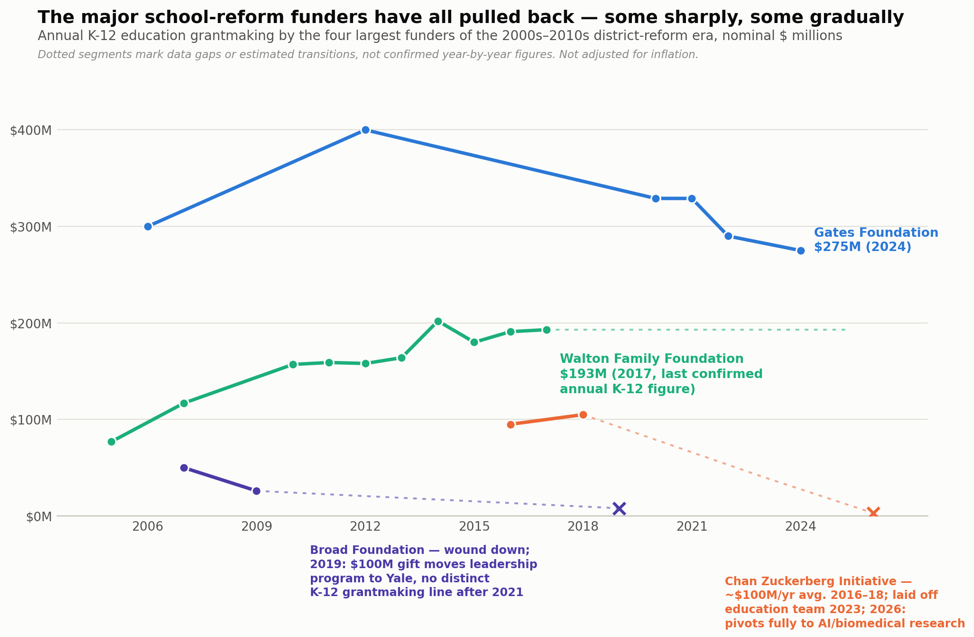
Twenty years ago, the role of a superintendent was often portrayed as a powerful catalyst for change, a chief executive officer capable of transforming complex educational enterprises. Figures like Rod Paige and Eli Broad championed a vision of superintendents as visionary leaders, capable of attracting significant philanthropic investment and driving ambitious reforms.
This era saw a deliberate effort to broaden the superintendent talent pool, actively recruiting individuals from outside traditional K-12 education. Programs like the Broad Superintendents Academy sought to bring in leaders from business, law, and the military, aiming to inject diverse perspectives and innovative approaches into district leadership.
This emphasis on non-traditional backgrounds, however, appears to be waning. An analysis of superintendents in the 20 largest U.S. school districts reveals a significant decline in non-traditional hires and those with experience outside of K-12 education. This shift suggests a retreat towards more conventional career paths, potentially limiting the influx of fresh ideas and diverse leadership styles.
The Decline of the Non-Traditional Leader
Claude's analysis of superintendent résumés across major districts over several years highlights a dramatic decrease in non-traditional leadership. From holding steady at 20% between 2006 and 2016, non-traditional pathways dropped to 15% by 2021 and have now fallen to a mere 5%. Similarly, outside leadership experience, which peaked at 40% in 2011, has dwindled to about 10% in recent years.
The infrastructure that once supported and encouraged these diverse pipelines, including initiatives like the Broad Superintendents Academy, has largely been dismantled or absorbed into broader academic programs without a dedicated K-12 placement focus. This has effectively closed off a significant avenue for recruiting experienced leaders from other sectors.
The Challenges of Modern District Leadership
The demands placed upon school superintendents have intensified dramatically. Beyond curriculum and instruction, leaders are now expected to navigate complex issues related to mental health, social-emotional learning, and increasingly divisive political climates. This expanded scope of responsibility, coupled with heightened public scrutiny, makes the job more challenging than ever.
The allure of the superintendent role has also diminished. While salaries remain substantial, the intense pressure and often short tenures can be a deterrent. The promise of significant philanthropic investment and widespread media recognition that once accompanied bold reform efforts has also faded, replaced by a more complex and often contentious environment.
Navigating the Complexities of Reform
Historical examples illustrate the inherent difficulties in driving large-scale district improvement. The tenure of Tom Boasberg in Denver Public Schools, while marked by significant gains in graduation rates and student achievement, also highlights the complexities and potential trade-offs involved in reform. Similarly, Mike Miles's tenure in Houston has shown that standardized test score improvements can sometimes come at the cost of access to advanced academic coursework.
These cases underscore that even with strong leadership, transforming a large school district is a monumental undertaking. The superintendent must balance innovation with stability, pushing for progress while ensuring equitable access and maintaining community trust. The success of these efforts often depends on a deep understanding of the local context and the ability to foster collaboration among diverse stakeholders.
What Can School Boards Do Now?
With the traditional superintendent pipeline showing significant cracks, school boards face a daunting task in identifying and recruiting effective leaders. The options are becoming more limited, requiring a more strategic and proactive approach to talent acquisition.
One immediate step is to look inward and cultivate leadership within the existing district structure. Developing internal candidates through mentorship programs and targeted professional development can create a more sustainable succession plan. This approach can also foster a deeper understanding of the district's unique challenges and opportunities.
- Cultivate Internal Talent: Invest in leadership development programs for aspiring principals and central office administrators.
- Broaden Search Criteria (Carefully): While non-traditional backgrounds are scarce, consider candidates with transferable leadership skills from other complex organizations.
- Leverage Expert Search Firms: Engage specialized search firms that understand the current landscape and can identify a wider, albeit smaller, pool of qualified candidates.
- Focus on Fit and Vision: Prioritize candidates whose leadership philosophy aligns with the district's values and long-term goals.
- Strengthen Onboarding and Support: Provide robust support systems for new superintendents to ensure their success and longevity.
Boards may also need to be more creative in their recruitment strategies. This could involve offering more flexible contract terms or exploring innovative compensation models. The goal is to make the position attractive to a wider range of highly qualified individuals, even if the traditional pathways are less accessible.
Rethinking the Role of Technology in Leadership Support
In today's educational landscape, technology can play a crucial role in supporting both district leaders and the educators they serve. Tools that streamline administrative tasks, enhance communication, and facilitate data-driven decision-making can free up valuable time for superintendents to focus on strategic initiatives.
For instance, platforms offering AI lesson plan generation and AI grading can alleviate the burden on teachers, allowing them to dedicate more energy to student engagement and instructional innovation. Similarly, tools for student grouping and interactive board features can help principals and teachers manage classrooms more effectively, contributing to a more stable and productive school environment.
The average tenure of a superintendent is now less than three years, a stark contrast to the nearly five years their predecessors served.
The challenge for school boards is to find leaders who can not only manage the day-to-day operations but also inspire innovation and foster a culture of continuous improvement. This requires a nuanced understanding of the evolving educational landscape and a commitment to supporting leaders with the resources and autonomy they need to succeed.
Ultimately, the responsibility lies with school boards to be more deliberate and resourceful than ever before in their pursuit of exceptional district leadership. The future of our largest school systems depends on their ability to navigate this challenging new reality and secure leaders who can guide them through the years ahead.






 Explore AI Teaching Tools
Comments (0)
Please login to comment
No comments yet
Be the first to comment on this article