
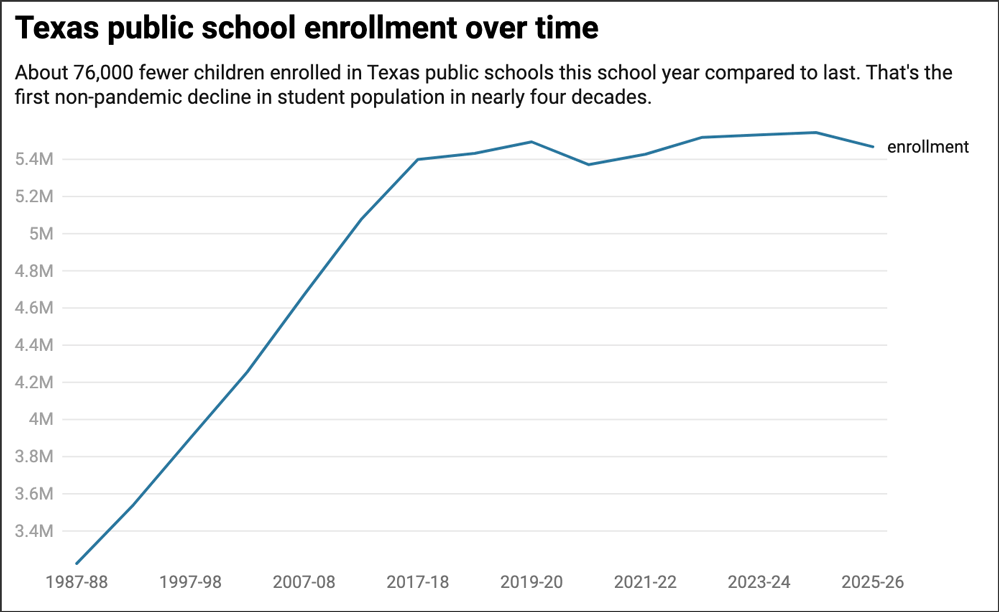
Texas public schools are facing a significant enrollment drop, the first of its kind in nearly four decades outside of pandemic-related fluctuations. This decline, impacting roughly 76,000 fewer students this academic year, signals a profound shift in the state's educational landscape. Educators must grapple with the implications of this demographic change, which disproportionately affects Hispanic students and those from low-income backgrounds, potentially reshaping resource allocation and support services.
A Shifting Demographic Tide Challenges Texas Schools
For years, a growing influx of new residents and increasing birth rates among certain demographics helped Texas public schools absorb the impact of declining birth rates nationwide. This period of steady growth masked deeper demographic shifts. Now, with a confluence of factors, this trend has reversed, presenting a complex puzzle for policymakers and school leaders.
"What stands out in the data is that public school enrollment is falling even as Texas continues to grow. In many parts of the state, population gains are no longer translating into public school enrollment growth."
The numbers paint a stark picture: an estimated 100,000 fewer students may attend public schools by the end of the decade. This projected decrease, however, is not uniform, with some projections suggesting a potential increase in other areas, highlighting the localized nature of this educational challenge.
Understanding the Drivers Behind the Enrollment Decline
Several interconnected factors are contributing to this unexpected downturn in public school enrollment. While the precise causes are still being debated, a combination of demographic shifts, evolving family structures, and policy changes are at play.
The Impact of Shifting Birth Rates and Immigration
A key element in the historical growth of Texas public schools has been immigration, which helped offset declining birth rates. The recent slowdown in immigration, coupled with a general decline in the birth rate across the state, means this buffer is diminishing.
This demographic reality means schools are not only serving fewer students overall but are also likely to see a higher concentration of students with complex needs. This presents a dual challenge: reduced funding due to lower enrollment and increased demand for specialized support services.
Fear and Uncertainty Drive Families Away
Recent increases in anti-immigration rhetoric and enforcement actions have sown fear within immigrant communities, leading some families to withdraw their children from public schools. This fear, even if not directly impacting all students, creates an environment of anxiety that can disrupt educational continuity.
Reports from educators and community advocates indicate that some parents have considered pulling their children from bilingual programs or seeking alternative schooling options out of concern for their family's immigration status. This fear-driven exodus directly contributes to the enrollment drop.
“I’ve heard it directly from the teachers, from principals, saying, ‘Hey, these kids just disappeared. Can you help us locate them or help us figure out what happened to them or to their parents?’ So, yes. It’s fear.”
The Rise of Alternative Educational Pathways
The landscape of education is also evolving with the increasing availability of alternative schooling options. As more families explore choices beyond traditional public schools, enrollment in neighborhood campuses naturally declines.
The impending launch of school voucher programs in Texas is also anticipated to draw more families away from the public school system. This trend, combined with other factors, suggests a significant shift in how Texas students access their education.
Navigating the Challenges: Strategies for Educators
The enrollment drop presents significant challenges for Texas public schools, impacting funding, staffing, and program offerings. However, educators can implement proactive strategies to adapt and thrive amidst these changes.
Focusing on Student Engagement and Retention
In an era of increasing choice, fostering a compelling and engaging learning environment is paramount. Schools that prioritize student success and well-being are more likely to retain their student population.
Leveraging tools that enhance classroom interaction and make learning fun can be a powerful retention strategy. Interactive elements like MentofyCove classroom games can boost student enthusiasm and participation, making school a place students want to be.
Leveraging Technology for Efficiency and Impact
The demands on educators are increasing, making efficient use of time and resources crucial. Technology can play a vital role in streamlining administrative tasks and enhancing instructional delivery.
Tools for Mentofy AI teaching tools, such as AI-powered lesson planning and assessment creation, can free up valuable time for teachers to focus on individual student needs. Features like AI grading can further alleviate workload, allowing for more personalized feedback and intervention.
Strengthening Community Ties and Support Systems
Building strong relationships with families and the wider community is essential, especially for students facing unique challenges. Schools that act as hubs of support can mitigate the impact of external stressors on students.
For schools serving diverse populations, understanding and addressing the specific needs of immigrant families is critical. Providing resources and creating a welcoming environment can help alleviate fear and encourage continued enrollment.
Adapting to Demographic Realities
The data clearly indicates a need for long-term strategic planning. School districts must analyze local demographic trends and adapt their resource allocation accordingly.
This includes a critical look at program offerings and potentially restructuring to serve a student population with evolving needs. Embracing flexibility and innovative approaches will be key to navigating this new educational era in Texas.
The enrollment decline in Texas public schools is more than just a statistical shift; it's an inflection point that demands thoughtful consideration and strategic adaptation from educators, policymakers, and communities alike. By understanding the multifaceted causes and embracing innovative solutions, Texas can work towards ensuring a robust and equitable education for all its students.






 Explore AI Teaching Tools
Comments (0)
Please login to comment
No comments yet
Be the first to comment on this article