

Navigating Education Funding Debates: Understanding Proposition 98 and its Impact
The landscape of public education funding is often complex, with intricate formulas and legislative decisions shaping the resources available to schools.When revenue shortfalls occur, the mechanisms designed to protect educational budgets come under intense scrutiny.
This article delves into the critical discussions surrounding education funding, exploring the principles behind guaranteed funding and the challenges that arise during economic downturns.
We will examine how these debates impact school boards, educators, and ultimately, the students who rely on robust educational systems.
Understanding the Foundation: Proposition 98 and Guaranteed Funding
At the heart of many state-level education funding discussions lies a fundamental question: how do we ensure a consistent and adequate flow of resources to our schools, even when the broader economy faces challenges?This is where constitutional guarantees, like the one established by Proposition 98, play a pivotal role.
Proposition 98, a significant piece of legislation, was designed as a safeguard, a mechanism to shield education spending from the volatility of tax revenues and the pressures of budget cuts.
It aims to create a predictable financial framework, ensuring that a substantial portion of the state's general fund is allocated to K-12 schools and community colleges.
The core principle of Proposition 98 is to establish a minimum funding floor.
This means that regardless of economic fluctuations, a certain level of investment in education is constitutionally mandated.
This guarantee is not static; it is calculated annually based on a complex formula that considers various economic indicators and student enrollment figures.
The intention is to create a stable base that grows with the economy and student population, providing a reliable stream of funding that allows school districts to plan and operate effectively.
Without such a guarantee, schools could face drastic budget reductions during economic downturns, leading to significant disruptions in educational services.
The Mechanics of the Guarantee
The calculation of the Proposition 98 guarantee involves several "tests" that are tied to economic performance and growth in student attendance.These tests ensure that the funding level adjusts appropriately to reflect the state's fiscal health and the needs of its student population.
For example, if the state's economy is robust and student enrollment increases, the guaranteed funding amount will typically rise.
Conversely, during periods of economic contraction, the formula is designed to still provide a baseline level of support, preventing catastrophic cuts.
The annual appropriation for Proposition 98 often becomes the foundational figure for calculating the subsequent year's minimum.
This creates a compounding effect, where consistent funding helps build a stronger financial base for education over time.
However, this intricate system can also become a point of contention when revenue projections are inaccurate or when the state faces significant fiscal challenges, leading to debates about how the formula is interpreted and applied.
Navigating Revenue Shortfalls: The Challenge of Budgetary Gaps
When the state's revenue projections fall short of expectations, the impact on education funding can be substantial.This is particularly true when these shortfalls are significant, potentially affecting billions of dollars that were anticipated for school budgets.
Such situations create a complex dilemma for state leaders: how to balance the budget while upholding constitutional guarantees for education.
One of the primary challenges arises from the timing of revenue collection and budget allocation.
Tax filing deadlines, for instance, can influence when accurate revenue figures become available.
If these deadlines are shifted, state officials may set budgets based on incomplete or inaccurate revenue estimates.
When the actual revenue collected is lower than projected, it can lead to a substantial gap between anticipated funding and available resources.
This is precisely the scenario that can trigger intense debates about how to address the shortfall without undermining the commitment to education.
The Impact of Miscalculations and Over-appropriations
A common scenario that exacerbates revenue shortfalls involves over-appropriation.This occurs when the state, based on initial revenue estimates, allocates more funds to sectors like education than the actual revenue collected can support.
In the context of Proposition 98, if schools and community colleges have already budgeted and spent these funds based on the initial allocations, addressing the resulting deficit becomes a delicate balancing act.
The question then becomes how to account for these discrepancies.
Some approaches might involve treating these over-appropriations as temporary accounting adjustments, aiming to spread the impact over several fiscal years.
However, such methods can be controversial, especially if they are perceived as circumventing the spirit or letter of the Proposition 98 guarantee.
The core of the dispute often lies in whether these adjustments are seen as legitimate financial management or as an attempt to reduce the state's constitutional obligation to fund education.
Disputes Over Funding Mechanisms: When Legal Challenges Loom
When disagreements arise over the interpretation and application of education funding laws, the specter of litigation often emerges.In situations where powerful education advocacy groups believe that the state is not upholding its commitments, they may threaten legal action.
This is particularly true when the perceived shortfall involves billions of dollars, representing a significant portion of the educational budget.
The California School Boards Association and the California teachers Association, for example, have historically voiced strong opinions on matters of education funding.
When they perceive that a governor's proposed budget maneuvers might undermine Proposition 98, they have the capacity and the will to challenge these actions.
Their arguments often center on the idea that any deviation from the established formula, especially one that results in billions of dollars less for schools, sets a dangerous precedent.
They contend that such actions could be emulated by future administrations during times of fiscal stress, leading to a permanent erosion of education funding.
The Argument for Constitutional Integrity
From the perspective of these educational organizations, the Proposition 98 guarantee is not merely a budgetary guideline; it is a constitutional mandate designed to protect the fundamental right to education.They argue that any attempt to bypass or manipulate this formula, even through complex accounting practices, is an "outright assault on public school funding." The concern is that such tactics, if allowed to stand, could "wreak havoc for years to come," impacting everything from class sizes and staffing levels to the availability of essential programs and student support services.
The legal and political battles that ensue can be protracted and have unpredictable outcomes.
The state's Department of Finance might argue that its proposed budget maneuvers are both legal and constitutional, designed to provide stable support amidst revenue volatility.
However, independent legislative analysts and key lawmakers may express skepticism, questioning the prudence or legality of such approaches.
This creates a dynamic where the interpretation of constitutional law, fiscal policy, and educational priorities are all brought to bear on the funding of our schools.
Exploring Alternative Budgetary Solutions and Their Consequences
When faced with significant revenue shortfalls and the complexities of guaranteed funding formulas, state governments explore a range of budgetary options.These can include difficult decisions that impact various sectors, including education, and may involve measures that have long-term financial implications.
One such measure is the suspension of Proposition 98.
This is a drastic step that requires a supermajority vote from the legislature and is typically reserved for extreme fiscal emergencies.
Suspending the guarantee allows the state to temporarily reduce its education spending obligations.
However, this action creates a debt, often referred to as the "maintenance factor," which must be repaid over time.
Restoring this maintenance factor can take many years, and the process itself can strain future budgets.
Studies indicate that this has been done in the past during severe economic downturns.
Deferrals and the Creation of Debt
Another common strategy to manage cash flow during revenue shortages is the use of deferrals.Deferrals involve delaying payments to various entities, including school districts, pushing those payments into the next fiscal year.
While this can provide immediate relief to the state's cash balance, it creates a rolling debt that accumulates over time.
These deferred payments are essentially IOUs, which are carried forward year after year until sufficient new revenue becomes available to clear the backlog.
This practice, which was employed in the years following the Great Recession, can create a cycle of delayed funding and financial uncertainty for schools.
The decision-making process around these options is often fraught with difficulty.
Legislators and budget officials must weigh the immediate fiscal pressures against the long-term consequences for education and other essential public services.
The goal is to find a path that addresses the current deficit without permanently damaging the state's ability to provide vital services, including a robust public school system.
The debate often involves finding a balance between fiscal responsibility and the constitutional commitment to education.
The Role of Advocacy and Public Engagement in Education Funding
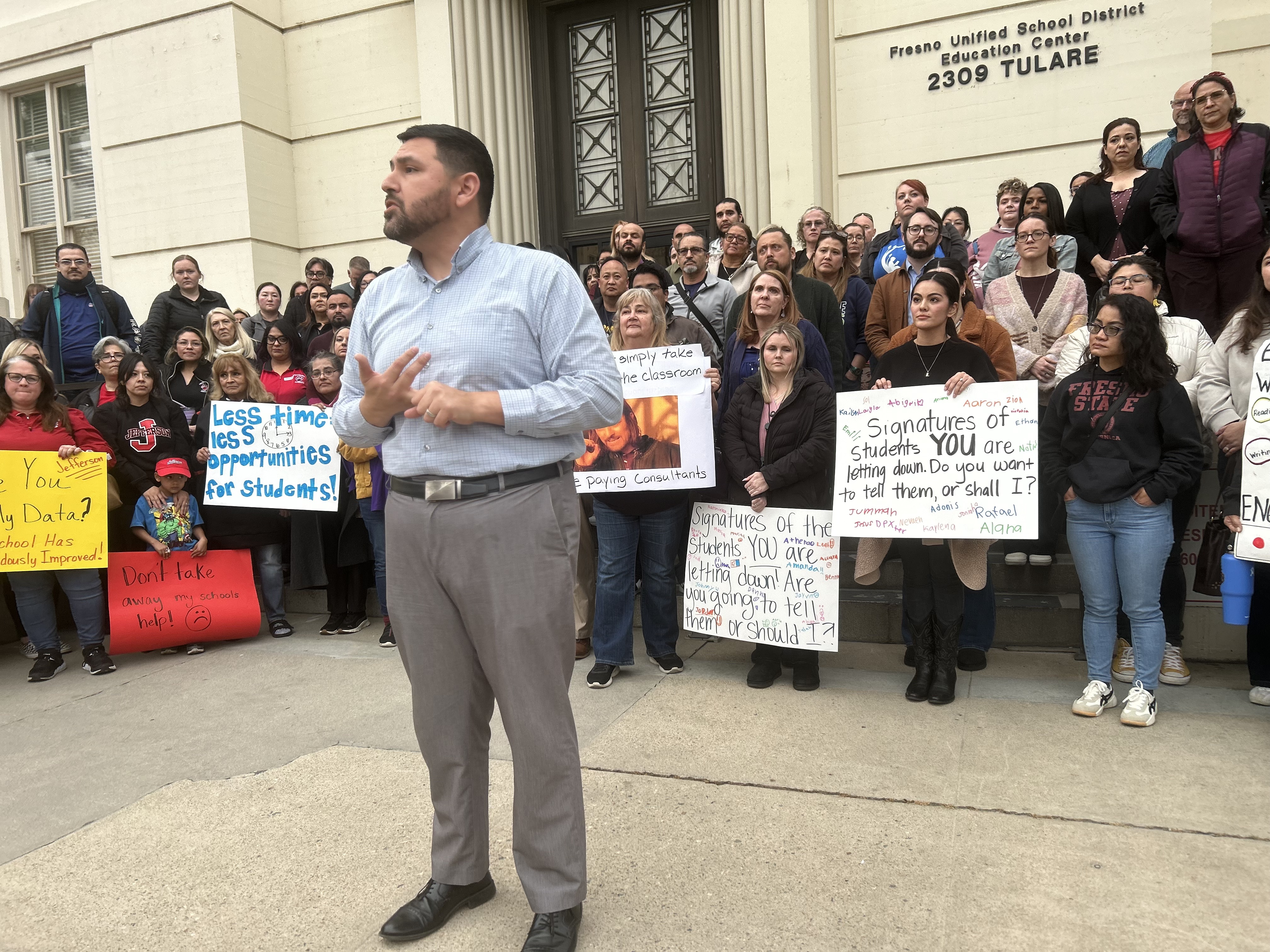
In the complex world of education finance, the voices of educators, parents, and community members are crucial.Advocacy groups, such as teacher unions and school boards associations, play a vital role in informing the public and lobbying lawmakers.
Their efforts are essential in ensuring that the needs of students and schools are not overlooked during budget negotiations.
When Proposition 98 or similar funding guarantees are threatened, these organizations often launch public awareness campaigns.
They aim to educate the public about the potential consequences of funding cuts, such as larger class sizes, fewer support staff like counselors and nurses, and the reduction of essential school programs.
By mobilizing public opinion, they seek to exert pressure on elected officials to protect education funding.
Demanding Protection for School Budgets
The call to action for elected leaders is clear: to protect the constitutional guarantees that safeguard school funding.This involves not only adhering to the letter of the law but also upholding its spirit.
It means recognizing that education is a long-term investment and that short-term budgetary fixes should not come at the expense of the future well-being of students and the state's economy.
The discussions surrounding education funding are not merely about numbers; they are about the fundamental values a society places on its younger generations.
Ensuring adequate and stable funding for schools is a collective responsibility, and informed public engagement is key to achieving this goal.
The proposition that education is a cornerstone of a thriving society underscores the importance of these ongoing debates and the need for vigilant advocacy.
Conclusion
The intricate relationship between state budgets, constitutional guarantees like Proposition 98, and the funding of our schools is a perpetual area of focus.When revenue shortfalls occur, the mechanisms designed to protect educational investment are tested, leading to complex debates and, at times, the threat of legal action.
Understanding the principles behind these funding formulas, the challenges posed by economic downturns, and the role of advocacy is essential for anyone invested in the future of public education.
The proposition that education is a critical driver of societal progress means that these funding discussions are not just about balancing budgets; they are about investing in our collective future, ensuring that every student has the opportunity to learn, grow, and succeed.
The billions of dollars at stake represent not just financial figures but the very resources that shape the educational experiences of millions.





 Explore AI Teaching Tools
Comments (0)
Please login to comment
No comments yet
Be the first to comment on this article