
Unlocking Educator Potential: Why More Prep Time is Crucial for Student Success
In the demanding world of education, the time available for teachers to prepare for their vital role is often a critical bottleneck.
This article delves into the profound impact of insufficient planning time on educators and, consequently, on the learning outcomes of students.
Discover why prioritizing teacher preparation is not just a matter of convenience, but a fundamental necessity for fostering thriving classrooms and achieving educational excellence.
The Unseen Struggle: Daily Realities of Limited Teacher Prep Time
Imagine a dedicated educator, armed with passion and a commitment to their students, facing a daily reality where their allocated preparation time is a mere fraction of what's needed.
This isn't an isolated incident; it's a widespread challenge that significantly hampers effective teaching.
Many teachers find that their so-called "prep time" is consumed by administrative tasks, urgent parent communications, or immediate classroom needs, leaving virtually no minutes for actual lesson planning or grading.
This constant pressure creates a cycle of reactive teaching rather than proactive, engaging instruction.
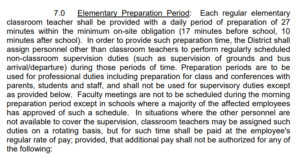
Research consistently highlights that educators nationwide identify increased planning time during the school day as one of the most impactful changes districts could implement to bolster their effectiveness.
Yet, in numerous school systems, elementary teachers are allocated an alarmingly low amount of time, often falling far short of even the national average, which itself is frequently deemed insufficient.
This disparity isn't just a statistic; it represents a crisis that directly impedes a teacher's ability to meticulously plan, collaboratively strategize, and provide the essential, individualized support that every student deserves.
The Ripple Effect: How Insufficient Prep Time Impacts Students
The consequences of limited teacher preparation time extend far beyond the educator's desk, directly affecting student learning and well-being.
When teachers lack adequate time to plan, they struggle to differentiate instruction to meet the diverse needs of their students, particularly those facing academic or behavioral challenges.
This is especially true for students in high-need communities who often require more targeted interventions and personalized attention.
Without the space to develop tailored strategies, access relevant resources, or collaborate with colleagues, educators are inadvertently set up to fail students before their learning journey even truly begins.
Furthermore, the pressure to compensate for insufficient in-school prep time forces many teachers to dedicate significant hours to work outside of their paid employment.
This often means sacrificing precious family time and personal well-being.
Studies indicate that a primary reason teachers consider leaving the profession is the overwhelming burden of responsibilities that extend beyond the contracted school day, including extensive lesson planning and grading at home.
For educators in underserved schools, this factor can be even more significant than concerns about compensation, underscoring the critical need for systemic change.
The Collaboration Deficit: Lost Opportunities for Growth
Beyond the individual toll on teachers, the scarcity of prep time also fosters professional isolation.
Effective schools are built on strong collaborative foundations, where educators can share best practices, mentor new teachers, and collectively problem-solve.
However, when prep time is severely restricted, opportunities for this vital collaboration dwindle.
Teachers are denied the chance to learn from their peers, offer guidance, or build a supportive professional community.
This lack of connection not only impacts teacher morale and retention but also limits the collective expertise that can be leveraged to benefit all students.
The implementation of new, comprehensive curriculum programs often exacerbates this issue.
These programs frequently demand extensive daily planning, sometimes requiring 30 to 40 minutes of preparation for a single subject, five days a week.
This intense focus on one area leaves precious little time for other crucial pedagogical tasks, such as providing detailed feedback on student work, planning targeted small-group interventions, or addressing individual student needs.
The result is a system that inadvertently places an unsustainable burden on educators.
Bridging the Gap: Strategies for Enhancing Educator Preparation
Addressing the critical need for more teacher preparation time requires a multi-faceted approach.
Districts must recognize that investing in educator time is a direct investment in student success.
This involves re-evaluating existing schedules to allocate more dedicated, uninterrupted time for planning and collaboration within the school day.
Innovative scheduling models and a commitment to reducing non-instructional duties can free up valuable minutes for teachers.
Here are actionable strategies that can make a significant difference:
- Protected Planning Periods: Ensure that allocated prep time is genuinely protected and free from interruptions.
This means establishing clear protocols for when and how teachers can be approached during these times.
- Collaborative Work Time: Structure the school day to include dedicated blocks for teachers to collaborate, co-plan, and share resources.
This fosters a sense of shared responsibility and professional growth.
- Streamlined Administrative Tasks: Implement efficient systems and provide adequate support staff to minimize the administrative burden on teachers, allowing them to focus on instructional planning.
- professional development Focused on Efficiency: Offer targeted professional development that equips teachers with strategies for effective and time-efficient lesson planning and assessment.
- Leveraging Technology: Explore how educational technology platforms can support lesson planning, resource sharing, and communication, thereby optimizing the use of available time.
The Urgency of Now: Securing a Brighter Future for Students
The evidence is clear: insufficient teacher preparation time is a significant barrier to effective teaching and student achievement.
National learning assessments often reveal stagnant or declining student performance, particularly in large, diverse districts.
The achievement gaps that persist, especially for marginalized student populations, are often rooted in systemic issues, including the chronic lack of adequate time for educators to plan and support their students effectively.
Prioritizing educator well-being and providing the necessary resources, including ample prep time, is not just a matter of fairness; it's a strategic imperative for closing these gaps and ensuring that all students have the opportunity to thrive.
The future of our education system hinges on our ability to create environments where teachers feel supported, valued, and empowered.
By advocating for and implementing policies that grant educators more prep time, we can cultivate stronger, more collaborative school communities.
This, in turn, leads to higher teacher retention, more engaged students, and ultimately, improved educational outcomes for all.
The clock is ticking, and the time to act is now to build a more robust and equitable educational landscape.
Conclusion
The critical need for increased teacher preparation time cannot be overstated.
This article has illuminated how limited minutes for planning directly impact a teacher's ability to deliver effective instruction, support diverse student needs, and engage in essential professional collaboration.
By implementing practical strategies such as protected planning periods, dedicated collaborative time, and streamlined administrative processes, educational institutions can empower their teachers.
Investing in educator prep time is a fundamental step towards fostering thriving classrooms, retaining talented educators, and ensuring that every student has the opportunity to reach their full potential.
The commitment to providing teachers with the time they need is a commitment to the future of education itself.





 Explore AI Teaching Tools
Comments (0)
Please login to comment
No comments yet
Be the first to comment on this article