
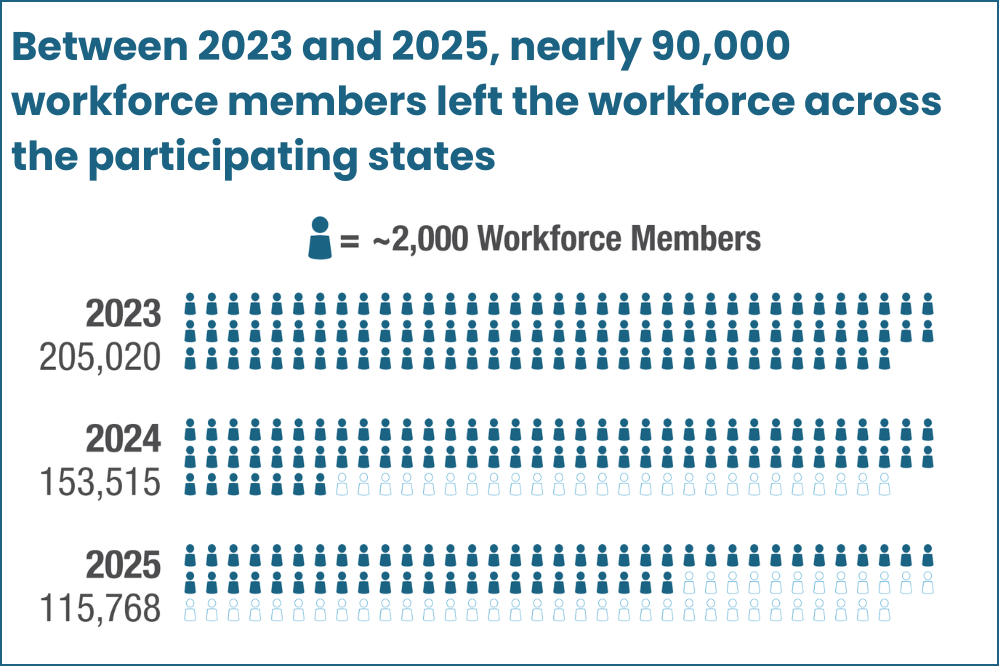
A staggering 44% of the early childhood education workforce vanished in just two years across eight participating states, a recent analysis reveals. This alarming statistic, translating to nearly 90,000 educators leaving their vital roles, underscores a crisis in early care and education that demands immediate attention from policymakers and administrators. For educators on the front lines, this means increased workload, instability, and a constant struggle to build the consistent relationships that young children desperately need for optimal development.
The Silent Exodus: Understanding the Scale of Early Childhood Educator Turnover
The figures are stark: between 2023 and 2025, a significant chunk of the early care and education workforce simply disappeared. This isn't just a numbers game; it represents a profound disruption to the foundational years of countless children's lives.
The Buffett Early Childhood Institute at the University of Nebraska's groundbreaking analysis leveraged state workforce registries to track educator participation. This meticulous approach offers an unprecedented glimpse into the true extent of attrition in a sector often characterized by anecdotal evidence and estimations.
“I figured it would be high. I was surprised it was that high. … That’s insane.”
This sentiment from Alexandra Daro, director of applied research at the Buffett Early Childhood Institute, captures the shockwaves these findings are sending through the field. The data indicates that for every ten early childhood educators active in 2023, nearly five were gone by 2025.
The study focused on licensed early childhood programs, encompassing both center-based and home-based settings. By examining data from eight states—Illinois, Maine, Montana, Nevada, Oklahoma, Oregon, Pennsylvania, and Tennessee—researchers painted a concerning picture of workforce instability.
When Stability Falters: The Impact on Young Children
Consistent, nurturing relationships are the bedrock of early childhood development. When educators are in constant flux, children struggle to form the secure attachments that foster emotional regulation, social skills, and cognitive growth.
The report highlights that turnover rates were particularly high among teaching staff, with center-based assistant teachers being especially prone to leaving. This is a critical point, as these are the individuals with the most direct and frequent interaction with young children.
Linda Smith, a report author and advocate for early childhood policy, emphasizes that "the single biggest factor for outcomes for children is the quality of adult interactions." High turnover directly erodes the potential for these high-quality interactions, creating a ripple effect of negative consequences for children's learning and well-being.
A Glimmer of Hope: Credentials as a Protective Factor
Amidst the concerning data, the analysis unearthed a powerful correlation: educational attainment appears to be a significant predictor of educator retention. Those with specialized early childhood degrees or credentials are far more likely to remain in the workforce.
This finding offers a tangible pathway forward for addressing the pervasive issue of turnover. Investing in the professional development and credentialing of early childhood educators could yield substantial returns in workforce stability.
The Power of Specialized Training
The research clearly indicates that educators holding an early childhood-specific degree or credential, such as the Child Development Associate (CDA), or an associate or bachelor's degree in the field, demonstrate markedly higher retention rates.
An eight-state analysis found that nearly 90,000 members of the early childhood workforce who were active in 2023 had left by 2025.
Compared to the overall retention rate of 56% in the study, educators with an associate degree in early childhood education saw a 70% retention rate. Similarly, those with a CDA credential maintained their roles at a 65% rate, and those with a general associate degree at 63%. This suggests that targeted training equips educators with the skills and confidence to navigate the challenges of the profession.
Smith elaborates on this, stating, "Childcare is hard work. It’s hard, physical work. If you’re not trained to understand basic child development, how you react to child behaviors varies." Specialized training, however, provides educators with the understanding and strategies to effectively manage children's behavior and foster positive learning environments.
Actionable Insights for a Stable Future
The findings from this eight-state analysis offer a clear mandate for action. While low compensation and inconsistent qualifications have long plagued the sector, the impact of educational attainment on retention is a crucial piece of the puzzle.
For administrators and policymakers, this means prioritizing and investing in pathways for educators to obtain early childhood credentials and degrees. This could involve:
- Expanding access to affordable professional development opportunities
- Offering scholarships or stipends for credentialing programs
- Streamlining the process for earning and maintaining credentials
- Recognizing and valuing the expertise gained through specialized training
For educators themselves, pursuing further education and credentials can be a strategic investment in their career longevity and personal satisfaction. The skills and knowledge gained are not only beneficial for children but also empower educators to feel more competent and resilient in their demanding roles.
The future of early childhood education hinges on creating a stable and experienced workforce. By understanding the profound impact of credentials and actively supporting educators in their pursuit of them, we can begin to stem the tide of turnover and ensure that our youngest learners have access to the consistent, high-quality care they deserve.
The path forward is clear: investing in the professional development and credentialing of early childhood educators is not just an investment in the workforce, but a critical investment in the future success of our children. As more states implement robust workforce registries, we can anticipate an even clearer national picture, but the message from these initial findings is undeniable: trained educators tend to stay, providing the stability our youngest learners need to thrive.





 Explore AI Teaching Tools
Comments (0)
Please login to comment
No comments yet
Be the first to comment on this article