
Feeding the Future: How Top Universities Are Cultivating the Next Generation of Food System Innovators
The way we produce and consume food is undergoing a seismic shift. As the global sustainable farming sector blossoms, projected to more than double in value by 2034, the demand for experts who can navigate this complex landscape has never been greater. Employers are actively seeking individuals equipped with the knowledge to champion climate-smart agriculture and build resilient food systems. A master’s degree in sustainable agriculture is no longer just a career enhancer; it's a vital pathway to leadership, bridging the critical intersections of science, policy, and practical application.
The urgency of this expertise is underscored by stark global realities. With hundreds of millions still facing undernourishment, advanced understanding in agriculture and food systems is paramount to addressing the most pressing challenges of our time. This is where forward-thinking universities are stepping in, offering specialized master’s programmes designed to cultivate the leaders our planet needs.
Cultivating Expertise at the University of Guelph
In the heart of Canada's agricultural landscape, the University of Guelph's Ontario Agricultural College (OAC) is at the forefront of shaping the future of food. Renowned globally for its agriculture and forestry programmes, OAC offers a Master of Sustainable Agriculture (MSAg) designed to equip students with the practical and theoretical knowledge essential for the evolving agri-food sector.
A Career-Focused Approach to Sustainable Agriculture
The 16-month MSAg programme is a course-based, career-focused journey, intentionally designed without a thesis requirement. This structure allows students to immerse themselves in critical areas such as data analysis, agricultural economics, supply chain management, and agri-food technology. From the outset, the curriculum is grounded in real-world industry practices.
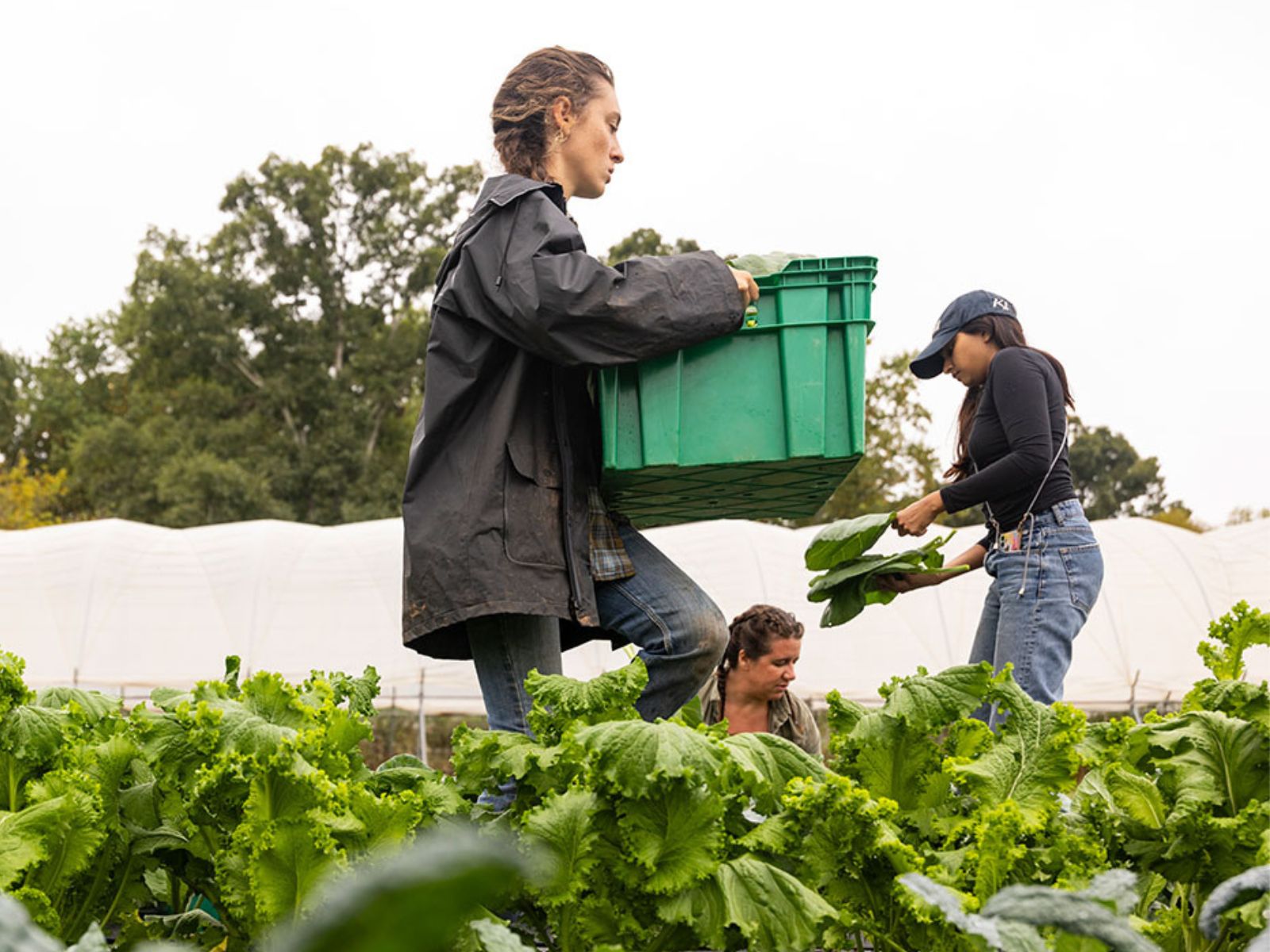
Each semester builds progressively, integrating hands-on field-based learning with invaluable opportunities to visit innovative agricultural operations across Ontario. This direct exposure provides firsthand insight into the modern, sustainable agricultural practices that are redefining the industry. Students gain a comprehensive understanding of how these advancements are shaping today's agri-food sector.
"Our first semester at U of G’s Ridgetown Campus is very well-integrated in the agriculture space,” shares Pranshu, a student from the inaugural cohort. “We gain the theoretical knowledge as well as the practical knowledge.”
Specialization and Real-World Application
The programme's structure seamlessly transitions students from the Ridgetown Campus to the main Guelph campus for their second and third semesters. Here, they have the opportunity to specialize in one of three key areas: Plant Agriculture, Livestock Agriculture, or Environmental Sciences. This focused depth of knowledge directly prepares them for their fourth and final semester.
The capstone of the MSAg programme is a paid internship within an agri-food organization. This immersive experience ensures graduates not only possess advanced skills but also tangible industry connections and practical experience. This robust foundation positions them to step confidently into senior roles within the field.
Graduates of the MSAg programme join a powerful network of over 35,000 OAC alumni. These professionals are making significant contributions across a wide spectrum of fields, including agronomy, sustainability consulting, food policy, and environmental management.
A Broader Spectrum of Graduate Studies
The OAC offers a diverse range of graduate pathways beyond the MSAg. Prospective students can explore programmes such as the Master of Plant Agriculture, the Master of Food, Agricultural and Resource Economics, and a suite of research-based MSc and PhD programmes, catering to a wide array of academic and career aspirations in agriculture and food science.
Innovation and Environmental Stewardship at the University of Georgia
The University of Georgia's (UGA) College of Agricultural & Environmental Sciences (CAES) is dedicated to nurturing global ecosystems and cultivating the next generation of leaders in agriculture and environmental sustainability. As a top-ranked institution for agricultural sciences in the United States, CAES is committed to advancing the science that underpins healthy living and sustainable food production.
Bridging Agribusiness and Environmental Science
CAES offers two distinguished graduate programmes that are particularly relevant for those focused on the nexus of food systems and sustainability. The Master of Agribusiness (MAB) is a professional degree designed for individuals seeking to integrate agricultural science with strategic business acumen. This programme emphasizes case-based instruction, quantitative methods, and robust business analysis, rather than a traditional thesis.
The core curriculum of the MAB programme covers essential economic tools, food marketing strategies, financial management, and agribusiness management. Students then have the flexibility to delve deeper through twelve elective hours, exploring areas such as futures and options markets, international agricultural marketing, environmental economics, and water resource management. This comprehensive approach ensures graduates are well-prepared for leadership roles in the business side of agriculture.
Research-Driven Excellence in Crop and Soil Sciences
For students drawn to the scientific underpinnings of sustainable food production, the MS in Crop and Soil Sciences with a Sustainable Agriculture concentration offers a compelling research-focused pathway. This degree requires a minimum of 30 graduate credit hours, culminating in a thesis that showcases original research. The programme's structure encourages early engagement with research, with students submitting their programme of study in the first semester and a thesis proposal by the end of the second.
Both the MAB and the MS in Crop and Soil Sciences are housed at UGA's main campus in Athens, Georgia. This environment is rich with research opportunities and boasts strong industry ties throughout the Southeast, providing students with invaluable practical connections and research collaborations. Financial assistance is available on a competitive basis through departmental research assistantships, making these programmes accessible to talented individuals.
Interdisciplinary Solutions at Iowa State University
Iowa State University, a pioneering land-grant institution established in 1869, has long championed the principle that higher education should be practical and directly address real-world challenges. Agriculture has remained a cornerstone of this mission, with the university's agriculture and forestry programmes consistently ranking among the world's elite.
A Pioneering Approach to Sustainable Agriculture Education
The university's MS in Sustainable Agriculture programme stands out as a testament to this enduring commitment. It was the first programme in the United States to offer both a Master of Science and a PhD in Sustainable Agriculture, pioneering an interdisciplinary curriculum that delves into the biological, social, and economic dimensions of sustainability. This programme is uniquely structured to foster cross-disciplinary thinking and equip students to tackle complex issues in food security and environmental quality.
What truly distinguishes this programme is its integrated approach. It spans 21 different departments, including Agricultural and Biosystems Engineering, Agronomy, Economics, Sociology, Landscape Architecture, and Political Science. Faculty from these diverse fields collaborate to offer courses and guide research, ensuring students are not siloed but are encouraged to explore the multifaceted nature of sustainable agriculture.
Broad Curriculum and Specialized Focus
The curriculum is anchored by foundational courses such as "Foundations of Sustainable Agriculture" and "Agroecosystems Analysis." Students gain a deep understanding of agroecological principles and the intricate social dynamics that shape farming and food systems, all while acquiring practical experience with sustainable techniques. This comprehensive education prepares them to address the interconnected challenges of modern agriculture.
For those with a particular interest in the post-harvest aspects of the food system, the MS in Food Science and Technology offers three specialized tracks: Functional Food and Packaging, Food Safety and Quality, and Green and Sustainable Food. These specializations allow students to focus on the crucial sustainability conversations that occur after food leaves the farm, further broadening the university's impact on the entire food value chain.






 Explore AI Teaching Tools
Comments (0)
Please login to comment
No comments yet
Be the first to comment on this article