
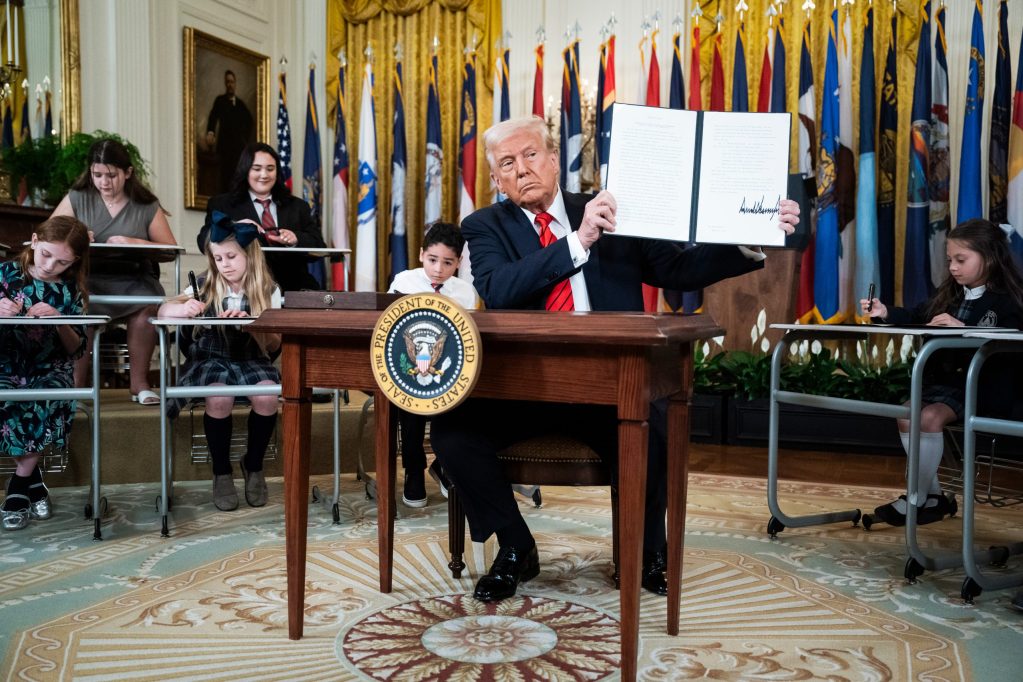
Transforming Education: A Deep Dive into Federal Administration Shifts and Their Impact on Schools in 2025
The landscape of education is perpetually evolving, and the year 2025 has presented a particularly dynamic period of change within the federal administration's approach to learning.This comprehensive look explores the significant shifts that have reshaped the educational experience for students, educators, and institutions across the nation, examining the rationale behind these changes and their far-reaching implications for schools and higher education alike.
We will delve into how federal policies have been re-envisioned, the debates surrounding these transformations, and what the future may hold for the administration of education.
Reimagining the Federal Role in Education: A New Vision for 2025
The year 2025 marked a significant pivot in how the federal government perceives and interacts with the education sector.Driven by a philosophy that emphasizes decentralization and a return to core principles, the administration has sought to redefine its footprint.
This shift is rooted in a belief that greater efficiency and effectiveness can be achieved by empowering states and local communities to lead educational initiatives.
The overarching goal has been to streamline federal involvement, reduce perceived inefficiencies, and foster an environment where innovation can flourish at the grassroots level.
This new direction aims to address long-standing debates about the optimal balance of federal versus state control in education, promising a year of substantial policy adjustments.
The Philosophy of Decentralization
A cornerstone of the administration's approach in 2025 has been the principle of decentralization.
This philosophy suggests that educational decision-making is best handled closer to the students and communities it serves.
By reducing the centralized bureaucracy, the administration aims to foster greater responsiveness to local needs and priorities.
This involves a critical re-evaluation of federal grant programs, with a focus on identifying and eliminating those deemed to be wasteful or duplicative.
The objective is to ensure that federal resources, when allocated, are directed towards initiatives that yield the most significant impact on student outcomes and educational equity.
Restoring Merit and Accountability
Another key tenet of the 2025 educational agenda has been the restoration of merit and accountability across various levels of the education system.
In higher education, this has translated into a renewed emphasis on academic achievement as the primary criterion for admissions and funding.
The administration has expressed a desire to root out fraud and abuse, ensuring that federal funds are utilized responsibly and effectively.
This focus on merit is intended to create a more equitable system where individuals are recognized for their academic prowess and contributions, fostering a culture of excellence within educational institutions.
Transformations in Higher Education: Navigating a Shifting Landscape
The higher education sector has experienced some of the most pronounced changes under the federal administration's new direction in 2025.Measures have been implemented to recalibrate research funding, admissions policies, and financial aid structures.
These adjustments reflect a broader effort to align federal support with specific ideological principles and to address concerns about the direction of academic inquiry and institutional practices.
The year has seen a significant debate unfold regarding the role of diversity, equity, and inclusion (DEI) initiatives, as well as the accessibility and affordability of college education.
Federal Funding and Research Initiatives
In 2025, the administration took a proactive stance on federal funding for higher education research.
Through the application of antidiscrimination laws, significant research funding streams were temporarily frozen.
This action aimed to compel institutions to review and alter policies that were perceived as discriminatory or misaligned with federal priorities.
The intention was to ensure that federal investments supported research that adhered to established principles of academic freedom and rigor, while also addressing concerns about the allocation of resources.
This approach sparked considerable discussion about the government's influence on academic research agendas.
Admissions Policies and DEI Programs
A significant focus of the administration's policy changes in 2025 has been on admissions processes in higher education.
There has been a strong push to move away from admissions criteria that consider factors beyond purely academic achievement.
This includes a critical examination of diversity, equity, and inclusion (DEI) programs that were designed to support students based on race or other characteristics.
The administration's stance has been that admissions should be based on merit and qualifications, aiming to create a level playing field for all applicants.
This has led to a re-evaluation of many institutional DEI initiatives and their future role within universities.
Affordability and Student Loan Reforms
Addressing the rising cost of higher education and the burden of student debt has remained a key concern.
In 2025, the administration has explored various avenues to make college more affordable.
This includes reforms to student loan programs, with a particular focus on graduate student borrowing and the elimination of certain loan forgiveness programs.
The aim is to create a more sustainable financial model for higher education, ensuring that students can access the education they need without facing insurmountable debt.
Discussions have also centered on the role of federal funding in supporting institutions that offer high-value degrees and career pathways.
K-12 Education: Empowering States and Local Communities
The K-12 education system has also been a focal point for federal policy adjustments in 2025.The administration's commitment to returning control to states and local communities is evident in its approach to funding, program development, and the oversight of educational standards.
While the federal government's role is being redefined, there is also an increased emphasis on empowering parents and fostering greater choice within the K-12 landscape.
This involves a careful balancing act between federal guidance and local autonomy, with the ultimate goal of improving educational outcomes for all students.
Shifting Funding Streams and Grant Realignments
In 2025, K-12 schools have experienced shifts in federal funding, with a review of grant programs aimed at identifying and redirecting resources.
The administration has expressed a commitment to ensuring that federal funds are used efficiently and effectively, supporting initiatives that have a demonstrable impact on student achievement.
This has led to a realignment of some grant programs, with a focus on areas such as early literacy, STEM education, and teacher development.
The objective is to ensure that federal investments are strategically aligned with national educational priorities and that they support the development of a skilled and knowledgeable future workforce.
The Expansion of School Choice Initiatives
A significant development in K-12 education in 2025 has been the administration's push to expand school choice initiatives.
This includes exploring federal programs that provide scholarships for students to attend private, charter, or religious schools.
The rationale behind these initiatives is to offer parents greater flexibility in selecting the educational environment that best suits their child's needs.
By fostering competition and providing more options, the administration hopes to drive innovation and improve the overall quality of education available to families.
This approach aims to empower parents and give them a more active role in their children's educational journey.
Federal Oversight and Student Rights
While the administration champions a return of power to the states, it has also maintained a strong federal presence in specific areas, particularly concerning student rights and equity.
In 2025, federal oversight has been particularly focused on issues related to Title IX and the protection of civil rights in schools.
The administration has established mechanisms to investigate complaints and ensure that all students are treated fairly and equitably, regardless of their background or identity.
This dual approach, balancing decentralization with targeted federal oversight, aims to create a robust and inclusive educational system for all.
Early Childhood Education: Supporting Young Learners and Families
Early childhood education has also been a critical area of focus for the federal administration in 2025.Recognizing the foundational importance of early learning, the administration has implemented policies designed to support young children and their families.
This includes initiatives aimed at improving access to quality childcare, enhancing early intervention programs, and providing financial support to families.
The goal is to ensure that every child has the opportunity to start school ready to learn and succeed, setting them on a path for lifelong educational achievement.
Enhancing Access to Quality Childcare
In 2025, the administration has prioritized efforts to enhance access to affordable and high-quality childcare.
This involves exploring various policy levers, including tax credits and grant programs, to support families in securing reliable childcare solutions.
The understanding is that accessible childcare is crucial for working parents and for the healthy development of young children.
By investing in early childhood education, the administration aims to build a stronger foundation for future academic success and to support economic growth by enabling parents to participate more fully in the workforce.
Support for Early Intervention and Development Programs
The administration has also placed a strong emphasis on supporting early intervention and development programs for young children.
Programs like Head Start, which provide comprehensive early childhood education services to low-income families, have received continued attention.
The goal is to ensure that these vital programs are well-funded and effectively delivered, reaching all children who can benefit from them.
By investing in early intervention, the administration seeks to address developmental needs early on, preventing potential learning challenges and promoting optimal growth and well-being for every child.
Financial Support for Families and Educational Savings
Recognizing the financial pressures many families face, the administration has introduced measures to provide direct financial support for educational endeavors.
In 2025, this has included initiatives such as increased child tax credits and the creation of new savings programs designed to help families plan for their children's future education.
These programs aim to alleviate financial burdens and encourage long-term investment in a child's educational journey.
The objective is to make education more accessible and attainable for all families, regardless of their socioeconomic background.
Conclusion: A Year of Educational Transformation and Future Outlook
The year 2025 has undeniably been a period of significant transformation within the federal administration's approach to education.From higher education to K-12 and early childhood learning, the emphasis has been on redefining the federal role, empowering states and local communities, and fostering an environment of merit and accountability.
While these changes have sparked robust debate, the underlying intention has been to create a more efficient, equitable, and effective education system for all.
As we look ahead, the ongoing dialogue and adaptation to these new policies will continue to shape the educational landscape, underscoring the critical importance of continuous learning and informed engagement with the evolving world of education.






 Explore AI Teaching Tools
Comments (0)
Please login to comment
No comments yet
Be the first to comment on this article