
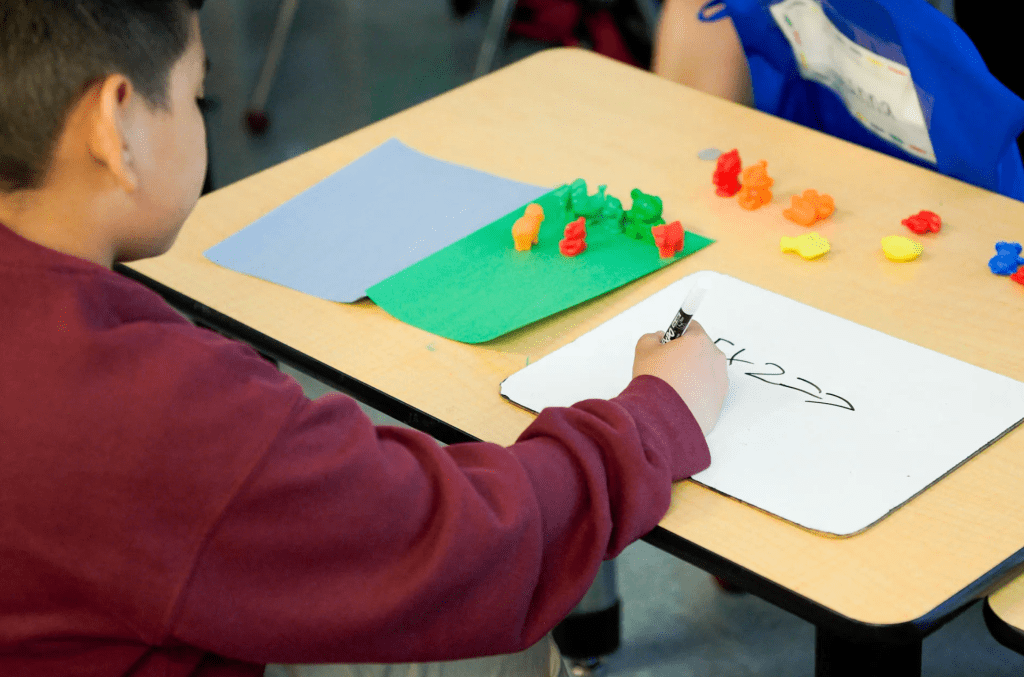
Third Grade Math Scores: The Unexpected Predictor of Algebra Success
A surprising revelation is emerging from the latest educational research: a student's performance in third grade math may hold a powerful key to their future success in Algebra I. This pivotal gateway course, often a prerequisite for higher-level mathematics, college graduation, and even future earning potential, appears to have its foundations laid years before students even enter the classroom.
Unlocking the Algebra Equation Years Early
For many, Algebra I represents a significant hurdle. Yet, the data suggests that the challenges or triumphs students experience in this course are not solely determined by their readiness in middle or high school. Instead, the roots of algebraic proficiency are deeply embedded in the foundational math skills cultivated in the early elementary years.
A comprehensive working paper, which meticulously analyzed the test scores of over 1.7 million students in Texas, has brought this phenomenon into sharp focus. The findings reveal a striking correlation: disparities in Algebra I pass rates between students from different socioeconomic and racial backgrounds can be largely attributed to how well they grasped fundamental math concepts in their formative years.
The Third Grade Benchmark
Researchers highlight third grade as a critical juncture. It's the earliest point at which educators and analysts can reliably assess a child's mastery of early math concepts.
“Education doesn’t start in third grade,” emphasizes Ben Backes, a principal economist at the American Institutes for Research and a co-author of the study. He clarifies that the essential building blocks for more complex mathematical understanding are constructed much earlier, even in kindergarten and first grade.
While previous research has hinted at the link between early academic achievement and later educational outcomes, this particular study zeroed in on Algebra I due to its undeniable significance in a student's academic trajectory. The research, a collaboration between AIR and the National Center for the Analysis of Longitudinal Data in Education Research (CALDER), sought to quantify this crucial connection.
The Pandemic's Lingering Shadow on Math Skills
The study also shed light on the profound impact of recent disruptions on student learning. The pandemic, in particular, appears to have exacerbated existing inequalities, derailing the academic growth of many students.
For instance, students from low-income backgrounds who had previously demonstrated similar math abilities to their more affluent peers found themselves falling further behind during periods of remote learning. Similarly, students who were already struggling with math skills experienced a more pronounced decline in their abilities compared to those who were performing at higher levels.
Rethinking Intervention Strategies
Policymakers have explored various avenues to improve Algebra I pass rates, including delaying the course until ninth grade or ensuring universal enrollment. However, the authors of the working paper suggest these approaches may not address the core issue.
“Our results underscore the importance of targeting resources to early elementary math instruction, especially for low-achieving students,” they conclude. This points towards a need for a fundamental shift in how educational resources and attention are allocated within the education system.
Bridging the Early Math Instruction Gap
Despite compelling evidence, the message about the critical importance of early math instruction is still struggling to permeate educational leadership. Deborah Stipek, faculty director for Development and Research in Early Mathematics Education, notes a significant imbalance in teacher training.
In states like California, for example, aspiring teachers are often required to complete two or three courses focused on reading instruction, while math education receives only one course. This disparity can leave educators less equipped to handle the nuances of teaching early math effectively.
Furthermore, a recent survey of nearly 100 California superintendents revealed that English language arts was ranked as the top instructional priority, with mathematics falling to third place. This prioritization may inadvertently sideline the foundational math skills that are so vital for future academic success.
The Challenge of Widespread Deficits
While instructional tools exist to support teachers in addressing the needs of a few students who may be behind, the challenge becomes far greater in classrooms with a substantial number of students facing significant learning gaps. Stipek observes that in communities with high rates of poverty or a large population of English language learners, it's not uncommon for the majority of students to be considerably behind by first grade.
“We need more and better teaching, in general,” she states, underscoring the pervasive need for enhanced pedagogical approaches across the board. The path to algebra success, it seems, is paved with strong early math skills, demanding a renewed focus on nurturing these essential competencies from the very beginning of a child's educational journey.






 Explore AI Teaching Tools
Comments (0)
Please login to comment
No comments yet
Be the first to comment on this article