
Unlocking Academic Excellence: How Engaging Instruction Fuels Student Growth in Schools
In the dynamic world of education, the pursuit of academic achievement is a continuous journey.For students navigating the complexities of modern schooling, the methods employed by educators can be the most powerful catalyst for success.
This article delves into the innovative strategies that foster deep learning and drive measurable progress, offering a blueprint for schools aiming to elevate their students' potential.
We explore how a focus on active engagement, collaborative learning, and a clear vision for student growth can transform educational outcomes, even in challenging academic environments.
The Power of Active Learning: Beyond Traditional Classrooms
The traditional image of a quiet classroom, where students passively absorb information, is being challenged by a more dynamic and interactive approach.Research shows that when students are actively involved in their learning, their comprehension and retention significantly improve.
This shift is not about creating chaos, but about cultivating an environment where intellectual curiosity is sparked through discussion, problem-solving, and real-world application.
Consider a typical middle school math class.
Instead of simply presenting formulas, educators are finding success by posing real-world scenarios.
For instance, a lesson on calculating costs might involve a group of students analyzing a large fast-food order.
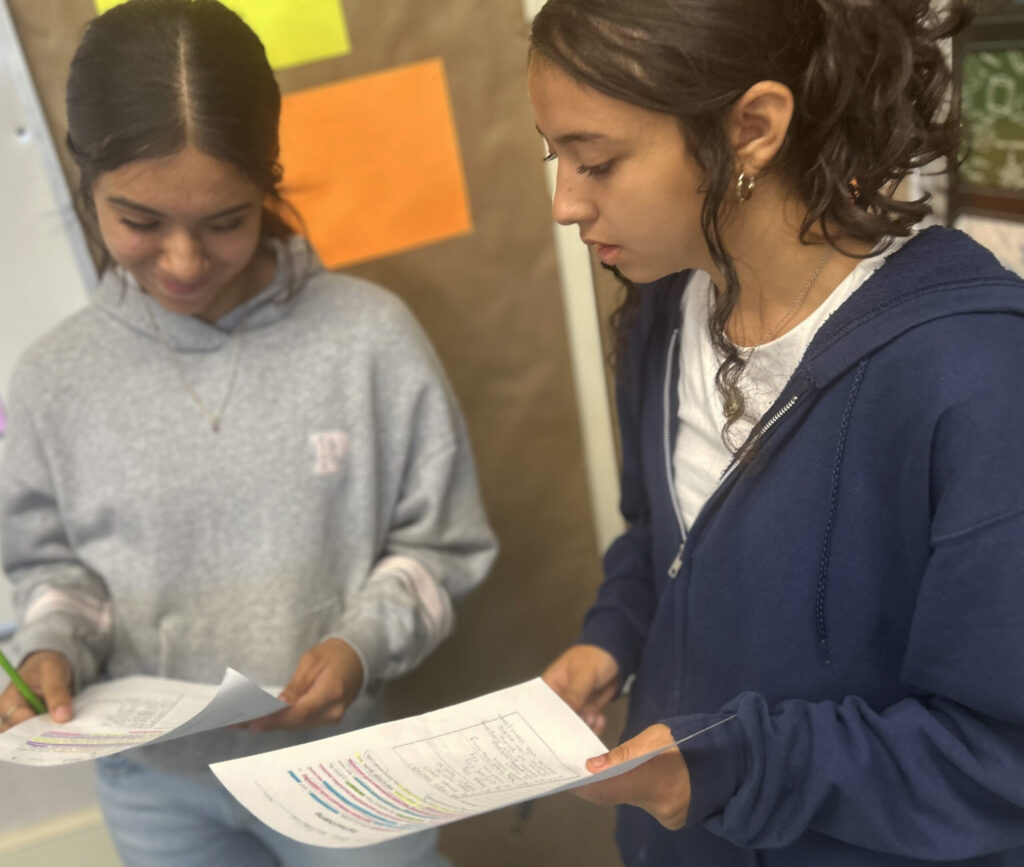
This activity requires them to not only apply mathematical concepts but also to collaborate, debate, and justify their reasoning.
The lively exchange of ideas, the "chitter-chatter" as some educators describe it, is not a distraction but a vital part of the learning process.
It allows students to grapple with the nuances of a problem, such as whether different types of beverages should be grouped together, fostering a deeper understanding of mathematical principles.
This approach emphasizes that learning is a social and interactive endeavor.
When students are encouraged to articulate their thought processes, they solidify their own understanding and learn from their peers.
This collaborative spirit extends beyond individual lessons, creating a school-wide culture that values exploration and shared discovery.
The goal is to move beyond rote memorization and towards genuine comprehension, where students can confidently apply their knowledge in diverse contexts.
Key Principles of Engaging Instruction
* Fostering a Safe and Inclusive Environment: Students are more likely to participate and take intellectual risks when they feel secure and respected.Educators must cultivate a classroom atmosphere where all voices are valued and diverse perspectives are encouraged. * Highlighting Academic Vocabulary: Explicitly teaching and reinforcing key academic terms is crucial.
This ensures that students understand the precise language of each subject, enabling them to communicate their ideas more effectively.
For example, in math, understanding that "another" or "a" signifies a single unit is fundamental to accurate problem-solving. * Connecting with Relevant Content: Making learning relatable to students' lives is a powerful motivator.
When academic concepts are linked to familiar experiences, such as analyzing a fast-food order, students see the practical value of what they are learning, increasing their engagement and interest.
Cultivating a Culture of Continuous Academic Growth
The journey of academic improvement for any school or district is rarely a sprint; it's a marathon built on sustained effort and a clear vision.For many educational institutions, the path to higher achievement involves a fundamental commitment to student growth, not just as a yearly goal, but as a daily practice embedded in every aspect of school life.
This unwavering focus on ensuring that every student makes progress, regardless of their starting point, is a hallmark of successful educational systems.
Twenty years ago, some districts might have found themselves at the lower end of academic performance rankings.
However, by setting ambitious yet attainable goals centered on academic advancement and student achievement, they began a transformation.
This transformation wasn't achieved through isolated initiatives but through a consistent application of proven strategies.
The same core actions that helped these schools rise from underperforming status are proving effective in addressing contemporary challenges, such as learning loss experienced during periods of disruption.
A cornerstone of this sustained growth is the implementation of collaborative professional development.
Instead of educators working in isolation, weekly professional learning communities bring teachers together to collectively address critical questions about teaching and learning.
This collaborative environment allows educators to share best practices, analyze student data, and refine their instructional approaches in real-time.
The focus remains on what students need to learn, how to effectively assess that learning, identifying who is grasping the material and who needs additional support, and, crucially, what steps educators will take to ensure all students succeed.
The Role of Professional Learning Communities (PLCs)
Professional Learning Communities are structured opportunities for educators to engage in deep, collaborative work.In these settings, teachers typically focus on four key areas:
- curriculum and Standards: Clearly defining what students are expected to learn at each grade level and within each subject.
- assessment Strategies: Developing and implementing effective methods to gauge student understanding and identify learning gaps.
This includes both formative assessments to guide instruction and summative assessments to measure overall achievement.
- Data Analysis: Examining student performance data to understand learning trends, pinpoint areas of strength and weakness, and inform instructional decisions.
This involves identifying which students are excelling and which require targeted interventions.
- Instructional Improvement: Collaboratively designing and refining teaching strategies to meet the diverse needs of all learners.
This includes planning for remediation and enrichment to ensure every student is challenged and supported.
This structured approach ensures that professional development is not a one-off event but an ongoing process of inquiry and improvement.
By working together, educators can build a shared understanding of effective teaching and create a cohesive learning experience for all students within the district.
Addressing the Whole Student: Social-Emotional Well-being and Support
Recognizing that academic success is deeply intertwined with a student's overall well-being, leading educational institutions are increasingly prioritizing social-emotional learning (SEL) and robust support systems.This holistic approach acknowledges that students learn best when they feel safe, supported, and emotionally regulated.
In the wake of challenging times, many school districts have intensified their focus on SEL and the provision of comprehensive support services.
This includes identifying students who may be struggling academically or behaviorally and offering them tailored resources.
The investment in these areas is not seen as an optional add-on but as a fundamental component of enabling students to reach their full potential.
To bolster these efforts, districts are strategically adding personnel to their campuses.
This might include wellness coaches at elementary schools, psychologists available across all school sites, and specialized teachers dedicated to providing academic support and intervention.
These professionals play a critical role in creating a nurturing environment where students can thrive both academically and personally.
The emphasis is on providing the necessary scaffolding to help students overcome obstacles and re-engage with their learning.
Enhancing Student Support Systems
* Wellness Coaches: These individuals provide support for students' emotional and mental health, helping them develop coping mechanisms and resilience. * School Psychologists: Offering expertise in child development and mental health, psychologists can assess students' needs, provide counseling, and collaborate with staff and families to address complex challenges. * Academic Interventionists: These specialized teachers work with students who are falling behind, providing targeted instruction and support to help them catch up and succeed in their academic pursuits.By investing in these support structures, schools demonstrate a commitment to the individual needs of each student.
This comprehensive approach ensures that academic progress is built on a foundation of well-being, creating a more positive and productive learning experience for everyone involved.
The Art of Balanced Instruction: Integrating Skills Across the Curriculum
Effective instruction is not confined to a single subject; it is a multifaceted approach that weaves together various skills and disciplines.A key element of this balanced instruction involves fostering academic discussion, where students are encouraged to articulate their thinking, explain their reasoning, and justify their answers to their peers.
This process moves learning beyond surface-level memorization to a deeper, more analytical understanding.
In a math classroom, for example, students might be asked to explain their strategies for solving a complex problem.
This not only reinforces their understanding of mathematical concepts but also enhances their communication and critical thinking skills.
When students can articulate how they arrived at an answer, they demonstrate a more profound grasp of the underlying principles.
This is particularly evident when integrating skills like writing into subjects like math.
By requiring students to write out their problem-solving steps, explain their reasoning, and justify their conclusions, educators are not only reinforcing mathematical understanding but also strengthening their writing abilities.
This integration of skills across subjects has a powerful ripple effect.
When students are consistently encouraged to write, reason, and think critically in all their classes, their overall academic performance improves.
This is especially noticeable in areas like English language arts, where proficiency can see significant gains.
The ability to articulate ideas clearly, support arguments with evidence, and engage in thoughtful analysis are transferable skills that benefit students across the entire academic spectrum.
Characteristics of Balanced Instruction
* Promoting Student Engagement: Creating an environment where students are active participants in their learning, encouraged to ask questions, share ideas, and collaborate with peers. * Developing Academic Vocabulary: Explicitly teaching and reinforcing the language of learning, ensuring students can understand and use subject-specific terminology accurately. * Connecting Learning to Real-World Contexts: Making academic content relevant and meaningful by linking it to students' lives and experiences, demonstrating the practical application of knowledge. * Integrating Cross-Curricular Skills: Emphasizing the development of essential skills like writing, critical thinking, and problem-solving across all subjects, fostering a more holistic and robust learning experience.This balanced approach ensures that students are not only acquiring knowledge but also developing the essential skills they need to succeed in a complex and ever-changing world.
The synergy created by integrating different disciplines and skills leads to a more profound and lasting educational impact.
Measuring Success: Understanding and Communicating Student Progress
State assessment results serve as a valuable tool for measuring student achievement and monitoring progress within the public school system.However, the true impact of these assessments is realized when families can understand and utilize the information they provide.
Effective communication about what these scores mean is paramount to empowering parents and guardians to support their children's academic journey.
While students themselves often grasp the significance of assessments, some parents may find the interpretation of scores challenging.
This highlights the need for schools and districts to proactively educate families about the metrics used to gauge student performance.
Strategies such as dedicated workshops, clear and accessible reports, and personalized conversations during parent-teacher conferences can bridge this communication gap.
The goal is to ensure that all stakeholders understand the benchmarks for student success and how individual progress contributes to broader academic goals.
The district's overarching objective of ensuring every student advances at least one grade level annually, or more if they are behind, translates directly to the school, the principal, the teacher, and ultimately, the student.
This cascading goal fosters a shared sense of responsibility and a collective drive towards improvement.
When students are aware of their starting point and understand the growth trajectory expected of them, they become more invested in their own learning journey.
Strategies for Effective Communication of Assessment Results
* Parent Workshops: Hosting sessions that explain assessment methodologies, scoring rubrics, and how to interpret individual student reports. * Clear and Concise Reporting: Providing assessment summaries that are easy to understand, avoiding jargon and focusing on key performance indicators and areas for growth. * Personalized Parent-Teacher Conferences: Utilizing conference time to discuss assessment results in detail, answer parent questions, and collaboratively develop strategies to support student progress. * School Events and Information Sessions: Organizing campus events that provide opportunities for parents to learn about academic expectations and assessment outcomes in an informal setting.By prioritizing clear and consistent communication, schools can transform assessment data from mere numbers into actionable insights that drive student success and strengthen the home-school partnership.
Conclusion
The pursuit of academic excellence is a multifaceted endeavor, deeply rooted in the quality of instruction and a steadfast commitment to student growth.As demonstrated by successful educational initiatives, engaging teaching methodologies that foster active learning, collaborative problem-solving, and real-world connections are instrumental in boosting student achievement.
Furthermore, a holistic approach that prioritizes social-emotional well-being and provides robust support systems creates an environment where every student can thrive.
By integrating skills across the curriculum and ensuring clear communication about academic progress, schools can empower students, engage families, and build a foundation for lifelong learning.
The journey of academic improvement is ongoing, and by embracing these principles, districts and schools can continue to unlock the full potential of their students, preparing them for success in an ever-evolving world.






 Explore AI Teaching Tools
Comments (0)
Please login to comment
No comments yet
Be the first to comment on this article