
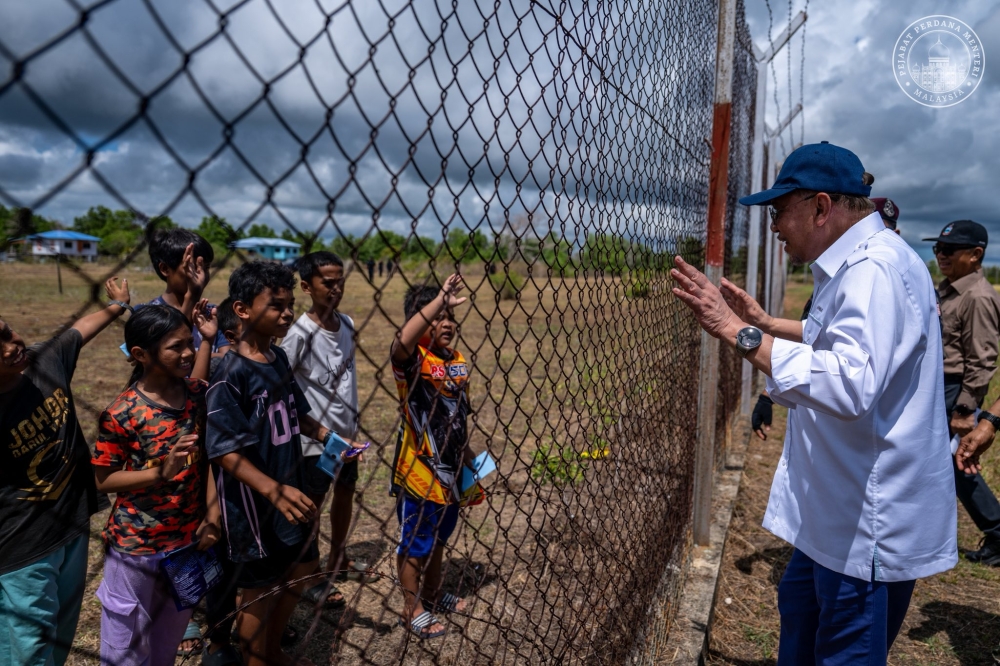
Sabah's Children: A Paradox of Access and Wellbeing Gaps
Despite near-universal access to essential services like healthcare and schooling, a significant portion of children in Sabah are falling short of crucial wellbeing benchmarks. A groundbreaking new survey reveals a stark disconnect between service availability and the actual health, learning, and overall development outcomes for the region's young population.
The Health Paradox: Services Abound, Yet Wellbeing Lags
The Sabah Child Wellbeing Index (SCWI) 2026 paints a concerning picture, indicating that while most children can reach healthcare facilities, a substantial number do not meet the minimum standards for health. This suggests that access alone is not translating into optimal health outcomes for every child.
Immunisation Shortfalls and Age-Related Declines
The index highlights that only 55.9 per cent of children achieved the overall health wellbeing benchmark. This is particularly striking given that 92.3 per cent of children have access to healthcare services. The gap underscores a complex interplay of factors beyond mere availability.
When delving into specific health indicators, the survey found that a concerning 73.6 per cent of children were fully immunised by 23 months. This means nearly one in four children have not completed their recommended vaccination schedule, a critical step in safeguarding their health.
While younger children, aged five and below, showed stronger health outcomes, a dramatic decline was observed in older age groups. A mere 20.8 per cent of adolescents aged 13 to 17 met the health benchmark. This steep drop points to emerging challenges as children transition into adolescence.
Adolescent Health: A Critical Blind Spot
The decline in adolescent health is particularly pronounced in areas of sexual and reproductive health. The survey revealed that only 31.8 per cent of adolescents aged 15 to 17 met the benchmark in this sensitive domain. This indicates a significant unmet need for comprehensive health education and services for this age group.
Geographic and logistical barriers contribute to these disparities. Tawau, for instance, recorded the lowest proportion of children meeting the health benchmark at 45.9 per cent, a stark contrast to the 70.8 per cent observed in the Interior division. These regional differences highlight the impact of distance and transportation on accessing consistent care.
The disparities are even more severe for vulnerable populations. Only 27.7 per cent of children with disabilities met the health benchmark, and a staggering 0.6 per cent among undocumented and stateless children. These figures underscore the urgent need for targeted interventions to ensure equitable health access.
Nutrition and Development: A Foundation in Question
Beyond immediate health concerns, the survey sheds light on the critical area of nutrition and development. Only 30.6 per cent of children met the threshold for adequate nutrition and development checks, indicating a widespread issue with monitoring and support in these foundational aspects of a child's life.
These findings align with broader national health trends, suggesting a significant proportion of children in Sabah are underweight or stunted. This has long-term implications for their physical and cognitive development, impacting their learning potential and overall future wellbeing.
Food Insecurity: A Pervasive Challenge
Food insecurity remains a major concern, with a substantial number of children experiencing insufficient access to nutritious food. The report indicates that only 28.2 per cent of children are classified as food secure, implying that approximately three-quarters of children face some level of food insecurity. This directly impacts their health, growth, and ability to concentrate on learning.
Learning Outcomes: Bridging the Gap from Classroom to Future
Despite high school participation rates, the learning domain reveals significant gaps in educational outcomes. Only 27.2 per cent of children met the overall learning benchmark, which assesses school engagement, availability of learning resources, and academic achievement.
While school attendance is generally high, the survey found that only 34.6 per cent of children met the benchmark for access to information and learning resources. This suggests that even when children are in school, they may not have the necessary tools and materials to thrive academically.
The Adolescent Learning Plateau
Educational outcomes were strongest among younger children, with 41.8 per cent meeting the benchmark. However, this figure drops significantly to 26.6 per cent in primary school and further to 20.3 per cent in secondary school. This trend indicates that the education system may be struggling to keep pace with the evolving needs of older students.
Interestingly, while 97 per cent of adolescents recognise the importance of education for their future, only 75.6 per cent are on track to complete school. This discrepancy points towards structural barriers within the education system, rather than a lack of motivation among students. Addressing these systemic issues is paramount to improving learning outcomes.
As with health, vulnerable groups face even greater challenges in the learning domain. Only 8.2 per cent of children with disabilities and a mere 2.7 per cent of undocumented and stateless children met the learning benchmark. This highlights the urgent need for more inclusive and supportive educational environments.
Safety and Protection: The Most Critical Frontier
The safety and protection domain emerged as the weakest area, with only 6.1 per cent of children meeting minimum standards. This encompasses critical aspects such as housing conditions, exposure to violence, environmental safety, and protection from bullying and harm.
The survey found that only 41.4 per cent of children have adequate housing conditions, a fundamental requirement for wellbeing. This pervasive lack of safety indicates widespread exposure to risks that can profoundly impact a child's physical and emotional health, as well as their capacity for learning.
The SCWI, developed through a collaboration between Unicef Malaysia and the Sabah State Economic Planning Unit, surveyed 4,441 children. The findings serve as a critical call to action for policymakers and service providers to strengthen health and nutrition services, expand inclusive education, and enhance child protection systems. Ultimately, leveraging data-driven policymaking will be key to addressing these deep-seated disparities and ensuring every child in Sabah has the opportunity to thrive.





 Explore AI Teaching Tools
Comments (0)
Please login to comment
No comments yet
Be the first to comment on this article