
Sabah Charts Bold 25-Year Course to Safeguard Forests, Balance Growth
In a significant move to secure its ecological future, Sabah is finalizing a comprehensive 25-year master plan aimed at preserving its invaluable forest cover while simultaneously fostering sustainable development. This ambitious strategy signals a deep commitment to balancing the needs of a growing population with the critical imperative of environmental stewardship.
A Blueprint for the Green Frontier
Chief Minister Datuk Seri Hajiji Noor has unveiled plans for a Statewide Forest Master Plan, a guiding document designed to shape forest resource management for the next quarter-century. This initiative underscores Sabah's dedication to a rationalized approach to land use, ensuring that ecologically vital areas receive paramount protection.
The Chief Minister emphasized that this plan is not merely about conservation; it's about ensuring that economic progress benefits the people of Sabah without compromising the natural heritage. The government aims to protect all ecologically sensitive areas while simultaneously pursuing sustainable socio-economic development.
Current Landscape: A Rich Natural Endowment
Sabah currently boasts an impressive 63 percent forest cover, a testament to its ongoing conservation efforts. This translates to approximately 3.85 million hectares designated as forest reserves and other protected zones, forming a critical buffer against environmental degradation.
Further strengthening this commitment, the state is dedicated to maintaining 2.2 million hectares, or 30 percent of its total land area, as Totally Protected Areas. This significant allocation is crucial for bolstering biodiversity conservation and safeguarding unique ecosystems.
Rejuvenating Degraded Lands: A Plantation Promise
Recognizing the need to restore past environmental impacts, Sabah has identified around 400,000 hectares of degraded forest reserve land. These areas are earmarked for extensive forest plantation development under the Forest Plantation Development Action Plan, running from 2022 to 2036.
This forward-thinking initiative seeks to revitalize the productivity of these lands, offering a sustainable alternative to timber extraction from natural forests. It represents a strategic shift towards managed forestry that supports industry while actively healing the environment.
Integrated Landscapes: A Collaborative Vision
In a major collaborative effort, Sabah is partnering with the United Nations Development Programme and the Global Environment Facility. Together, they will implement the Food Systems, Land Use and Restoration Impact Programme, a large-scale initiative covering 2.1 million hectares across 12 districts.
This program focuses on integrated landscape management, aiming to benefit approximately 56,000 rural residents. By coordinating land-use planning, it seeks to mitigate the environmental footprint of key industries like palm oil production and preserve forests of high conservation value.
Carbon Sink Status: A Global Contribution
Recent assessments confirm Sabah's status as a carbon-negative state, a remarkable achievement driven by its vast forested areas. These natural landscapes act as powerful carbon sinks, absorbing more carbon dioxide than the state emits, thereby playing a vital role in global climate stabilization.
The state's extensive forests are critical contributors to the nation's overall carbon absorption capacity. This ecological service underscores the global importance of Sabah's conservation endeavors.
Blue and Green Economies: Harnessing Nature's Potential
Beyond carbon sequestration, Sabah's diverse forest ecosystems, including peat swamp and mangrove forests, offer significant potential for developing its blue and green economy sectors. These natural assets can be leveraged for sustainable economic growth that aligns with environmental preservation.
Community-Driven Restoration: Empowering Local Stewardship
The Sabah Forestry Department is actively engaged in community-based forest restoration programs. These initiatives encompass reforestation of degraded areas, rehabilitation of water catchment zones, and the promotion of alternative income streams through non-timber forest products like kelulut honey and rattan.
These programs not only restore vital ecosystems but also empower local communities, fostering a sense of ownership and direct benefit from conservation efforts. This approach ensures that the long-term health of Sabah's forests is intrinsically linked to the well-being of its people.
Financial Commitments: Investing in a Greener Tomorrow
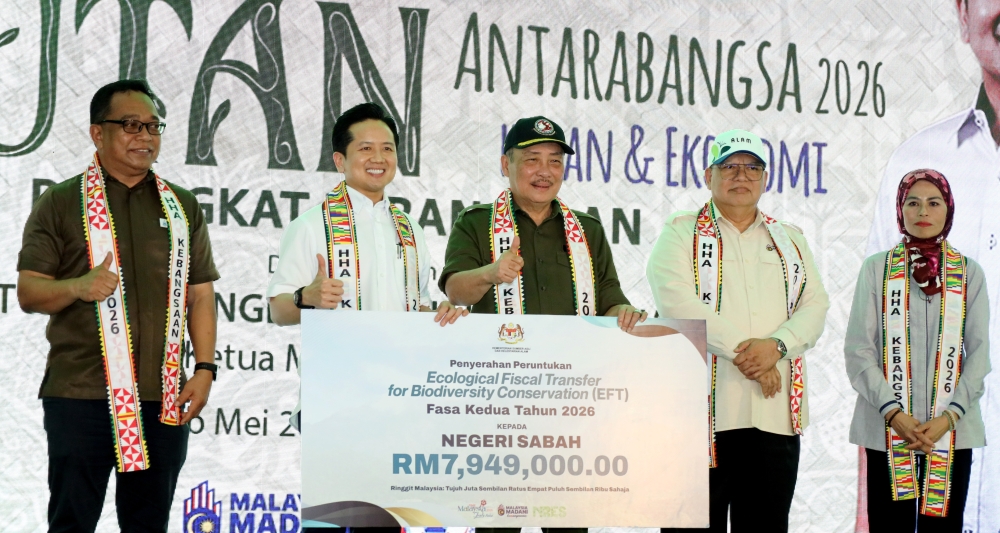
Significant financial resources are being channeled into these conservation and development efforts. Since 2019, Sabah has received RM126.36 million in Ecological Fiscal Transfer funds specifically for biodiversity conservation projects.
Furthermore, the Sabah Forestry Department has been allocated RM70.8 million under the 13th Malaysia Plan, dedicated to advancing crucial forestry initiatives. These substantial investments highlight the state's serious commitment to its long-term forest plan and sustainable land development.






 Explore AI Teaching Tools
Comments (0)
Please login to comment
No comments yet
Be the first to comment on this article