
Navigating Diversity in Higher Education: A Strategic Approach for universities
In the dynamic landscape of higher education, fostering a diverse and inclusive environment is paramount.
This article explores how leading university systems, like the California State University (CSU), strategically adapt their diversity initiatives to align with evolving federal guidelines and legal frameworks, ensuring continued support for all students while maintaining compliance.
Discover actionable insights for universities aiming to champion equity and inclusion effectively.
1.
The Evolving Federal Landscape for Diversity Initiatives
Recent years have seen shifts in federal guidance concerning diversity programs within educational institutions.
A significant directive, initially issued in February 2025, called for an end to race-conscious programs, prompting widespread review across university systems.
This guidance, though later subject to legal challenges and judicial review, created a period of uncertainty and necessitated careful consideration of existing diversity, equity, and inclusion (DEI) efforts.
Universities were advised to meticulously examine their programs to ensure they adhered to current state and federal laws, a process that involved both internal reviews and potential adjustments to public-facing communications.
The core challenge for many institutions, including the extensive CSU system, was to maintain robust support for underrepresented students without inadvertently attracting scrutiny from federal agencies.
This delicate balancing act required a nuanced approach, focusing on legal compliance while upholding the fundamental mission of providing equitable access and opportunities.
The aim was to "stay the course" on essential diversity work, ensuring that the foundational principles of inclusivity remained intact.
2.
Strategic Adaptation: Realigning Language and Programs
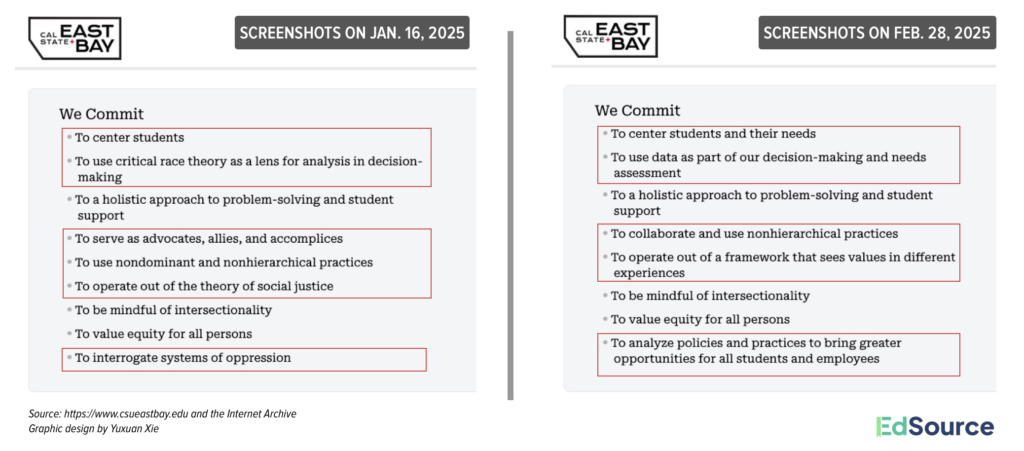
In response to the evolving federal climate, many universities began a process of reviewing and, in some cases, subtly revising their public communications and program names.
This was not about abandoning the essence of diversity work but rather about ensuring that the language used was legally sound and clearly communicated the institution's commitment to equal opportunity for all.
For example, some offices that previously focused explicitly on "diversity" began to adopt broader terminology like "Community and Belonging" or "Inclusive Excellence." Similarly, events or series that once highlighted "diversity" in their titles might have been reframed to emphasize broader themes of community engagement or academic achievement.
These linguistic adjustments, often captured through website archives and internal reviews, were part of a larger effort to align with legal interpretations and federal expectations.
The goal was to minimize potential conflicts while continuing to serve the diverse student body.
Studies indicate that such careful recalibration of language can help institutions navigate complex regulatory environments without compromising their commitment to equity.
Key Strategies for Linguistic Alignment
- Office Renaming: Transitioning names of departments or initiatives to reflect broader inclusivity and belonging rather than solely focusing on specific demographic categories.
- Event Titling: Adjusting event names to encompass wider themes of community, culture, or academic success, ensuring inclusivity without explicit racial or ethnic focus.
- Mission Statement Review: Ensuring that mission statements and public declarations of purpose accurately reflect the institution's commitment to equity and non-discrimination in compliance with all applicable laws.
3.
Ensuring Legal Compliance: The Role of University Counsel
A critical component of navigating these changes involved the proactive engagement of university legal counsel.
Internal guidance provided to university presidents emphasized the importance of reviewing all diversity-related programs to ensure strict compliance with existing state and federal laws.
This included a thorough inventory of initiatives, from admissions processes to student support services and cultural celebrations, to identify any elements that could be misconstrued as preferential treatment based on protected characteristics.
The advice generally suggested that programs promoting equal access, non-discrimination, and academic success for all students remained permissible.
The key was to ensure that these programs were framed and implemented in a manner that was legally defensible and aligned with constitutional amendments and federal anti-discrimination statutes.
This proactive review process aimed to provide clarity and confidence to university leaders, assuring them that their ongoing efforts to foster an inclusive learning environment were not inherently unlawful.
Checklist for Legal Compliance Review
- Program Inventory: Conduct a comprehensive audit of all diversity-related programs, services, and initiatives.
- Legal Framework assessment: Evaluate each program against current state and federal anti-discrimination laws, including any relevant constitutional amendments.
- Language Review: Scrutinize all public-facing language, including website content, marketing materials, and official statements, for compliance and clarity.
- Policy Alignment: Ensure that all university policies and practices related to diversity and inclusion are up-to-date and legally sound.
- Disclaimer Implementation: Consider adding consistent disclaimers to communications, affirming the university's commitment to equal opportunity and non-discrimination.
4.
Maintaining the Essence of Work: Focus on Outcomes and Impact
Despite adjustments in terminology or program names, the fundamental commitment to supporting students from all backgrounds remained a central tenet for many universities.
Research indicates that the "essence of the work" – the dedication to fostering an inclusive environment and ensuring equitable outcomes – was not diminished.
Instead, institutions focused on clearly articulating the tangible benefits and concrete outcomes of their diversity initiatives.
For faculty and staff involved in federally funded projects, this often meant shifting the narrative from broad diversity statements to specific, measurable achievements and the impact on student success.
For instance, a teacher training grant might pivot from emphasizing "diversity" in its description to highlighting how the program equips educators with skills to support a wide range of learners and improve educational equity through concrete pedagogical approaches.
This strategic reframing ensures that the valuable work continues, even when the language used to describe it needs to adapt to external pressures.
5.
The Importance of Inclusive Excellence for Student Success
The overarching goal for university systems like CSU is to champion "inclusive excellence" – a framework that ensures all students, regardless of their background, have the opportunity to thrive academically and personally.
This commitment is deeply embedded in the mission of public higher education, aiming to serve the diverse demographic tapestry of the state and nation.
Universities are increasingly focused on closing achievement gaps in areas such as graduation rates and retention, demonstrating that equity is not just a matter of compliance but a strategic imperative for student success.
The pursuit of inclusive excellence involves creating an environment where every student feels valued, supported, and empowered to reach their full potential.
This requires ongoing efforts to understand and address the unique needs of different student populations, ensuring that educational pathways are accessible and equitable.
The commitment extends to supporting the basic human rights of all students, fostering a sense of belonging that is crucial for academic achievement and personal development.
Conclusion
Navigating the complexities of diversity initiatives in higher education requires a strategic and adaptable approach.
Universities must remain steadfast in their commitment to fostering inclusive environments while diligently adhering to legal frameworks and evolving federal guidelines.
By carefully reviewing language, ensuring robust legal compliance, and maintaining a clear focus on the tangible impact of their programs, institutions can effectively champion diversity, equity, and inclusion.
The ultimate goal is to create an educational landscape where every student has the opportunity to succeed, contributing to a more equitable and vibrant society.
The California State University system's experience offers valuable insights into how to balance these critical objectives, demonstrating that a proactive and principled approach is key to sustained success in higher education.







 Explore AI Teaching Tools
Comments (0)
Please login to comment
No comments yet
Be the first to comment on this article