
Beyond the Bell: The Resurgence of Recess as a Critical Educational Tool
In the relentless pursuit of academic achievement, a fundamental element of childhood development has been increasingly sidelined: recess. Once a non-negotiable fixture in the school day, unstructured play is now facing a powerful resurgence, with educators and child development experts championing its return not as a mere break, but as a vital component for fostering engaged, well-rounded students.
The Quiet Erosion of Playtime
For decades, the elementary school day was punctuated by the joyous sounds of children at play. This cherished time, however, began to wane as educational priorities shifted. The intense focus on standardized testing and maximizing instructional minutes led many school districts to reduce or eliminate recess, viewing it as expendable time.
This strategic reallocation of time, intended to boost academic performance, has inadvertently created a deficit in crucial developmental areas. Advocates argue that this trade-off is fundamentally flawed, sacrificing long-term benefits for short-term gains.
A Growing Chorus for Recess
A growing movement, fueled by research and anecdotal evidence, is challenging the notion that less play equates to more learning. Organizations and individual advocates are working tirelessly to reinstate recess as a protected and essential part of the school curriculum for all children.
The American Academy of Pediatrics (AAP) has been a leading voice, recently reaffirming and expanding its stance on the importance of play. Their updated recommendations now extend beyond elementary schools to include middle and high school students, acknowledging that the benefits of breaks and unstructured time are not age-limited.
The Cognitive and Emotional Case for Play
Experts emphasize that recess is far more than just a physical release. It's a crucial period for cognitive processing and emotional regulation. When children engage in play, they are not simply having fun; they are actively developing problem-solving skills, creativity, and the ability to navigate social complexities.
Dr. Catherine Ramstetter, a co-author of a significant report on structured play, highlights a critical flaw in the current educational system. "It's not that we don't need hard work and concentrated effort, but when you hit a wall, you take a break," she explains. "That's where I think, systematically, we're kind of broken; that we expect little kids to be like little robots."
This perspective underscores the idea that breaks are not a sign of weakness but a necessary component of sustained effort and deep learning. Forcing children to remain in a state of constant academic exertion without respite can lead to burnout and diminished returns.
Expanding the Reach of Play
The AAP's expanded recommendations acknowledge a cultural misconception that rigor in older grades means constant, uninterrupted academic focus. This is a fallacy, according to many educators who understand that sustained intellectual engagement requires periods of rest and rejuvenation.
"I don't know many high school teachers that are studying or deep into play," Ramstetter notes, contrasting it with the typical training early childhood educators receive. "Also, culturally in older grades, rigor is somehow equated with your nose to the grindstone—when in reality, when we want to attain rigor, we have to have breaks."
This shift in understanding is driving grassroots efforts across the country. Similar to the growing awareness around limiting screen time, communities are organizing to advocate for the return of dedicated play time in schools.
The Movement for Mandatory Playtime
Across more than a dozen states, advocacy groups are pushing for legislation that would guarantee at least 60 minutes of play per day for students. A key tenet of this movement is ensuring that recess is not used as a disciplinary tool or a reward for good behavior, but as an inherent right for all children.
Elizabeth Cushing, CEO of PlayWorks, a nonprofit dedicated to implementing evidence-based play strategies in schools, observes a significant evolution in how recess is perceived. "What might have been perceived as a 'break' is now seen as a critical part of the school day," she states. "It's enabling kids to be in connection with each other in a way that's fun, with low stakes, to build a community."
While legislative efforts are gaining traction, they often face challenges. A recurring concern is the lack of allocated funding to support the implementation of these policies. Furthermore, schools grapple with finding the practical time within already packed schedules to accommodate these breaks.
Local Solutions for Universal Benefits
Deborah Rhea, founder of the Let's Inspire Innovation ‘N Kids (LiinK) Project, advocates for a localized approach. She believes that each school district should determine the best way to integrate play based on its unique student population and resources.
"I think we have made more strides than I ever thought possible," Rhea shares, reflecting on the progress made. "But at the same time, we're limping along. We're not being successful with momentum. Doing this propels them forward academically."
However, simply mandating recess time is not enough. Ramstetter emphasizes the need for quality. "I think policy can help support practice, but to make it quality playtime—something that doesn't feel like an onerous task on a school—you have to spend some time planning," she advises. "Similar to introducing a new curriculum on English. It's treating it like the crucial instructional time that it is."
The Multifaceted Benefits of Recess
The advantages of recess extend far beyond the immediate enjoyment of children. Experts highlight a range of academic, social, and emotional benefits that are crucial for development at all ages.
Building Essential Social Skills
For younger students, recess provides an invaluable arena for developing critical social skills such as cooperation, teamwork, and inclusion. These are not just skills for the playground; they are foundational for success in all aspects of life.
"The opportunities and skill-building that happens in elementary school around cooperation, teamwork, and how to include everyone in a game are easily done at that age," Cushing explains. "They follow into middle and high schools where technology and social pressures require they have those skills already. If we want to develop citizens who work in a team and make friends, we have to start early."
As children progress through their academic careers, the social and emotional competencies honed during recess become even more vital. Navigating peer relationships, resolving conflicts, and understanding social cues are skills that are best learned through practice in low-stakes environments.
Boosting Attendance and Engagement
Recess also plays a significant role in improving school attendance, a critical factor given the persistent challenge of chronic absenteeism in many schools. When children look forward to their time at play, they are more motivated to attend school.
A compelling example comes from Bedford High School in Massachusetts, which introduced "movement breaks" during lunch. This initiative led to a dramatic decrease in chronic absenteeism, dropping from 35% to 23% within the first year. This demonstrates a direct correlation between opportunities for movement and joy and a student's willingness to be present.
"There's a lot of focus on recess to help with belonging and source of positive, joyful feelings about school," Cushing adds. Schools that have implemented structured play frameworks have reported lower rates of chronic absenteeism compared to those that have not.
Tangible Improvements in Student Well-being
Deborah Rhea's work with the LiinK Project offers concrete data on the positive impacts of play. Across approximately 25,000 students who participated in her programming, significant improvements were observed:
- Cortisol levels, a marker of stress, decreased.
- Academic assessment scores saw an increase.
- Off-task behavior in the classroom dropped by a remarkable 40 percent.
- Schools found that offering such programming could even serve as a recruitment tactic, attracting families who prioritize a holistic approach to education.
"The only time I had to convince parents was the first year I started this," Rhea recalls. "After that, word of mouth spread." This suggests that the tangible benefits of well-implemented play programs speak for themselves.
Navigating the Hurdles to Play
Despite the overwhelming evidence, the path to widespread recess implementation remains challenging. The primary obstacle is finding the necessary time within the school day, a concern that is compounded by budget constraints that prevent many districts from investing in structured play programs.
Not every school has the financial resources to adopt comprehensive systems like those offered by PlayWorks or the LiinK Project. This reality necessitates creative and adaptable solutions that can be implemented with minimal external funding.
The Power of Simple, Structured Play
Cushing emphasizes that even with limited resources, children can thrive with simple, structured play. The key is to create an environment where play can flourish naturally.
"Recess is the only time in the school day where children naturally know they have mastery," she observes. "The beauty of recess is that kids will play everywhere. Despite all the complexity, there's a real beauty in the universality of it."
However, the absence of basic resources can hinder the full realization of recess's benefits. A lack of equipment or designated play areas can leave children standing on the sidelines, unsure of how to engage.
"If you look at a playground where there's no frame for it, you'll see a majority of kids standing around the outside of the playground," Cushing explains. "They're too afraid or shy to jump in and don't know if it's going to be fun or not. It's not that they don't want to play, they just need the conditions created to do it."
The Role of Technology and Intentional Design
While cell phones are less prevalent in elementary schools, their potential impact on play conditions is a growing concern. Experts suggest that reducing screen time during school hours can significantly improve the quality of play.
Many schools are adopting "bell to bell" policies that restrict cell phone use throughout the entire school day, including during lunch and recess. While the AAP's study didn't directly address technology, Ramstetter interprets the implication as clear: "yeah, get it out of the way."
"Don't give them to kids at recess: Encourage them to connect, give them quiet places to sit, to run around, to dig in the dirt," she advises, drawing a parallel to consent. "If I tell you I don't want to play anymore, I need to mean it. Otherwise, it gets muddy."
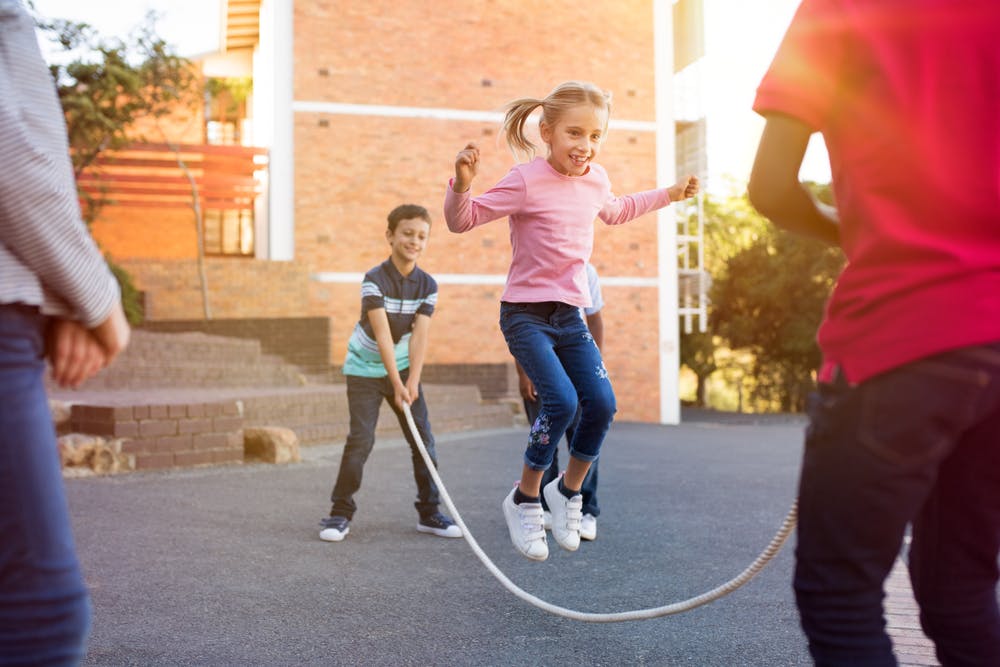
The emphasis is on intentional design. Simple tools like jump ropes, chalk for drawing games like Four Square, and open spaces can empower children to create their own rules and engage in imaginative play. These activities foster collaboration and problem-solving without requiring elaborate equipment or supervision.
"Everyone agrees recess is beneficial, but you have to do it well to reap the benefits," Ramstetter concludes. "If we all believe it's beneficial, let's take a step back to see how we can better tap into some of this time, preparing to do it well." The future of education may hinge on rediscovering the profound power of play.







 Explore AI Teaching Tools
Comments (0)
Please login to comment
No comments yet
Be the first to comment on this article