
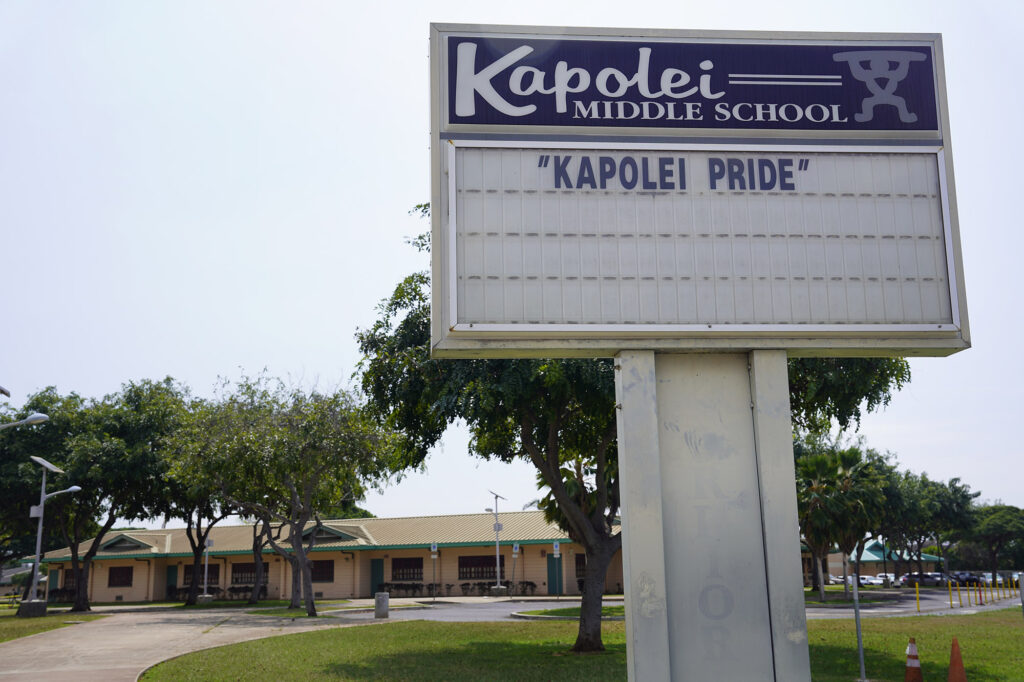
The recent deployment of pepper spray by a Honolulu police officer at Kapolei Middle School, intended to break up a fight, has ignited a fervent debate about the role of law enforcement in schools and amplified calls for increased mental health support. This incident, which saw young students exposed to chemical agents, underscores a growing concern among educators and parents: are we prioritizing punitive measures over preventative care when addressing student behavior?
When the Classroom Becomes a Scene of Conflict
The incident at Kapolei Middle School, a typical Hawaiʻi public school serving grades 6-8, occurred in late February. According to police reports, a fight broke out involving several students, and a lone responding officer deployed pepper spray to disperse the crowd and restore order. While the officer stated he was outnumbered, the use of such force on minors has sparked widespread alarm.
This event is not an isolated one, but its occurrence at a middle school, where students are particularly vulnerable, has amplified existing anxieties about school safety and the methods employed to maintain it. The use of pepper spray, a substance designed to incapacitate, raises critical questions about proportionality and the long-term impact on young minds and bodies.
“We are talking about kids in school and concerns about criminalizing behavior that really should be better dealt with through school officials or authorities,” stated Emily Hills, senior attorney with the ACLU of Hawaiʻi. “Aside from whether or not this is constitutionally excessive force, was this really necessary?”
The Escalation Dilemma: Cops or Counselors?
For years, the conversation around school safety has often oscillated between increasing police presence and bolstering mental health resources. While some parents and politicians have advocated for armed School Resource Officers (SROs) in response to high-profile fights, incidents like the one at Kapolei Middle School lend significant weight to the argument for a different approach.
Advocates for increased mental health services argue that addressing the root causes of behavioral issues—such as trauma, anxiety, and social-emotional challenges—is far more effective than relying on law enforcement to manage conflict. They posit that police intervention, even with the best intentions, can inadvertently escalate tensions and alienate students.
The ACLU of Hawaiʻi, among other organizations, is a strong proponent of the "counselors, not cops" philosophy. This perspective emphasizes that schools should be environments focused on learning and development, where behavioral issues are addressed through therapeutic interventions and support systems, rather than through the criminal justice lens.
Shifting the Paradigm: Prevention Over Reaction
The core of the "counselors, not cops" argument lies in the belief that proactive mental health support can prevent many of the conflicts that lead to disciplinary actions or, in extreme cases, police involvement. This includes providing students with accessible avenues to discuss their struggles, learn coping mechanisms, and receive guidance from trained professionals.
A 2024 survey of 1,200 K–12 educators revealed that over 70% believe a lack of adequate mental health support is a primary contributor to disruptive behavior in schools. This sentiment is echoed by parents and students alike, who often feel unheard or unsupported when facing personal or academic challenges.
The goal is to create a school climate where students feel safe, understood, and equipped to handle challenges. This involves fostering strong relationships between students and staff, implementing restorative justice practices, and ensuring that mental health professionals are an integral part of the school community, not an afterthought.
The Urgent Need for Mental Health Professionals
The Hawaiʻi Department of Education has recognized the critical need for mental health intervention. They are requesting $1.8 million from the Legislature to fund 20 mental health interventionists. These professionals would focus on assessing student risk for self-harm or harm to others and assist with transitions for students requiring specialized educational placements.
This initiative represents a significant step towards bolstering the mental health infrastructure within schools. However, advocates argue that even this level of investment may not be sufficient to meet the pervasive needs of all students, especially in a system that has historically underfunded these essential services.
Furthermore, there's a push to professionalize the role of school psychologists in Hawaiʻi. Currently, the state is unique in not requiring school psychologists to be licensed by the state board of psychology. Advocates believe that establishing licensure requirements would ensure higher standards of training and ethical practice, ultimately benefiting students.
“I am heartbroken that the police had to enter the situation,” said Deborah Bond-Upson, president of Parents for Public Schools. “And that’s why my first responses are, ‘What is it we can do to make the atmosphere of the school such that this kind of alarming behavior does not happen to kids and with kids?’”
The Impact of Pepper Spray on Young Students
The use of pepper spray, even as a last resort, carries significant implications for children, particularly those in middle school. While generally considered a lower-level use of force, its effects can be severe and distressing.
Short-term effects include intense eye pain, burning sensations, temporary blindness, respiratory distress, and skin irritation. For students with pre-existing conditions like asthma, exposure can be particularly dangerous. The long-term psychological impact of experiencing such force within the school environment is also a considerable concern, potentially leading to increased anxiety, fear, and a diminished sense of safety.
Leslie Keating, a parent of an eighth grader at Kapolei Middle School, voiced her apprehension, stating, “These are chemical weapons that have chemicals that we don’t know the long-term effects of. I’m not okay with it.” Her concern highlights the broader unease about introducing such measures into a space intended for learning and growth.
Reimagining School Safety: Beyond the Officer's Badge
The incident at Kapolei Middle School serves as a stark reminder that the traditional approaches to school safety may no longer be adequate. While the presence of SROs can deter some forms of violence, it does not address the underlying issues that contribute to student conflict.
Educators are increasingly seeking innovative ways to foster positive school climates and manage student behavior proactively. This includes leveraging technology for engagement and support, such as using tools for AI lesson plan creation and interactive displays to build community and manage classroom dynamics. Platforms offering classroom games can also be instrumental in creating a more positive and engaging learning environment, reducing opportunities for conflict.
The conversation is shifting towards a more holistic view of school safety, one that prioritizes the well-being of every student. This involves not only addressing immediate safety concerns but also investing in the long-term emotional and psychological health of the student body.
The Role of Technology in Fostering a Positive School Environment
In an era where technology plays a significant role in students' lives, educators can harness its power to create more supportive and engaging school environments. Tools that facilitate communication, collaboration, and positive reinforcement can be invaluable.
For instance, AI grading tools can free up teacher time, allowing them to focus more on individual student needs and interventions. Similarly, MentofyGroups can help teachers create balanced and effective student groupings for collaborative activities, fostering peer support and reducing social friction.
Interactive displays, like those found on MentofyBoards, can be used to display positive affirmations, manage classroom transitions smoothly, and even host quick polls that gauge student sentiment, offering teachers real-time insights into the classroom atmosphere. When students feel connected and supported, the likelihood of disruptive behavior decreases.
The integration of live quiz and trivia game options within the classroom can transform learning into an engaging, collaborative experience, shifting focus away from potential conflict and towards shared academic goals. These tools, when used effectively, contribute to a more positive and less confrontational school day.
Moving Forward: A Call for Comprehensive Support
The use of pepper spray at Kapolei Middle School is a critical juncture, prompting a necessary re-evaluation of how schools approach student discipline and well-being. While the immediate incident involved a police officer attempting to de-escalate a volatile situation, it highlights a broader systemic challenge.
The path forward requires a multi-faceted approach. This includes sustained investment in school-based mental health professionals, robust training for educators in de-escalation techniques, and a commitment to creating school cultures that prioritize empathy and understanding. It also means continuing to explore and implement innovative solutions, both technological and pedagogical, that support student growth and resilience.
Ultimately, the goal is to cultivate schools where every student feels safe, valued, and empowered to learn. This vision is achievable, but it demands a collective commitment to prioritizing mental health and well-being as the cornerstones of a truly secure and thriving educational environment. For educators looking to enhance student engagement and support, exploring resources like Mentofy is free for teachers can provide valuable tools and strategies to begin this important work.




 Explore AI Teaching Tools
Comments (0)
Please login to comment
No comments yet
Be the first to comment on this article