
Bridging the Divide: Why "College vs. Career" is a False Choice for Today's Students
The notion that students must choose between a traditional college path and a hands-on career track is increasingly outdated. A growing body of evidence suggests that the most effective preparation for the future involves a seamless integration of both academic rigor and practical skill development, a concept that many educational systems are still struggling to fully embrace.
The Siloed System: A Legacy of Separation
For decades, educational philosophy has largely segmented learning into distinct pathways. Students were often implicitly or explicitly guided toward either a four-year university or a vocational route, creating a cultural perception that these were mutually exclusive destinations.
This separation is often reinforced by systemic structures. State policies and school district curricula frequently house "academic" and "career" courses in different departments, funded through disparate streams and evaluated by distinct accountability metrics. This institutional division inadvertently perpetuates a polarization that limits students' horizons.
Even when coursework offers overlap, the outcomes are often bifurcated. Some students earn college credits, while others gain technical skills and industry certifications. The ideal, however, should be a comprehensive "both/and" approach, not an "either/or" dilemma.
Beyond the Dichotomy: The Power of Integration
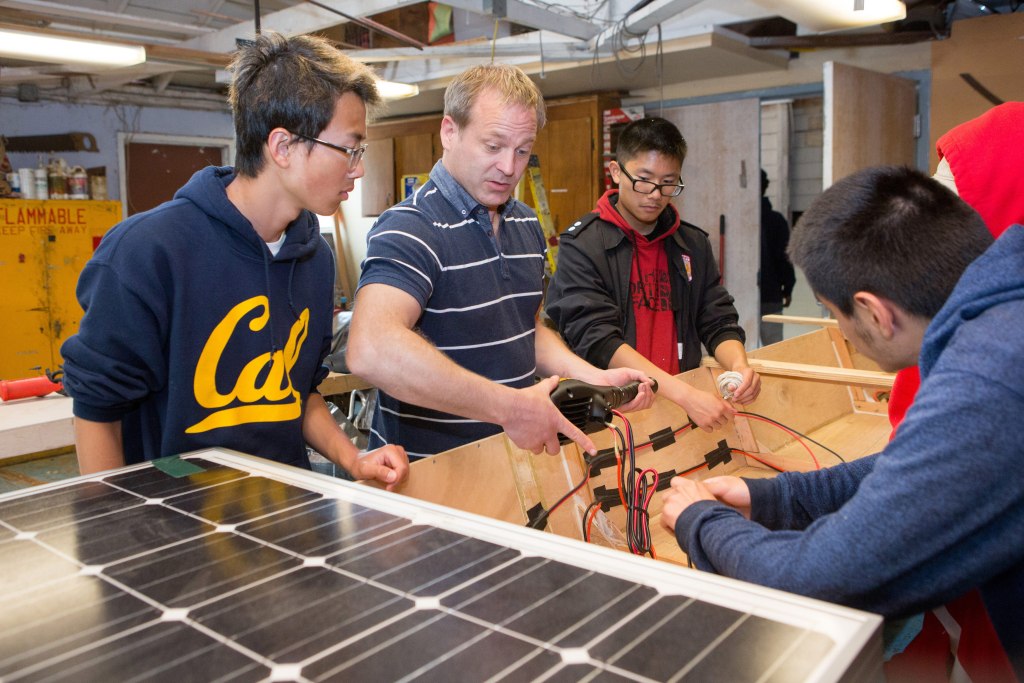
The reality is that academic knowledge and technical skills are not opposing forces; they are complementary building blocks essential for genuine, future-ready graduates. The most impactful learning experiences often occur when conceptual understanding is married with practical application.
When these pathways remain separate, students miss out on the profound synergy that arises from combining the theoretical depth of advanced academics with the tangible problem-solving of career and technical education (CTE). This missed opportunity can have lasting implications for their preparedness.
A recent survey highlights this disconnect, revealing that only about one in six educators involved with CTE programs feel that these initiatives are seamlessly integrated within their schools. This statistic underscores a persistent challenge: the status quo has sent a subtle yet powerful message that traditional academic pursuits and practical skills are not held in equal regard.
A Personal Revelation: When Theory Met Practice
The limitations of a purely academic approach became starkly clear to me during my own high school experience in the early 1990s. As a student identified for advanced academic work, I was placed on a college-bound track, surrounded by peers who excelled in theoretical discussions.
Our final physics project required us to build a functional catapult. For many of us, the task was a bewildering challenge. We could articulate the physics principles involved with ease, but translating that knowledge into a tangible, working machine proved to be an insurmountable hurdle.
In contrast, a student outside our specialized cohort, who was not on the traditional college track, designed and built a catapult that not only spanned the gymnasium but sailed over the school building. This experience was a profound lesson: being "book smart" is not synonymous with being truly prepared for real-world challenges.
Rethinking Assessment: From Timed Tests to Tangible Skills
While education has evolved significantly since then, some advanced academic programs remain tethered to traditional practices that often lack contextualized knowledge. Assessments relying solely on timed tests, essays, and multiple-choice questions can gauge discipline-specific knowledge but often fail to capture a student's ability to apply that knowledge.
Authentic assessments, on the other hand, challenge students to demonstrate their understanding and deploy their skills in scenarios that mirror real-world problems. This approach makes learning more relevant and engaging, fostering a deeper connection to the material.
It is entirely possible to design assessments that blend the theoretical emphasis of traditional methods with the hands-on application characteristic of CTE. Such integrated assessments have been shown to enhance student learning, boost autonomy, and significantly improve motivation.
Cultivating Essential Skills for a Dynamic World
In today's rapidly evolving global landscape, where technological advancements and labor market demands shift at an unprecedented pace, adaptability and essential skills are paramount. The ability to communicate effectively, exercise sound judgment, and think critically are not merely desirable traits; they are foundational for early career success and lifelong learning.
Contextualizing academic content beyond the confines of the classroom cultivates these higher-order thinking skills. This approach fosters problem-solving and decision-making abilities, which are directly linked to increased engagement and improved career outcomes, regardless of whether a student pursues immediate employment or further academic study.
The developmental years of high school are a critical window for instilling these vital competencies. CTE courses, by their very nature, are designed to provide this real-world context and skill development.
The Growing Momentum for Integrated Learning
Across the nation, there is a burgeoning conversation among educators and policymakers advocating for models that merge academic and career-focused learning. This shift away from siloed pathways is gaining traction, with schools and states beginning to report positive outcomes from this integrated approach.
The persistent stigma surrounding CTE courses often leaves many students unaware of the valuable opportunities they offer or hesitant to enroll. This perception must be actively challenged. We need to move beyond forcing students onto separate tracks and instead champion the inherent strengths that both academic and career-oriented learning provide.
Educators and policymakers must acknowledge and actively reflect on how readiness for the future is not a singular attribute but rather a dynamic blend of curiosity, acquired skills, and the capacity for adaptation. Bringing this integrated learning model to life requires courage, a willingness to embrace bold shifts in perspective, and a steadfast determination to enact policy changes that enable future-minded integration.
Policy and Practice: Paving the Way for Integrated Pathways
State policymakers can take concrete steps by recognizing rigorous, dual-purpose courses for both academic and CTE credit. This simple yet significant policy change can help dismantle the barriers that currently keep these valuable programs isolated.
School administrators play a crucial role in championing local examples that vividly demonstrate how integrated learning enhances student engagement and academic achievement. Rethinking course codes and actively promoting these innovative approaches are essential for fostering a more holistic educational experience.
When we equip students with the ability to both think critically and to do effectively, we are not just preparing them for their first job. We are setting them on a path for a lifetime of continuous learning, abundant opportunities, and sustained personal growth. This is the essence of true readiness, and it is an entitlement that every student deserves.




 Explore AI Teaching Tools
Comments (0)
Please login to comment
No comments yet
Be the first to comment on this article