
Bridging the Divide: How Cross-District School Partnerships Are Cultivating Empathy and Driving Real Change
In an era marked by deep national divisions, the echoes of discord are increasingly felt within our communities and, alarmingly, within our schools. This pervasive tension creates a challenging environment for young people, shaping their understanding of a world often characterized by misunderstanding and a disregard for shared humanity. Yet, for educators on the front lines, despair is not an option; the daily commitment to students demands proactive solutions.
When the grand scale of national change feels out of reach, educators possess powerful, localized levers for transformation. Consider the proximity of neighboring school districts, often separated by the very social and economic fissures that divide the nation: rural abutting suburban, racially diverse bordering homogeneous, affluent alongside economically struggling, conservative enclaves adjacent to liberal bubbles. By intentionally bringing these nearby communities together, we can orchestrate a more manageable, yet profoundly impactful, model of the change we aspire to see nationwide.
Leveraging existing connections—across districts, within professional networks, and through shared student experiences—educators can empower students to become the architects of this change. These cross-community school partnerships offer a tangible, local response to the widespread societal discord.
Unlocking Potential Through Proximity
The foundation for such initiatives is often already in place. Many educators, administrators, and parents have existing ties to individuals in neighboring districts. These connections might stem from shared professional associations, participation in the same athletic conferences, or involvement in academic competitions.
Principals and teachers may have crossed paths in college or collaborated earlier in their careers. These established relationships provide a natural starting point for bringing students, who often live mere car rides apart yet remain worlds away, into meaningful alliances and relationships.
A Decade of Deliberate Connection: The Metro Project
For the past ten years, a compelling experiment in this very vein has been unfolding. As a professor of educational policy and a co-founder of The Metropolitan Community Project, affectionately known as "Metro," I've witnessed firsthand the transformative power of city-suburban school partnerships. Our initiative, based in Chicago, began by tapping into the very networks described above.
We convened a gathering of teachers and community organizers who had shared academic experiences, collaborated on service projects, and forged professional bonds. Some members of our core group teach at "Taylor," a public neighborhood high school in a lower-income Chicago community, and are deeply involved in local uplift efforts. Others are educators at "Wyndham," an affluent public suburban high school located just 25 minutes away.
Our initial meetings took place in the Taylor high school library during the summer. Together, we meticulously outlined the project's intentions and designed a framework for student interactions throughout the upcoming academic year. As the fall semester commenced, teachers actively recruited enthusiastic volunteers from their classrooms and after-school clubs.
Today, approximately 30 students participate in Metro annually, with an equitable balance drawn from both Taylor and Wyndham. The inherent diversity of the student cohort is a direct result of bringing together individuals from two distinct educational environments.
The Metro Model: From Icebreakers to Advocacy
Metro's activities are carefully structured to align with the rhythm of the school year. In the fall, our cross-district cohort convenes for an initial icebreaker activity—a scavenger hunt designed to foster initial connections and ease any lingering apprehension.
Following this, teachers and I provide students with foundational information about the structures and historical policies that contribute to educational inequality between school districts. This educational component is crucial for building a shared understanding of the systemic issues at play.
Subsequently, each school group convenes independently. Students engage in thoughtful discussions about how to articulate their school's identity—what they cherish about their institution and what areas require improvement. They brainstorm elements for school tours, identifying specific classes, clubs, and campus locations they wish to showcase.
The heart of the program lies in the reciprocal school visits. Suburban students spend a day immersed in the city school environment, followed by a visit from their city counterparts to the suburban campus. Student hosts guide their visitors in small groups, offering insights into ongoing classes, recreational spaces like the gymnasium, and the daily dynamics of the cafeteria during lunchtime.
These immersive experiences include shared lunch breaks, after which the tours resume, concluding at the end of the school day. Dedicated time is allocated for debriefing observations and processing the similarities and differences encountered. This structured reflection is vital for deepening comprehension.
From Observation to Action: Empowering Student Voices
The stark realities of resource disparities and the formation of new friendships invariably ignite a desire for action among Metro students. As spring approaches, an education organizer guides them in identifying areas where they can channel their energy for positive change.
Students receive comprehensive training in advocacy strategies. This includes honing their skills in crafting persuasive arguments, writing impactful public letters, and effectively gathering signatures for petitions. These practical skills empower them to become agents of change.
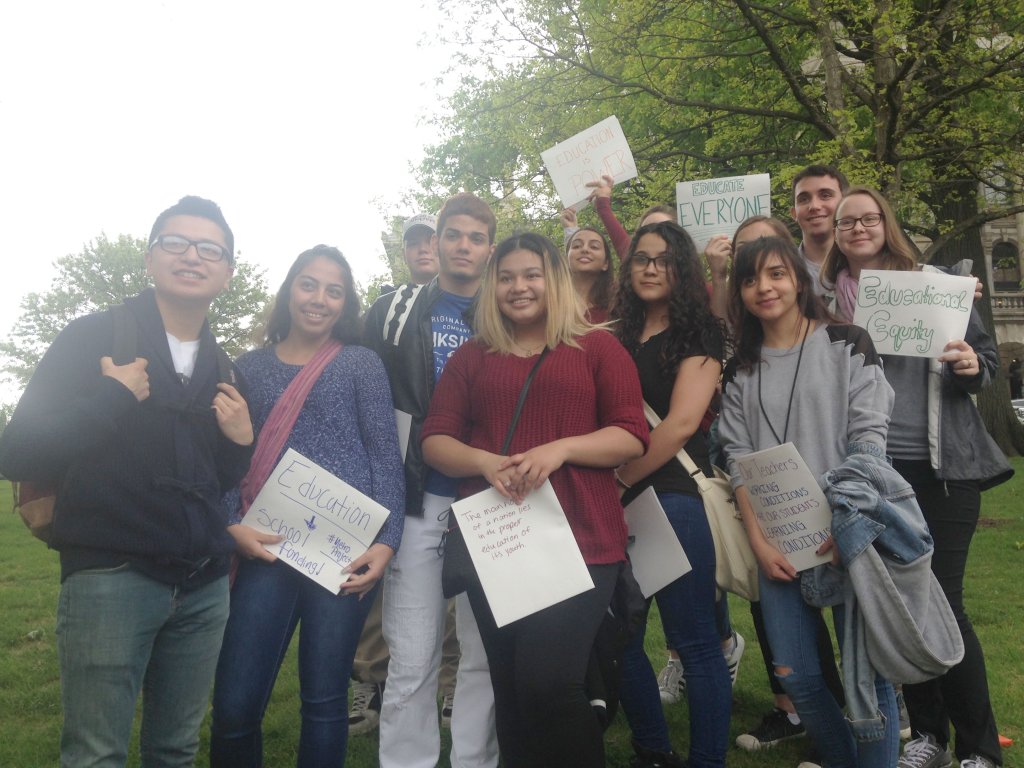
Metro's action campaigns typically commence near the end of the academic year. Throughout the project's history, students have engaged in a variety of impactful initiatives. They have conducted door-to-door outreach in their respective communities, presented a student bill of rights to parents, and met with state legislators to advocate for equitable school funding.
Before the summer break, a celebratory closing ceremony marks the culmination of the year's efforts, honoring the partnership and the students' achievements. This provides a moment of reflection and recognition for their hard work.
The Pillars of Partnership: Trust, Empathy, and Collective Action
What underpins the success of this cross-community partnership is the sustained, extended interaction students experience. Over the course of the school year, and sometimes beyond, they develop a profound understanding of each other's lives, both within and outside the school walls. This deep immersion cultivates a robust, ingrained trust.
Furthermore, Metro is intentionally designed to facilitate collective action. Students from both districts are empowered to collaborate on issues that resonate with them as a unified group. This shared purpose amplifies their impact and strengthens their bonds.
The profound outcome we have consistently observed is the emergence of empathy, genuine understanding, and solidarity. These qualities are not merely byproducts but are integral to the very fabric of the program's design.
A Hopeful Horizon for Education
Teaching is, at its core, a profession steeped in hope. A steadfast refusal to succumb to the prevailing climate of distress and division should be an intrinsic component of what it means to remain dedicated to our students—to truly "not give up on kids."
Initiatives like Metro demonstrate that by intentionally fostering connections between diverse school districts, we can cultivate a generation equipped with the empathy and understanding necessary to bridge social divides. These partnerships are not just educational exercises; they are powerful incubators for meaningful, lasting change within our communities and beyond.




 Explore AI Teaching Tools
Comments (0)
Please login to comment
No comments yet
Be the first to comment on this article