
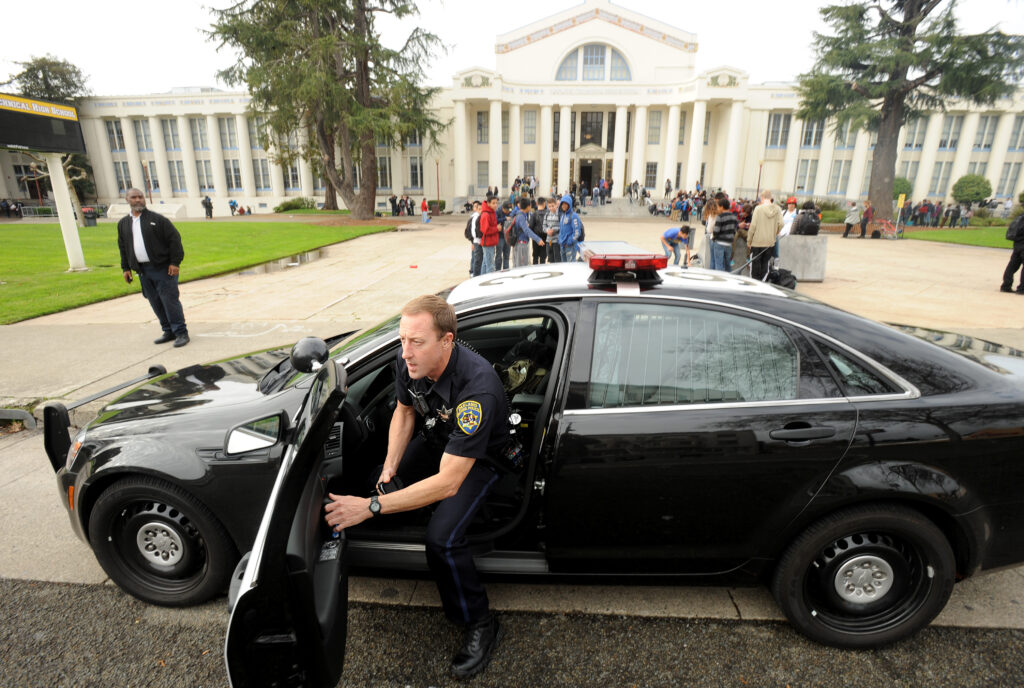
Navigating the Shift: Oakland Schools' Journey Towards Police-Free Environments
The landscape of school safety is evolving, and the Oakland Unified School District (OUSD) is at the forefront of a significant transformation.
Moving away from traditional policing models, OUSD is pioneering a new approach focused on de-escalation, restorative justice, and community-based support.
This article delves into the complexities, challenges, and innovative strategies employed by the district as they strive to create safer, more supportive learning environments for all students, exploring what happens when schools decide to call police only as a last resort.
The Genesis of a New Approach: Why Oakland Schools Reimagined Policing
In June 2020, a pivotal decision was made within the Oakland Unified School District: to disband its internal police department.
This move was not made lightly, but rather as a deliberate step towards fostering an environment where conflict resolution prioritizes dialogue and understanding over immediate intervention by armed officers.
The underlying philosophy is to minimize the potential for students to face arrest or negative interactions with law enforcement, thereby promoting a more positive and less punitive school climate.
This shift reflects a broader societal conversation about the role of police in schools and a growing recognition of the need for alternative safety measures.
The district's commitment to this new paradigm is deeply rooted in a desire to address the root causes of conflict and build stronger relationships within the school community.
The emphasis is on empowering in-house staff, who are trained to handle disturbances without resorting to force or arrest.
This strategy aims to create a more nurturing atmosphere where students feel heard and supported, even when facing challenges.
The Core Tenet: Prioritizing Internal Resolution
At the heart of Oakland's strategy is the principle that school staff should first attempt to resolve issues internally.
This means relying on trained personnel who are equipped to de-escalate situations, facilitate conversations, and implement restorative practices.
These individuals, often referred to as culture and climate ambassadors or culture keepers, are tasked with building rapport with students and addressing behavioral concerns through understanding and guidance.
The goal is to foster an environment where students feel comfortable approaching these staff members, knowing they will be met with support rather than immediate disciplinary action.
This approach is designed to chip away at the "rough edges" of student behavior by addressing underlying issues and promoting positive social-emotional development.
Implementing the Police-Free Model: Strategies and Innovations
The transition to a police-free model in Oakland schools involves a multifaceted approach, integrating new roles, specialized training, and a strong emphasis on restorative justice principles.
The district has invested in developing a cadre of professionals dedicated to student well-being and conflict resolution, aiming to create a robust internal support system.
Restorative Justice: Fostering Trust and Understanding
Restorative justice is a cornerstone of Oakland's approach.
This philosophy centers on repairing harm and rebuilding relationships.
Instead of focusing solely on punishment, it encourages dialogue, empathy, and accountability.
Circle-of-trust interactions are a common practice, providing a structured space for students to express their feelings, understand the impact of their actions, and collaboratively find solutions.
This method aims to improve how students interact with one another, fostering a sense of community and mutual respect.
Eddie Franklin, a culture and climate ambassador, shared that much of his work involves simply having authentic conversations with students, allowing them to be themselves while guiding them toward better choices.
This patient, empathetic approach is credited with significantly reducing the need to call external law enforcement.
Culture Keepers and Climate Ambassadors: The New Frontline of Safety
The Oakland district has redefined the roles of its safety personnel.
Former security guards have transitioned into positions like "culture keepers" and "culture and climate ambassadors." These individuals are not armed and do not have arrest powers.
Instead, their primary focus is on de-escalation, building positive relationships with students and staff, and creating a supportive school climate.
These professionals are trained to understand student behavior, intervene in conflicts non-violently, and connect students with appropriate resources.
They work proactively to build trust and address potential issues before they escalate.
When Franklin was a culture keeper, his daily work involved understanding diverse student personalities to better interpret their behavior and guide them toward constructive actions.
As a climate ambassador, he now provides support across multiple schools, building relationships and ensuring staff have the resources they need.
Specialized Support: Addressing Complex Needs
Recognizing that certain issues require specialized expertise, Oakland has also invested in programs like the School Violence Intervention and Prevention Program.
This initiative includes hiring life coaches, violence interrupters, and gender-based violence specialists.
These professionals work with students at four comprehensive high schools and three continuation high schools.
The gender-based violence specialists, a unique aspect of Oakland's program, conduct workshops on critical topics such as dating violence, stalking, sexual harassment, and exploitation.
Surveys have indicated that these specialized staff members often have greater relatability with students, enabling them to address individual needs more effectively and alleviate some of the burden on teachers.
This comprehensive approach acknowledges that safety encompasses not only physical security but also emotional and psychological well-being.
Navigating the Challenges: Data, Discrepancies, and Difficult Realities
While the vision for a police-free school environment is clear, the implementation in Oakland has not been without its complexities.
Analyzing data and reconciling different reporting mechanisms have presented significant challenges, highlighting the ongoing nature of this transformation.
Understanding the Data: Calls to Police and Internal Records
The district's efforts to reduce 911 calls have shown promising results, with a dramatic decrease reported from over 2,000 calls in the last year with a police department to a few hundred in recent years.
However, an analysis of police data revealed a higher number of calls from a subset of middle and high schools within a six-month period.
These calls included serious incidents such as assault with a deadly weapon, suicide attempts, and criminal threats.
This discrepancy between the district's internal records and external police logs has raised questions and underscored the need for improved data tracking and communication.
Misha Karigaca, OUSD's director of student support and safety, acknowledged that discrepancies can arise, particularly when 911 calls are made from cell phones and not immediately reported to his department.
This highlights a critical point: ensuring all incidents are captured and accounted for is paramount to accurately assessing the effectiveness of the new safety protocols.
The district is working to ensure that all staff are trained on when to call 911 and, crucially, to report any such calls made.
When to Call: Defining the Boundaries of Intervention
The question of "when to call" remains a central point of discussion and training.
While the goal is to minimize police involvement, there are specific circumstances where external law enforcement intervention is deemed necessary for the safety of students and staff.
The district's guidelines for calling 911 include situations such as active shooters, fires, medical emergencies, the presence of a gun or explosive, bomb threats, serious injuries, hostage situations, abduction, violent crimes, death at a school site, emergency evacuations, or any scenario posing an immediate danger to health or safety.
These are critical thresholds that necessitate immediate external support.
However, even when 911 is called, the district's approach aims to ensure that students are not automatically subjected to arrest.
Arrests typically occur when students are involved in incidents outside of school or for severe offenses that require law enforcement action.
The district actively partners with organizations to provide alternative support, but acknowledges that these resources can sometimes be overstretched, leading to situations where even they advise calling law enforcement.
The Lingering Influence of Past Practices
Decades of having an embedded police department have created a deeply ingrained culture.
educators and administrators have, for a long time, been conditioned to see police as the primary responders to safety concerns.
Unwinding this conditioning is an ongoing process.
Jesse Jannetta, a senior policy fellow at the Urban Institute, described Oakland as being on the "leading edge of an emerging violence-reduction practice." This indicates that while the path is challenging, the district's efforts are being recognized as innovative and potentially influential for other school systems grappling with similar issues.
The goal is to move towards a place where police-free schools are achievable, but acknowledging that there are still times when police support is necessary is a realistic assessment of the current situation.
Community Voices and External Perspectives
The journey towards police-free schools in Oakland is not solely an internal district initiative; it is deeply intertwined with community advocacy and external evaluation.
The perspectives of community organizations and researchers provide valuable insights into the progress and challenges of this transformative endeavor.
Advocacy and Historical Context
The Black Organizing Project, a community organization focused on racial, social, and economic justice, has been a driving force behind the movement to end the police department in Oakland schools since 2011.
Their advocacy, amplified by the national conversation following the murder of George Floyd, played a crucial role in the school board's unanimous vote to disband the department.
The historical context of racism and police abuse in Oakland, particularly against the Black community, has significantly influenced this push.
This historical awareness underscores the urgency and importance of creating a more equitable and just system within the schools.
External Evaluation and Future Directions
The Urban Institute is conducting a study to evaluate the effectiveness of Oakland's police-free model.
The findings are expected to provide valuable data on whether the district is achieving its goals of violence reduction and improved student safety.
While it is too early for definitive conclusions, initial observations suggest that the district is moving in a positive direction.
The Black Organizing Project, through its director of administration Jessica Black, emphasizes that progress is a result of sustained community effort and advocacy, not simply policy implementation.
They stress that achieving this level of change requires ongoing commitment and collaboration.
Dissenting Views and Ongoing Debates
Not all stakeholders are in complete agreement with the decision to disband the district's police department.
Some, like board member Clifford Thompson, have expressed concerns that eliminating the force without a robust backup plan for situations requiring significant intervention might not have been the optimal approach.
These dissenting voices highlight the complex and often contentious nature of school safety reform, underscoring the need for continued dialogue and adaptation as the district navigates this evolving landscape.
The school board, however, has not considered reinstating the district's police department, indicating a continued commitment to the current direction.
Conclusion: A Continuous Journey Towards Safer Schools
The Oakland Unified School District's pursuit of police-free environments is a testament to a bold vision for transforming school safety.
By prioritizing restorative justice, investing in specialized staff like culture keepers and climate ambassadors, and fostering a culture of de-escalation, the district is actively working to create more supportive and less punitive learning spaces.
While challenges persist, including data discrepancies and the deeply ingrained nature of traditional policing culture, the commitment to this transformative path remains strong.
The journey is ongoing, marked by continuous learning, adaptation, and the vital involvement of the community.
As Oakland continues to innovate, its experiences offer valuable lessons for other educational institutions seeking to reimagine safety and cultivate environments where every student can thrive.






 Explore AI Teaching Tools
Comments (0)
Please login to comment
No comments yet
Be the first to comment on this article