
Beyond the Classroom: How Forest Adventures Are Reshaping Early Childhood Development
In an era dominated by screens, a growing movement is turning to the rustling leaves and muddy trails to cultivate a new generation of curious, resilient children. One dedicated teacher is leading the charge, proving that the most profound lessons for young minds are often found far from textbooks, immersed in the wild.
Unearthing a Natural Curriculum
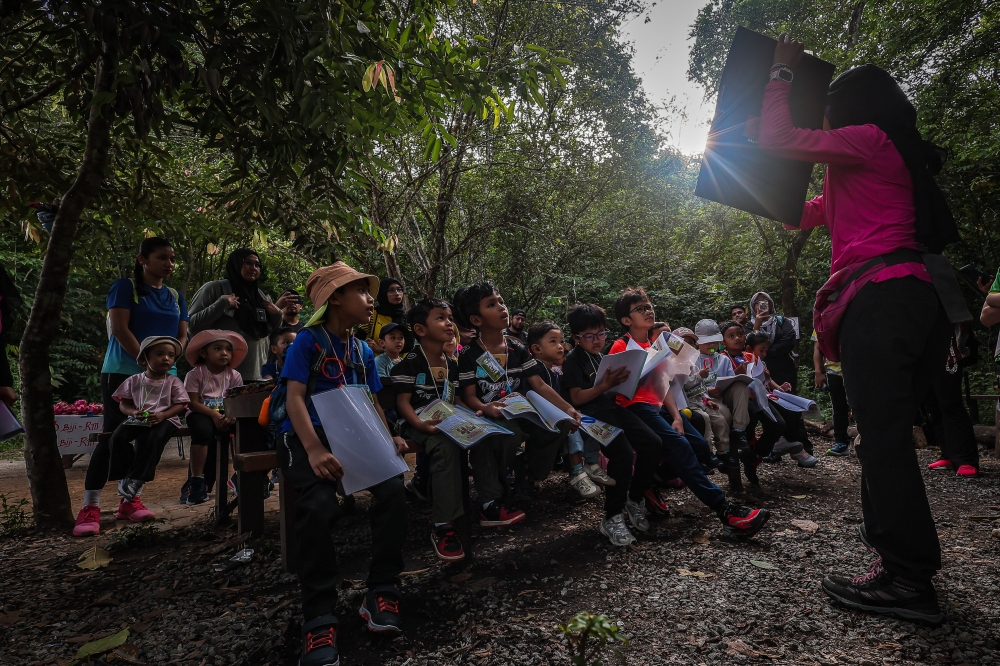
For many parents, weekend plans revolve around curated entertainment. Yet, a kindergarten teacher, Farah Zahira Zahari, has pioneered an alternative: a captivating programme that plunges children into the heart of nature. This initiative, born from a desire to offer experiences beyond the typical classroom, has quickly gained traction among parents seeking to enrich their children's lives.
Farah, a seasoned educator with a background in Early Childhood Education, observed a burgeoning parental interest in hands-on, outdoor learning. What began as informal gatherings for her own children and close friends soon blossomed into a structured programme designed to foster holistic development.
The core philosophy is simple yet powerful: nature itself is the ultimate classroom. Through activities like guided forest walks, tactile clay play, and keen environmental observation, children are not just playing; they are actively engaging their physical, emotional, and social faculties. This approach taps into a child's innate curiosity, making learning an organic and joyful process.
The Sensory Symphony of the Wild
Farah highlights a critical shift in modern childhood: an increasing reliance on digital devices. This disconnect from the natural world, she argues, can be counteracted by immersive outdoor experiences. "When children are in the forest," she explains, "all their senses come alive. They are observing, listening, touching, and moving in a way that naturally enhances their development."
This multi-sensory engagement is particularly beneficial for developing fine motor skills and hand-eye coordination. The forest provides a dynamic environment where these skills are honed organically, without the structured pressure often found in indoor settings. Children learn to navigate uneven terrain, manipulate natural materials, and interact with their surroundings in a meaningful way.
Conquering Fears, Embracing Exploration
A significant aspect of Farah's programme addresses common childhood anxieties. For children who are hesitant about getting dirty or apprehensive around insects, the forest offers a safe space for gradual exposure and acceptance. The simple act of playing with soil and mud, encouraged within a supportive environment, can be transformative.
"Some children are initially afraid to touch soil, dislike getting dirty, or feel squeamish around insects," Farah notes. "However, when they are given the opportunity and encouragement to play freely with soil and mud, they gradually become more confident." Witnessing this transformation, from trepidation to genuine enjoyment of nature's textures and inhabitants, is a profound reward for the dedicated teacher.
This journey of overcoming sensory sensitivities is not just about comfort; it's about building resilience and a broader capacity for new experiences. The programme fosters an environment where children are empowered to explore their boundaries and discover their own capabilities.
A Framework for Safety and Growth
The programme thoughtfully caters to different age groups, ensuring age-appropriate engagement and safety. Younger children, aged two to five, participate alongside their parents, fostering a shared family experience. Older children, from six to twelve, engage in more independent group activities, building teamwork and leadership skills.
Safety is paramount, with meticulous planning and risk assessment forming the bedrock of each excursion. Preliminary site evaluations are conducted to understand trail conditions, identify emergency access points, and ensure reliable communication coverage. This thorough preparation helps alleviate parental concerns, which Farah acknowledges as a primary challenge.
"The biggest challenge is not the children themselves, but parents’ concerns about their children’s safety," she admits. "However, once we explain the safety procedures and they see how the programme is conducted, most become much more confident." The programme maintains a low teacher-to-participant ratio, typically one teacher for every six to seven children, ensuring attentive supervision.
Voices from the Trail
The impact of these forest adventures is best illustrated through the experiences of the children and their families. Seven-year-old Erhan Malique Mohammad Khairul Nizzam, who attended with his younger sisters, described the forest as an exciting playground. "It was fun because I got to play with clay and climb trees," he shared enthusiastically. "There are so many things to see in the forest, like mushrooms and insects. I enjoy activities like this because I get to walk through the forest."
For urban dwellers like Siti Rohaya Aini Abdullah Najib, the programme offers a vital connection to the natural world that is otherwise scarce. "We live in the city and in a high-rise home, so my children seldom have the chance to interact with nature," she explained. "Activities like this allow them to explore new things and spend quality time with the family."
Single mother Siti Nuruljannah Abdul Rahman found the programme invaluable for her young son, Muhammad Umar Raees. Despite initial worries about his age and potential fatigue, she observed the programme's expert management by Teacher Farah. "I could see that the programme was well managed by the experienced Teacher Farah, and my son seemed to enjoy himself throughout the activities," she reported, highlighting the programme's ability to engage even the youngest participants.
Farah Zahira's initiative is more than just an outdoor activity; it's a testament to the power of nature in shaping well-rounded, confident, and environmentally conscious children. As more families seek authentic learning experiences, the call of the forest is becoming an increasingly compelling answer, promising a future where children are deeply connected to the world around them.







 Explore AI Teaching Tools
Comments (0)
Please login to comment
No comments yet
Be the first to comment on this article