
Higher Education's Looming Reckoning: Hundreds of Colleges Face Closure in Next Decade
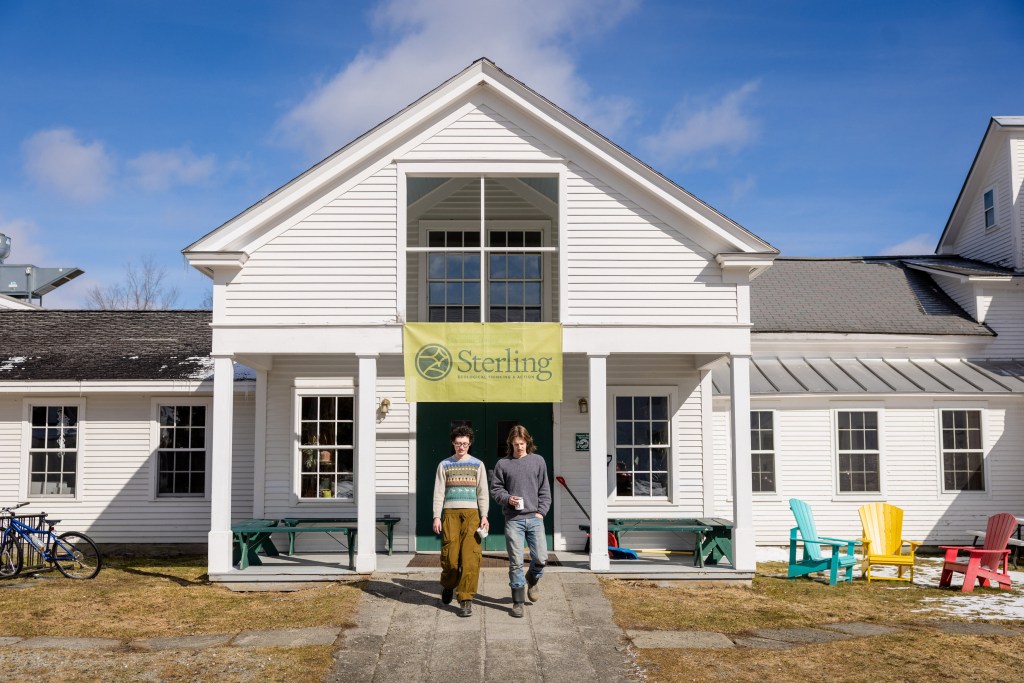
In a quiet corner of Vermont, where cell service is a luxury and the nearest car is a rare sight, Sterling College’s farm buzzed with life. Newborn lambs gamboled under the watchful eyes of students, a symbol of continuity in a place that has unexpectedly become a poignant example of higher education's precarious future. This idyllic scene, however, is set to fade as Sterling College prepares to close its doors at the end of the current semester, marking the end of an era for its dedicated students and faculty.
A Stark Projection: The Widening Chasm of College Closures
Sterling College's impending closure is not an isolated incident but a harbinger of a much larger crisis. A recent projection paints a sobering picture: nearly 442 of the nation's 1,700 private, four-year colleges and universities are teetering on the brink of closure or forced mergers within the next ten years. This seismic shift could impact an estimated 670,000 students nationwide.
The analysis, conducted by Huron Consulting Group, delved into critical financial indicators, including enrollment trends, tuition revenue, institutional assets, debt burdens, and available cash reserves. The findings reveal that over 120 institutions are categorized as being at the highest risk, many of them small, rural colleges that, like Sterling, offer a unique educational experience often far removed from urban centers.
LillyAnne Keeley, a senior at Sterling, articulated the broader concern: "I just really worry about some students out there that are going to have less and less choices." Her sentiment underscores the human cost of this unfolding crisis, a narrative often overshadowed by broader debates surrounding higher education.
The Unseen Forces Driving the Crisis
The current predicament of higher education is not a sudden implosion but a slow burn fueled by a confluence of demographic shifts and evolving societal demands. A long-term decline in the number of Americans pursuing college degrees has created a fundamental imbalance between the number of available educational "seats" and the shrinking pool of prospective students.
Peter Stokes, a managing director at Huron, succinctly captured the situation: "We have too many seats. We have too many classrooms. So over the coming five to 10 years, this shakeout is going to take place." This impending consolidation will inevitably reshape the landscape of American colleges and universities.
Sterling College, which stands as the seventh private institution in Vermont to cease operations since 2016, offers a rare, unvarnished look at the human impact of this trend. Its decision to provide students with a full final semester to complete their studies or transfer, rather than an abrupt closure, allows for a more humane transition, a stark contrast to the sudden shutdowns experienced elsewhere.
The Ripple Effect: Student Disruption and Lost Opportunities
The consequences of college closures extend far beyond the institution itself. A comprehensive study by the State Higher Education Executive Officers Association (SHEEO) reveals a disheartening reality: fewer than half of students whose colleges close manage to continue their higher education journeys. Of those who do, many face the arduous task of re-earning credits, with less than half ultimately achieving their degree aspirations.
Izzy Johnson, a first-year student at Sterling, has already experienced this disruption firsthand. The college he initially planned to attend shut down just before his high school graduation, leading him to enroll at Sterling, only to face another closure. "Having to pick up everything and find a new place to settle down is really miserable," Johnson shared, as he navigates the uncertain path ahead.
This uncertainty is a recurring theme for students caught in the crossfire of institutional instability. The prospect of losing earned credits and the emotional toll of relocating can be devastating, particularly for students who thrive in smaller, more intimate educational environments.
The Sterling Experience: A Microcosm of Niche Education
Founded in 1958, Sterling College, with its unique focus on agriculture and sustainable practices, never boasted large enrollment numbers. Its peak enrollment hovered around 120 students, dwindling to approximately 40 in its final year. Nestled in a rural Vermont town of just 1,300 residents, the college's modest campus blended seamlessly with its surroundings.
Even for a work college, where students contribute to the daily operations of the farm, dorms, and kitchen, maintaining financial sustainability proved challenging. President Scott Thomas acknowledged that while Sterling had been breaking even, its financial margins were exceptionally thin, making it vulnerable to external pressures.
A Community United in the Face of Closure
Despite the impending closure, Sterling College's final semester was marked by a surprising sense of optimism and community. Weekly meetings brought together students, faculty, and staff, fostering a shared commitment to making the most of their remaining time. Discussions ranged from practical matters like bear sightings to the vital task of ensuring continued connection post-graduation.
"Students have decided that we’re just going to have a really good last semester and go out on a really positive note," said LillyAnne Keeley, echoing the sentiments of many who are working diligently to complete their degrees. "And I feel like we’ve been really able to do that so far, but it’s still really sad."
Many students, like first-year Jack Beatson from California, were drawn to Sterling precisely for its intimate size and remote location. "I don’t think I would have done well at a big, traditional college," Beatson admitted. "I just sort of get freaked out in a big space like that."
The personalized attention and deep connections forged at Sterling were a significant draw. Senior Samuel Stover, whose mother also attended Sterling, found invaluable mentorship: "I have really amazing role models and instructors and teachers who I feel like I really connect with on a deeper level than just ‘I’m a student and I hand in papers.’"
The Erosion of Choice and the Rural Impact
As institutions like Sterling disappear, the options for students seeking an alternative to large, conventional universities diminish. This trend is particularly acute in rural areas, where colleges often serve as vital economic and social anchors.
The closure of Sterling College sends ripples through its surrounding community. Beyond the loss of jobs and student spending at local businesses, the college has historically been a source of talent and entrepreneurship for a state grappling with an aging population. Many graduates choose to remain in the area, contributing to the local economy and building families.
Liz Chadwick, an alumna who returned to teach food systems at Sterling, highlighted this enduring connection: "They build families here." The loss of such institutions creates "craters in the small rural communities that they have been a part of for, in some instances, decades or a century," stated President Thomas.
Paul Lisai, another Sterling alumnus, exemplifies this local impact. He established a successful dairy farm and creamery in a nearby town, a testament to the entrepreneurial spirit fostered by the college. Lisai expressed concern about the future: "For me as a business owner, what I’m scared about most is not having access to that group of like-minded people." In a region with a low unemployment rate, finding skilled and engaged individuals is a persistent challenge.
A Perfect Storm of Financial Pressures
The existential strain faced by colleges and universities stems from a complex interplay of factors. A significant decline in the number of 18-year-olds, a demographic cohort that began shrinking around 2010 due to a drop in birth rates, is projected to continue through at least 2041. This demographic cliff directly impacts the traditional college-going population.
Furthermore, the proportion of high school graduates enrolling in college has also decreased, falling from 70 percent in 2016 to 61 percent in 2023. The international student market, a crucial revenue stream for many institutions, has also contracted, with a substantial drop in visa issuances for new full-tuition-paying students.
Adding to these pressures are looming federal loan caps for graduate studies, which could further reduce demand and revenue for universities. The cumulative effect is a perfect storm where "every major revenue stream and expense category is under pressure at the same time," as noted by the consulting firm EAB.
Widespread Anxiety and Institutional Responses
The financial precariousness of higher education is a palpable concern among institutional leaders. A survey by the American Council on Education revealed that 86 percent of college and university leaders are worried about their schools’ long-term financial viability. This anxiety is leading to serious discussions about mergers, with a separate survey indicating that one-fifth of college presidents have explored such options.
Signs of financial distress are becoming increasingly visible across the sector. Research by Robert Kelchen at the University of Tennessee indicates that nearly a third of private, nonprofit colleges and universities reported deficits in 2024. In New England, a separate analysis by education consultant Steven Shulman found that over a third of 44 smaller colleges are facing operational funding shortages.
The Strain Reaches Beyond Small Campuses
The challenges are not confined to small, rural institutions. Even large, well-established universities are implementing significant cost-cutting measures. The University of Southern California, Stanford, and Northwestern University have all announced substantial layoffs, while DePaul University cited a sharp decline in international graduate enrollment and rising costs as reasons for workforce reductions and the closure of its art museum.
George Washington University has engaged in strategic asset sales to bolster its financial health, and The New School has announced a 20 percent workforce reduction. Rider University recently secured necessary funding by selling a portion of its campus and leasing facilities, averting an immediate financial crisis.
Even public universities and colleges are not immune to these financial headwinds. Fitch, a bond-rating agency, points to slowing economic growth and shifts in federal policy, such as potential cuts to Medicaid and SNAP, as factors that will strain state funding for public higher education. Emily Wadhwani of Fitch noted, "We are seeing state funding pressure now in a way that we wouldn’t have expected perhaps five or 10 years ago."
Community colleges, which serve a significant portion of the nation's students, are also experiencing financial squeezes that limit their capacity to adapt and innovate. Daniel Greenstein, former chancellor of the Pennsylvania State System of Higher Education, warns of a "slow erosion of capacity" in these vital institutions.
Public Perception and the Value Proposition
Compounding these financial pressures is a public perception that higher education, after decades of tuition increases that have outpaced inflation, no longer offers a commensurate return on investment. This sentiment is often amplified by political discourse and cultural debates that have, at times, cast higher education in a negative light.
Online commentary following Sterling College's closure frequently reflects this sentiment, with remarks like "Free market wins!" and accusations of institutions "woking themselves right out of business." Such reactions, while reflecting a segment of public opinion, often overlook the complex challenges facing educational institutions and the profound impact of their closures on students and communities.
Yet, within the Sterling College community, the experience was one of profound gratitude. "I’m so glad I got to spend at least a year here," expressed first-year student Jack Beatson. "Just feeling like you’re really part of something, and other people depend on you — that’s very important to young people especially, and today especially."
Beatson, like many of his peers, will transfer to another institution. However, the lessons learned and the bonds forged at Sterling will undoubtedly remain a significant part of their educational journey. As the landscape of higher education continues to shift, the experiences of colleges like Sterling serve as a crucial reminder of the diverse needs and aspirations of students, and the vital role these institutions play in shaping both individual lives and the fabric of our communities.







 Explore AI Teaching Tools
Comments (0)
Please login to comment
No comments yet
Be the first to comment on this article